Poverty Gully Burning [1]: what’s it for?

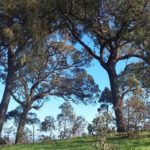
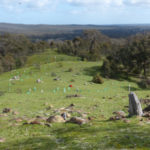
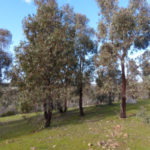
The Poverty Gully management burn [CAS 008] was a Zone 1 fuel reduction exercise covering 99.6 hectares on the Castlemaine town side of the Dingo Park road, north of Poverty Gully Track. It was conducted late last year.

The Arthur’s Track burn [CAS 107] is a Zone 2 exercise covering 243 ha on the south side of the Poverty Gully Track. The two burns, CAS 008 and 107, are contiguous, but the Arthur’s Track exercise has been broken up: an area was done in November, and we assume the rest will be finished in Autumn. This is to take account of the presence in this zone of Castlemaine Spider Orchids, and Eltham Copper Butterfly colonies.

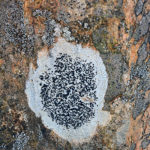
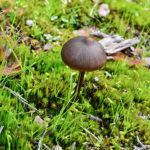
Fire fungus growing in the ash of the Poverty Gully fuel reduction burn. Zone 1 Asset protection burns are for fuel reduction only, but it's worth asking if the safety effect could be achieved with less environmental damage.

The purpose of Zone 1 reduction burns is fuel reduction to ‘provide the highest level of localised protection to human life and property.’ According to DSE’s Code of Practice fuel treatment ‘will be carried out through a combination of planned burning and other methods such as mowing, slashing or vegetation removal.’ The aim of the operation is to remove or substantially reduce surface and suspended fuels: in effect, we’re told, a burn aims to cover 90 % of the parcel in question.

There is no provision for ecological management in Zone 1 prescriptions, and DSE officers have frankly admitted that these are sacrificial zones, ecologically speaking. In particular, it’s envisaged that these areas can be burned every five years: the Tolerable Fire Interval for bushland in our region is at least ten years: that is, for bush to be able to regenerate fully it needs at least ten years between even mild fires. The system, therefore, must inevitably produce an impoverished environment. The only concession is that the Code of Practice directs that ‘the department will seek to moderate the negative impact as far as practicable.’ This is the price the community pays for safety.

Continue reading

Posted in Fire Management, News | Comments Off on Poverty Gully Burning [1]: what’s it for?

Poverty Gully Burning [2]: a review

Here are some impressions of the Poverty Gully burns. We’ve divided them into six sections, and would be interested in any further member comments. We’ve made no effort to assess the burns’ success in reducing fuel.

The interdepartmental shemozzle problem

A comical touch?—the polythene sheeting put into the water race by Coliban Water a few years ago to prevent leakage was melted and burned to a black ash or slime. There’s a slight element of madness here: as this review is being written [January 31] water is flowing through the channel from Malmsbury. This channel is

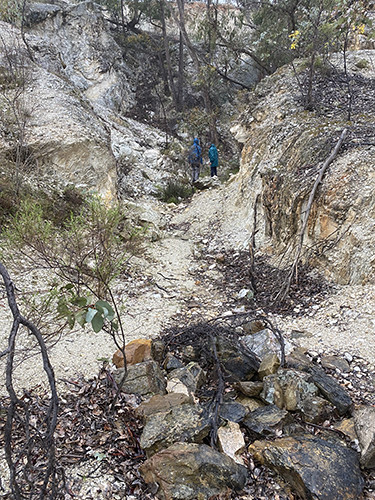
Poverty Gully channel, February 5: Most of the sheeting put in by Coliban Water to reduce leakage from the channel was destroyed by the reduction burn--not a great advertisement for inter departmental consultation.

notoriously leaky, and it’s been suggested that it should be taken out of commission—but if water is going to be brought through it, it might as well be done as efficiently as possible. It’s not great that one Government body is burning down the work of another. DSE is bound by its protocols to consult with other relevant managers before conducting its burns, but we believe Coliban Water wasn’t consulted on this one.

The large tree problem

Large old trees are not a fuel hazard targeted by reduction burns, but FOBIF has found that it’s common for DSE fires to destroy these trees. This is a big loss to biodiversity with no gain for safety, and over the years we’ve puzzled over why it inevitably happens. Among possible answers: the managers on the ground don’t really know or care about ecology [true of a minority of DSE managers]; lack of knowledge of the burn parcel as to where valuable tree assets are [with increasingly large burn parcels, this is quite likely]; and lack of resources to identify and exclude valuable trees in the burn zone [the most likely explanation].

When compared to recent DSE ‘fuel reduction’ operations, like Ashby’s Track in North Castlemaine [an out and out artificial bushfire] and Tarilta Gorge [a travesty of an ‘ecological’ burn], CAS 008 and 107 are greatly superior jobs. Relatively few

Continue reading

Posted in Fire Management, News | Comments Off on Poverty Gully Burning [2]: a review

Have your say about creek flooding

A public meeting to get community ideas on the flood problem in our local creeks will be held on Monday February 18 at 6.30 pm at the Castlemaine Town Hall.

The meeting is being held by the Catchment Management Authority, the Shire Council and GHD, a firm of water industry experts. It’s part of the process of developing a flood management plan for Castlemaine, Campbell’s Creek and Chewton. The process has been funded by the State Government in response to recent flood events.

Readers will remember that there was some controversy during recent floods about whether vegetation along creeks increases water levels. Our posts on this can be found here and here.

Posted in News | Comments Off on Have your say about creek flooding

Garden birds in Castlemaine

Damian Kelly has contributed this article on birds in his Castlemaine garden. To see previous posts by Damian on garden birds, click here and here.

This summer has seen a much reduced number and range of birds in my garden in Castlemaine. Honeyeater numbers in particular are well down. However, by providing water we still get a reasonable variety of birds in the garden. 

The Blue-faced Honeyeater seems to be getting more common in this area. A small number have been resident in Castlemaine continuously since at least early Autumn. They can be seen along the street trees in Mostyn and Lyttleton streets, as well as in gardens in this area. They have a distinctive call.

Blue-faced Honeyeater

Another less regular visitor is the White-eared Honeyeater. It has a strident call that can be heard long before you see the bird. Although not common around town, you will see them if you add water bowls in protected spots in your garden.

White-eared Honeyeater

I like watching the Yellow-faced Honeyeaters – they are quite curious and you can often get up close to them. This one is having a good preen after bathing in a water bowl on a hot day.

Yellow-faced Honeyeaters

To me, the Eastern Spinebill is one of the most appealing of the honeyeaters – it can hover to get at flowers and is partial to a range of natives as well as introduced plants. Quite a sight when you get to see views like this.

Eastern Spinebill

Although not often seen in gardens, Woodswallows are often to be seen in groups in the sky hawking for insects. They have a soft, chattering call that comes from on high. Here is a male and female White-browed Woodswallow pair. 

Woodswallows


Posted in Nature Observations, News | 1 Comment

Rosella fledgings display their colours

Several Eastern Rosella fledgling recently fell out of a nest box in John and Marie’s yard at Golden Point. They landed in saltbush below where the adults fed them for a week before they finally flew off.

One of the Rosella fledglings. Photo by John Ellis, December 2012

A week or two previously Doug Ralph also discovered young Rosellas. This time they had stayed in their nest box.

Photo by Doug Ralph, December 2012

To see even younger Eastern Rosellas have a look a Geoff Park’s site here and here. In this brilliant sequence of photos, Geoff has recorded the transformation of chicks from nestling to fledging stage over a 25 day period.

Posted in Nature Observations | Comments Off on Rosella fledgings display their colours

Comeback

The cup moth caterpillars have come in their millions and munched away, but it seems that they’ve gone to pursue their careers as moths, and the bush is responding accordingly. Green shoots are appearing everywhere, and things aren’t looking anywhere near as desolate as they were a month or so ago.

Fryers Forest, early December: new growth in the eucalypts is an indicator of the disappearance of the cup moth caterpillars.


Posted in News | 1 Comment

Catch this

North Central Waterwatch has released a handy Fish Field Guide for waterways in the area bounded roughly by Donald in the west, Creswick in the South, Heathcote in the east and Swan Hill in the north. Native fish are little known and it’s a bit of a downer to find out in the guide that 10 of the 22 species in this region are listed as endangered. Threats to native fish include, among others, removal of woody debris and riparian disturbance: another argument for careful restoration of our waterways.

Expedition Pass: a population of Macquarie Perch has been released here as a conservation measure.

Fishing is one area where conservation and recreation have an uneasy relationship. For this reason it’s of interest to note that 10,000 Macquarie Perch were released into Expedition Pass a couple of years ago with the support of local anglers. Macquarie Perch is an endangered species found in catchments to our east. It is described in the guide as ‘likely to have historically occurred in the Loddon River basin’, and the stocking is an attempt to re establish it in the area.

As of December this year the population at Expedition Pass is reported to be doing well. We believe it’s not legal to fish it here. [‘Macquarie perch can only be taken from three waters in accordance with strict catch limits and a three month closed season: http://www.dpi.vic.g…macquarie-perch ‘]

The guide can be got from the Catchment Management Authority in Huntly.

Posted in News | Comments Off on Catch this

‘Due consideration’: does this mean, ‘Not interested’?

FOBIF has received a reply from the Minister for Bushfire Response, Peter Ryan. We asked him if he had considered Royal Commission Monitor Neil Comrie’s recommendation that the five per cent burning target be revised. It’s now clear from the three letters we’ve had from Government members that there is no intention of doing anything about Mr Comrie’s recommendation.

When Mr Comrie’s report was released, Mr Ryan told The Age  [August 1], ”I see the logic of what he argues and we will give it due consideration,” he said.

Mr Ryan doesn’t bother getting even this specific in his response to FOBIF. His letter runs as follows:

‘Thank you for your correspondence received by this office…in which you raise concerns regarding planned burning.

Tarilta Creek valley before this year's 'control burn': Large operations like this in remoter areas reduce DSE's capacity to do the detailed work which would enable it to protect the community without damaging the environment. The Government appears to be ignoring the Royal Commission Monitor on this matter. Photo: Dominique Lavie

‘It is important to note that planned burning is part of an integrated plan to reduce the bushfire risk to people, property and communities. Combined with community and householder preparedness, planned burning is a very effective way to reduce the risk of future bushfire by reducing the extremely high fuel loads that have built up in our environment, slowing bushfires down and  making them less intense, and therefore easier to control before they grow and threaten properties and communities.

‘As the issue you raise relates to the Department of Sustainability and Environment, I have forwarded your correspondence to the Honourable Ryan Smith MP, Minister for Environment and Climate Change, for his consideration and response.

‘Thank you for raising this matter with me.’

In other words: ‘I’m not answering your question.’ As our readers know, we have already had Mr Smith’s reply in the form of a letter from DSE’s fire boss, Lee Miezis. He didn’t answer our question either: from which we have to conclude that the Government isn’t going to do anything about Mr Comrie’s recommendation. There’s no evidence that it’s been given any consideration at all.

Continue reading

Posted in Fire Management | Comments Off on ‘Due consideration’: does this mean, ‘Not interested’?

Burning season under way

With DSE starting burns around Castlemaine, it’s worth clarifying what the Department’s targets are. The following has been supplied to us by DSE for land within the Murray Goldfields district:

Zone: 1. Asset protection 2. Bushfire management 3. Landscape management 4. Planned burning exclusion
Area total 8,322 ha 59,119 227,846 56,716
Area annual 1,664 5,912 6,092 0
Burn rotation Every 5 years Every 10 years 37 years plus 0

In his reply to FOBIF’s question of the safety value of the five percent target, DSE Executive Director, Fire [Lee Miezis], sought to create the impression that Asset Protection burns, those most directly concerned with human safety, had been vigorously pursued, while Landscape Management burns in remoter areas were relatively softly pursued.

It’s clear from the above table that nearly half DSE’s fuel reduction burns in the Murray Goldfields district are in remoter areas. FOBIF’s view [like that of the Royal Commission Monitor], is that the effort put into these exercises would be better spent doing a more effective job in areas closer to settlements.

This more effective work might, for example, involve fuel reduction through methods other than burning [grooming and slashing, for example]–but these can be time consuming and labour intensive.

Part of the problem is that Royal Commission recommendation 56 was for ‘prescribed burning’, not ‘fuel reduction’. There are other ways of reducing fuel than setting fire to the bush, but we have found that there is confusion in the DSE itself about whether fuel reduction by, for example, grooming 50 hectares of gorse, counts towards the five per cent target. The result is a drive to burn regardless, and the government is apparently unwilling to review this policy.

Posted in Fire Management | 1 Comment

We have the answer, but where’s the answer? [and what’s Hawkeye?]

FOBIF has had another go at finding out what if anything the Government intends to do about the Royal Commission Monitor’s suggestion that the five per cent target be revised. The letter we received from DSE Director of Fire, Lee Miezis, failed to answer our question on this.

We’ve also asked Mr Miezis to give us examples to back up his claim that the Monitoring program Hawkeye is ‘guiding approaches to planned burning.’ Though we believe that local DSE fire managers are trying to tighten up their practices, we haven’t seen any evidence on the ground of a guiding research principle.

According to DSE”s 2011 publication ‘Fire ecology program achievements 2009-11’, Hawkeye is a ‘long-term biodiversity monitoring project’ established in 2010 ‘to inform the way [DSE] conducts planned burning and guide how we balance the dual objectives of fire safety and biodiversity protection.’  The project began field operations in 2011. Hawkeye might be a very good project: we think it could be. But to claim that it is already ‘guiding’ DSE approaches to planned burning –one year into a long term project!–is testing our goodwill.

It should be remembered that DSE and its predecessors have been producing Codes of Practice, Strategic Directions and Guidelines and Procedures on fire management for many years. The oldest one we have is the 1995 code, which stipulates that fire management practices must ‘be appropriate for maintaining the vigour and diversity’ of our native flora and fauna; that they must protect water quality by minimising impact on streams; that they must prevent ‘inappropriate destruction’ of soil; that the possible introduction of pest plants and animals be avoided; and that burns should be monitored when specialist officers recommend.

The claim that burning is being guided by a program that’s one year old seems to be an admission that the requirements of numerous Codes of Practice over the years have been widely ignored.

Posted in Fire Management | Comments Off on We have the answer, but where’s the answer? [and what’s Hawkeye?]