Gold 1: What do you want to remember? What would you rather forget?

What does the phrase ‘extensive vegetation modification’ mean?

Answer: in Heritage speak, it’s a reference to what happened to our landscape during the gold rush. It’s code for: trashed landscapes, ruined waterways, denuded forest lands.

Why do heritage documents use such gormless terminology when talking about the history of the goldfields?

Answer: because in general ‘heritage’ is the nice side of history, the parts we want to remember: evocative buildings, romantic stories, heroic deeds. The dark side of history can be wrapped up in phrases like the one above, which mean practically nothing, and therefore can be skated over in a blink.

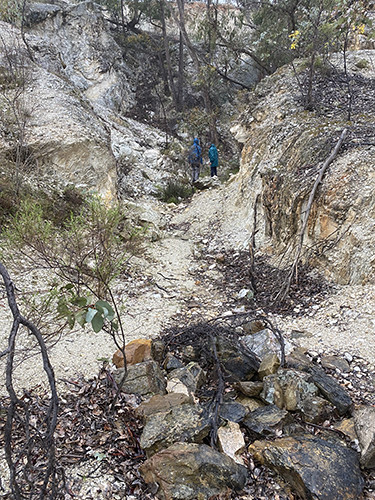
The late Doug Ralph in Dirty Dick’s Gully, 2013. Anyone who pays even minimal attention will notice the shocking erosion of our creeks, and the fact that our forests are struggling to recover from the rampant exploitation of the past. But heritage guides turn our attention away from these things, disguise them under bland phrases like ‘extensive vegetation modification.’

The phrase ‘extensive vegetation modification’ is quoted on page 36 of the latest heritage management document for the Castlemaine Diggings NHP. To its credit, this latest document doesn’t fall for such a misrepresentation of environmental history, though for our liking it’s still a bit subdued when talking about the destruction wrought in the gold rushes. In this, it’s right in the tradition of heritage talk generally: one of the worst examples being the National Heritage declaration for the park, which observed, solemnly, that ‘The degree of alteration of, and intervention in, the natural landscape makes a strong impression on visitors.’ Really? We would suggest, ‘Visitors will be appalled at the way the country was torn to pieces in the desperate rush for gold.’

***********

Three major transformations happened with the discovery of gold in Central Victoria. They’re interlinked, and can’t be separated:

  1. Massive immigration largely caused by the gold rush created a completely new society, with all its virtues and defects.
  2. The natural environment was almost completely trashed, with every waterway degraded, and natural vegetation stripped from the landscape.
  3. The destruction of indigenous culture and society was dramatically advanced: already weakened by disease and violent dispossession, Aborigines now saw their country almost eradicated

Any serious effort to appreciate what happened in the 19th century should deal honestly with all these questions.

Continue reading

Posted in News | Comments Off on Gold 1: What do you want to remember? What would you rather forget?

Gold 2: preservation or repair?

The new plan does make some advances on the old on the twin questions of environmental damage and Aboriginal dispossession.

For a start, it explicitly tries to incorporate a role for indigenous questions in park interpretation:

‘In 2013 settlement of a native title claim acknowledged the legal recognition of the Traditional Owners. In 2012 -14 development of the Dja Dja Wurrung’s first Country Plan was undertaken. This plan acknowledges the importance of preservation and revival of cultural heritage as one of its key goals’

Equally CDNHP is an Aboriginal landscape of cultural sites and areas, natural resources and totemic species, creation stories and personal memories. The mined landscapes are referred to as ‘upside down country’ by Dja Dja Wurrung people. As custodians of the land that has been severely impacted by mining they feel a responsibility to heal the wounds that it has sustained’ [FOBIF emphasis]

This last point presents an interesting challenge to heritage managers: it suggests that respect for Indigenous culture would involve repair of the landscape, not preservation of the cause of its wreckage. The ‘equally’ in that paragraph is very important…

The Framework document does tend, like most documents to do with goldfields heritage, to pussyfoot around the environment question: it uses words like ‘dramatic transformation of the landscape’ when ‘rampant destruction of waterways and hillsides’ might be more accurate. In fact, we have to get to page 36 before the word ‘destructive’ appears….

Similarly, on the Aboriginal question the Framework seems to discreetly handpass the responsibility for dealing with this aspect of heritage to the Dja Dja Wurrung people. In one way this is fine: in another it has the effect of making this a separate issue. It therefore tends to enable the appreciation of our mining/digger heritage without seeing its darker side…

These are not easy questions for park managers to deal with: but any presentation or promotion of  the park which underplays any of the three points made above is a betrayal of our real history.

The 2017 Heritage Management Framework is an important document, both for its own value and for the fact that it may be the guiding document for Park managers in the coming years. It contains much interesting and informative information, and its proposals for managers need to be widely known.

There is one important underlying principle in the document about which we should be cautious, however. That is, that it’s partly designed to facilitate visitation to the park. Visitation rates are now practically an obsession for Parks Victoria. Up to a point, of course, increased visitor numbers would be good for the local economy. But tourism is a tricky matter. Castlemaine Diggings is possibly unique in that its appeal is specifically related to the quiet neglect of some of its most interesting sites. Its intriguing landscapes are, for those prepared to look, wonderfully evocative of another age: but they’re probably best viewed without the hassle of crowds…

Posted in News | Comments Off on Gold 2: preservation or repair?

Wetland Plant Identification course

Registrations are now open for the Wetland Plant Identification Course 2019 run byDamien Cook and Elaine Bayes. The course starts on 31 October 2019.

To find out more click on the image above.  

Posted in News | Comments Off on Wetland Plant Identification course

Central West forests report is out.

VEAC has released its final recommendations on the Central West forest. The full report with the executive summary and related documents can be found here.

The final recommendations take account of responses to the draft, issued last year: but the changes made in this document do not alter the main thrust of the draft. A significant increase in protected areas is recommended by VEAC, including a new national park in the Wombat, and inclusion of part of the Wellsford forest in the Greater Bendigo National Park.

This summary of the recommendations is taken from the VNPA:

Continue reading

Posted in News | Comments Off on Central West forests report is out.

Call for photos

This year’s FOBIF exhibition will be a general one about our local Box-Ironbark Forests.

TOGS Cafe in Castlemaine will host the exhibition in September and October 2019.   It will be our 6th photo exhibition at TOGS and our 10th overall.

So if you have a favourite photo/s of flora and/or flora in our region send them along to FOBIF: info@fobif.org.au  There is plenty of time to take new photos: the closing date for the submission of photos is not till 19th August.

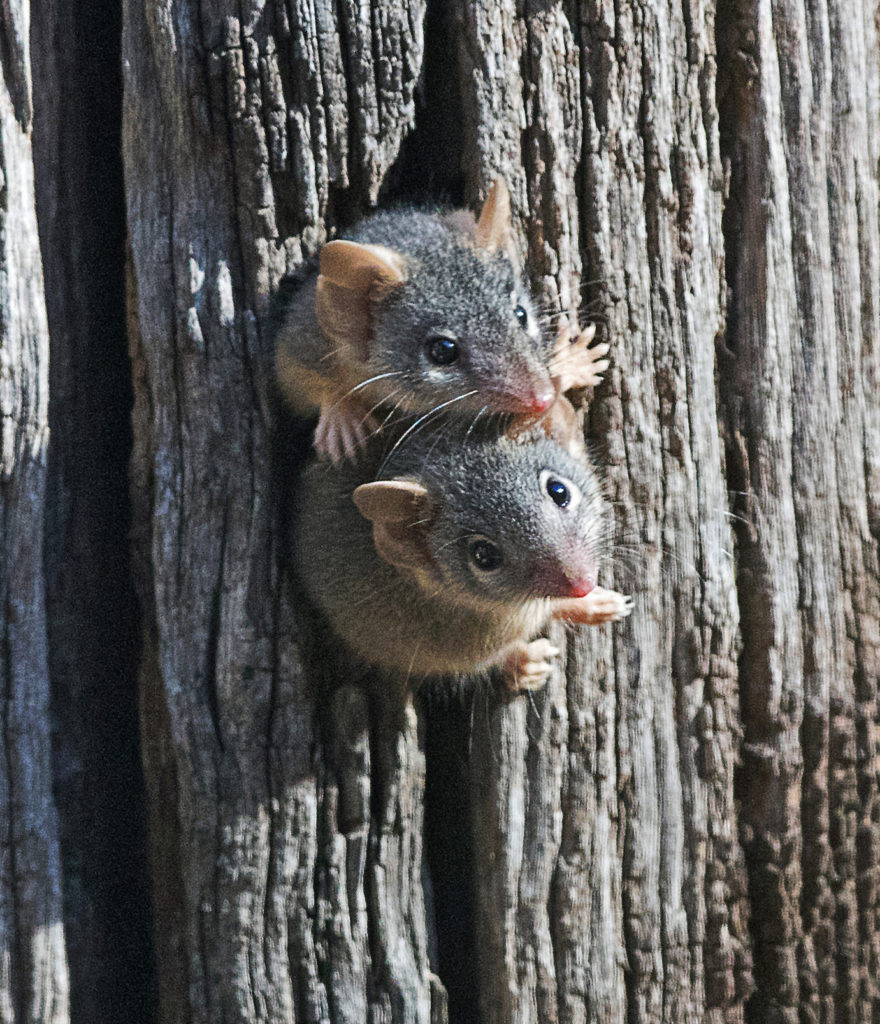
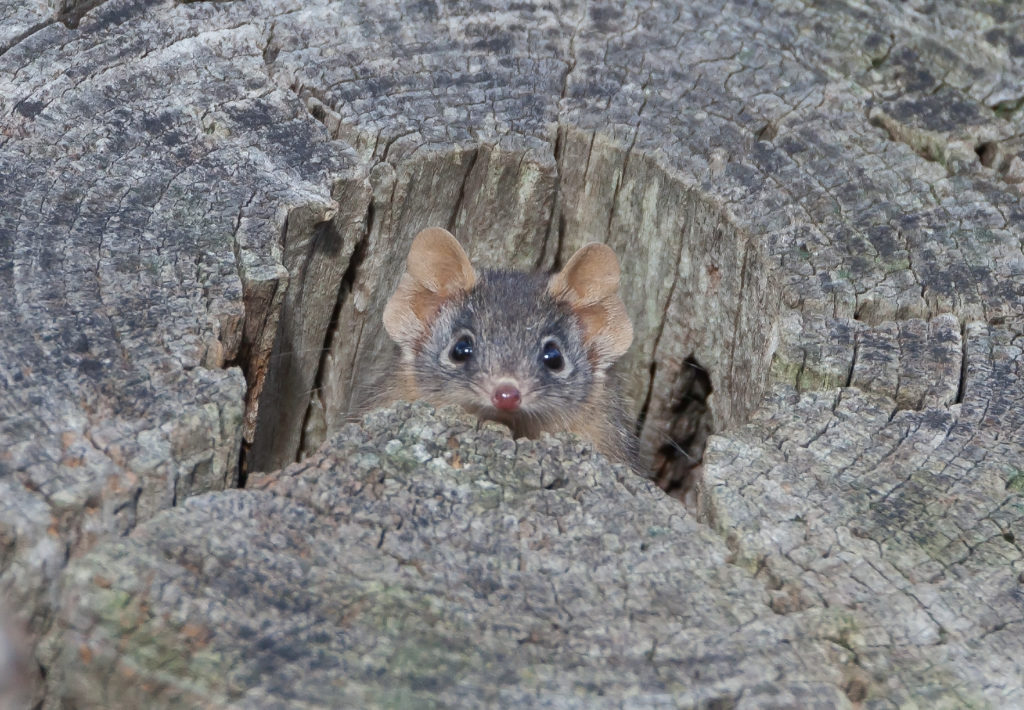
We will place all photos in a designated album on the FOBIF Flickr site. A FOBIF sub-committee will then select approximately 18 photos to be printed and framed for the exhibition. As you can see from the wildlife photos below there is plenty of scope for variety.

If your photo is selected, as well as being included in the exhibition, you will receive a free copy of your photo.

Guidelines

  1. Photo/s of Box-Ironbark flora and fauna within the Mount Alexander region. 
  2. A small file size is fine for Flickr but the photo will need to be at least 3 mg to be printed and included in the exhibition. (At this stage only send files under 1mg).
  3. Include the photo’s location, date, identification of flora and fauna and any extra information you have about the phot0.

Some of this year’s photos on our FOBIF Flickr page.

And don’t forget that entries to the Eucalypt photo competition run by the Threatened Species Recovery Hub close on 22 July 2019.

Posted in News | Comments Off on Call for photos