Powerful Owl Presentation

Newstead Powerful Owl with prey photo by Patrick Kavanagh

Powerful Owl and prey at Newstead by Patrick Kavanagh.

Newstead residents and readers of the Natural Newstead blog may be familiar with the spectacular and rare Powerful Owls, which have very successfully raised young down by the Loddon River. But what are the lives of these magnificent nocturnal hunters really like? And how do they sustain themselves and feed their young? Newstead Landcare member and PhD student Emmi Scherlies has been researching the lifestyles of these remarkable birds and will let us into their secrets at Newstead Landcare’s October presentation and AGM.

Don’t miss this great opportunity to discover more about Australia’s largest owl. The presentation will be on Thursday October 15th starting at 8pm at Newstead Community Centre and will go for about an hour. A very brief AGM will follow and then some light refreshments. All are welcome to attend. Gold coin donations would be appreciated. Bookings not necessary.

For more information ring Frances Cincotta on 5476 2691 or Patrick Kavanagh on 0437 663 345.

Posted in News | Comments Off on Powerful Owl Presentation

What might have been…

The Federal Department of the Environment estimates that estimated that weeds ‘cost Australian farmers around $1.5 billion a year in weed control activities and a further $2.5 billion a year in lost agricultural production. The real cost of weeds to the environment is difficult to calculate, however it is expected that the cost would be similar to, if not greater than, that estimated for agricultural industries.’

MAM 18 December 1857 P 4 Capture

John Ellis has unearthed the item at left from the Mount Alexander Mail, December 1857. The thistle was declared as a noxious weed in Victoria in 1856. Apparently the Mail‘s urgings weren’t heeded, because it’s now Victoria’s most widespread weed ,  and covers over a million hectares around Australia. Before you get depressed by that figure, it’s worth noting that this is only a fifth of the area it covered before control programs started in the 1960s. Weeds can be fought!

There’s an interesting moral in the Mail‘s sermon, too: get in early, before the problem gets out of hand. If only we’d done that with bridal creeper, for example: a few years ago its spread was a fraction of what it is now. That’s more motivation for those attacking outbreaks of Chilean Needlegrass.


Posted in News | Comments Off on What might have been…

Water on the Great Dividing Trail!

It’s well known that one of the problems with walking on the GDT is the lack of water, which probably discourages some walkers from undertaking ambitious distances on the track.

A small dent in this problem is about to be made, with the launch of the GDT’s  FIRST watering point on the Leanganook Track section of the Goldfields Track (between Bendigo and Castlemaine) next Friday [October 16].

It’s located East of the Goldfields Track, next to the Coliban Channel and near the Parks Victoria dry campsite.  Mandurang South Road is close by. It’s on map 30 of the Goldfields Track Walking Guide .

Coliban Water is GDTA’s partner in this great initiative and importantly, they have announced that they will ‘host’ the tank for track users. If the system works for walkers and bike riders there’s a chance more tanks will be put in on the track.

The launch will be at 11 am, and it’s catered. FOBIF members are invited to attend: RSVP to Alison Lanigan at gdtatrail@gmail.com


Posted in News | Comments Off on Water on the Great Dividing Trail!

Big Tree goes to the doctor

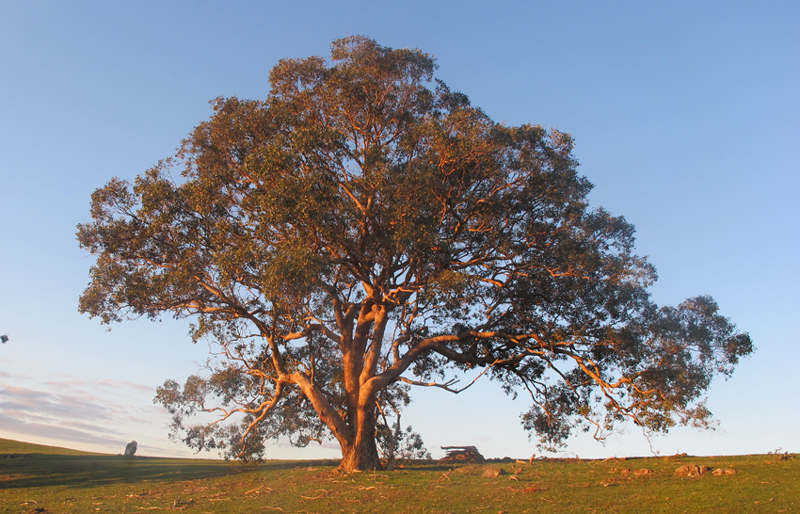
The Mount Alexander Shire will be undertaking works on the Guildford Big Tree, which, as we’ve previously reported, was badly damaged in February. From a Council briefing:

‘The severe storm in February 2015 caused considerable damage to the
canopy of this significant tree causing the loss of several large
sections of the canopy.  This loss has exposed a number of branches
within the remaining canopy which have the potential to shed during
relatively mild weather conditions.

The Big Tree: works will be undertaken to try to forestall further damage to the old feller.

The Big Tree: works will be undertaken to try to forestall further damage to the old feller.

‘To protect the tree, reduce potential branch loss and improve overall
tree health, the following works are scheduled to occur within the
next few weeks:

‘1. The tree will be pruned to reduce over-extended and exposed
branches.  The pruning will reduce the potential hazard associated
with these branches and leave a well-balanced tree with an
aesthetically pleasing appearance.  All pruning will be undertaken in
accordance with Australian Standards, AS4373-2007 Pruning of amenity
trees.

‘2. Several large branches that remain below the tree will be relocated
from beneath the trees canopy and remain on-site as informal seating
for visitors.  Some of the other branches will be taken to Guildford
Primary School.  Any other remaining branches will be removed.

‘3. The existing grassed area beneath the tree will be mulched.
Mulching of the existing grassed area will reduce root competition for
soil moisture and nutrients, prevent soil compaction by mowing
equipment and improve tree health.’

Posted in News | Comments Off on Big Tree goes to the doctor

Tarran Valley: how necessary is it?

FOBIF has made a submission to the Tarran Valley rezoning advisory committee. This committee has been appointed by the planning minister, Richard Wynne, to consider a proposal to develop land in the Sandy Creek area near Maldon. We have objected to the development. Our submission can be found here.

This matter dates back to 2006, and our background posts on it can be found by tapping Tarran Valley into the search box at top right of this page.

Our objections relate to fire risk and development in catchment areas. We also point out that population trends used by Council in its original decision to approve the development were significantly exaggerated: ‘[The Mount Alexander Urban Living Strategy 2005] has a population projection for 2021 of 21,930, compared with the more realistic population projection of 19,291 from the Victoria in Future [VIF] 2015 study.  The urban living strategy thus over estimates the population, in comparison to VIF, by 2,639 which translates to an over estimation in housing lots needed at this date of over 1,000 lots.’

The committee will report to the minister in due course–possibly not till next year.

Posted in News | Comments Off on Tarran Valley: how necessary is it?