Here we go again

The cup moth [Doratifera] grub is at it again: the damage perhaps a bit patchier than the last infestation. The grub is pretty undiscriminating in its appetite, but appears to prefer stringybarks [Eucalyptus macrohyncha] in our area. The Bendigo Field Naturalists Eucalypt guide notes that this tree ‘is subject to annual, often very severe defoliation by the caterpillars of the cup moth. This places considerable stress on the trees, but almost certainly has its compensations in the form of reduced waterloss through reduced leaf area during summer, and improved nutrient recycling…’

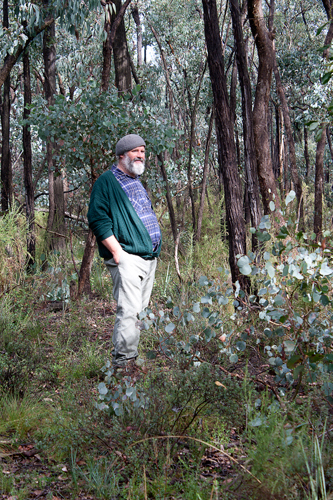
The patchiness of the present infestation can be seen in the two photos below, taken less than two kilometres apart. In the first, the Maldon Historic Reserve seems completely untouched:

Tatt Town track, October 5: the trees are virtually untouched by the cup moth caterpillar.

Tatt Town track, October 5: the trees are virtually untouched by the cup moth caterpillar.

In the second, a couple of kilometres down the road, the devastation is clear. The second photo is taken in bush with heavier concentrations of stringybarks:

A couple of kilometres down the same track, on the same day: bushland with greater numbers of stringybarks is heavily defoliated.

A couple of kilometres down the same track, on the same day: bushland with greater numbers of stringybarks is heavily defoliated.

How well does the bush recover from these infestations? Trees trashed a couple of years ago seem, on the whole, to have gotten over the attacks. On the other hand, our understanding of these matters is limited. As forestry researchers noted [in Australian Forestry June 2010, in reference to similar outbreaks in Gippsland early this century,

‘The cause of the outbreaks by Doratifera spp. is uncertain because of insufficient knowledge concerning their lifecycle. While climatic factors are likely triggers, other factors such as eucalypt host susceptibility, foliage nutritional status, altitude, forest type,

Continue reading

Posted in Nature Observations, News | Comments Off on Here we go again

A budding group of springtime learners

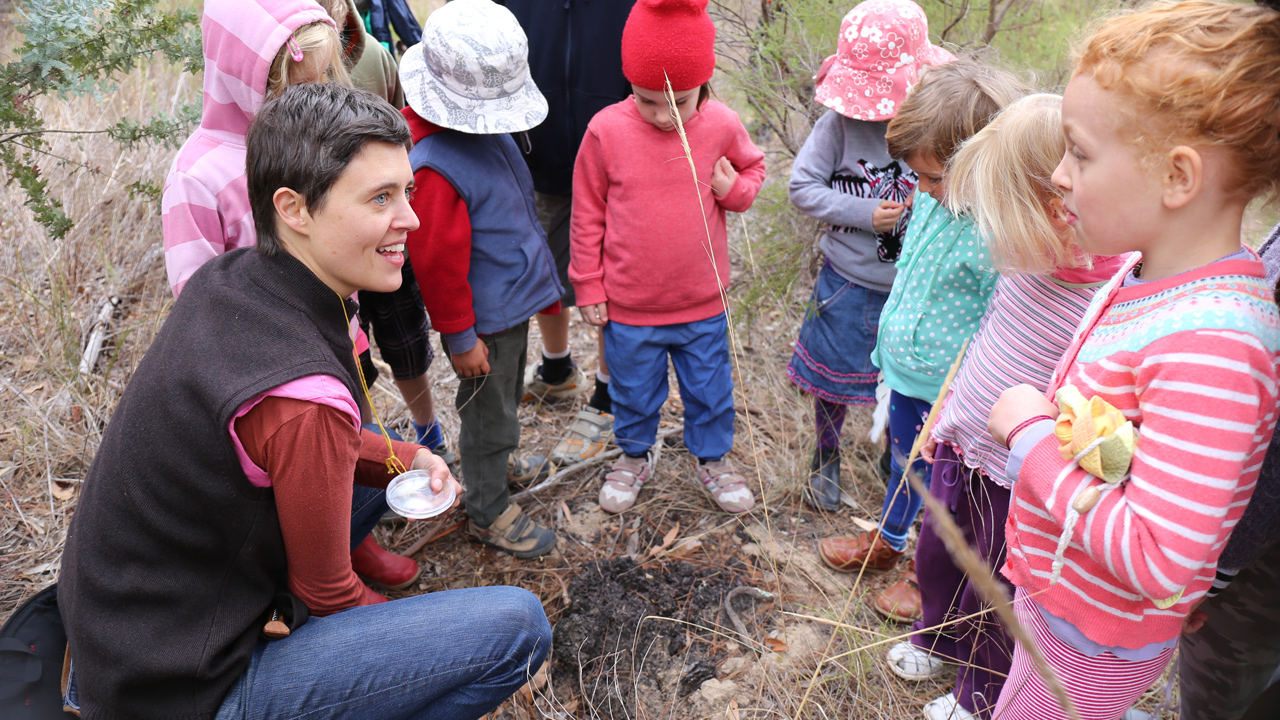
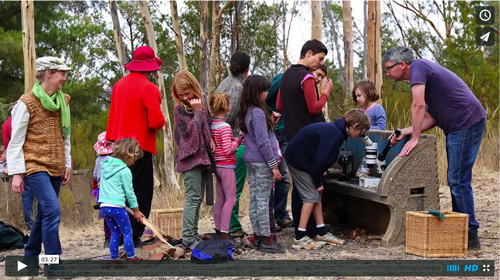
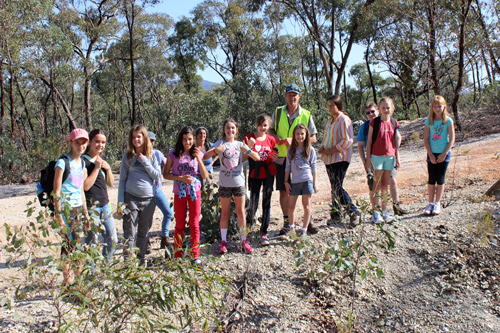
A group with representatives from six families heard Ern Perkins give an introduction to one of his favourite places to visit and study in Castlemaine at Kaweka Reserve on Sunday 28th September.

The group of parents and small children, aged 2-6, were then on task with the Local Flora Guide to see which species they could spot and were given instruction on how to use a hand lens by local co-author of Mosses of Dry Forests in South Eastern Australia, Cassia Read.

web

Cassia demonstrating how moss wakes up.

Cassia also introduced the children to the pleasure of using their stomachs as agents for biological control by eating their way through the Briza maxima and illustrated response to changes in weather conditions as she ‘woke up’ some moss with a pour from her drink bottle.

A well earned cuppa and snack break half way through energised the group for the second half of the walk with parents able to socialise and make acquaintance with other likeminded families while the kids played in the pretty spring bush.

Thanks to Ern and Cassia for their help in introducing the group to this patch of bush in an increasingly urban Castlemaine.

Posted in News | Comments Off on A budding group of springtime learners

Risk management vs random burning: a reply

We’ve received a prompt reply to the questions we put to the Environment and the Bushfire Response Ministers yesterday.

Readers will remember that our question was simple:

–the government is trumpeting its achievement in setting out to burn 5% of public land every year.
–at the same time it’s developing a risk management policy, which essentially implies that you only burn where it’s really needed.
–so, how do these contradictory approaches mesh with each other?

The reply from the Minister’s office doesn’t answer the question, but it does clarify one thing:

‘The Strategic Bushfire Management Plans are currently being finalised and will highlight the Coalition Government’s commitment to delivering a fuel reduction program that is focused on reducing the risk of bushfires to lives, property and assets, in addition to implementing a hectare based target recommended by the Victorian Bushfires Royal Commission.’

In other words, the Government is going to implement both a risk based and a target policy–at the same time. This is in spite of the fact that the Royal Commission Implementation Monitor recommends the second be reconsidered in favour of the first. Bafflingly, the ministerial reply ends by approvingly quoting the Monitor, as if he is in favour of such an incoherent approach.

Here’s the Government’s letter in full. Readers can make up their own minds about its argument:

Continue reading

Posted in Fire Management | Comments Off on Risk management vs random burning: a reply

Yee–Haah! On the runaway horse!

The Minister for Police, Emergency Services and Bushfire Response, Kim Wells, has today issued a press release on the State Government’s achievements in planned burning. The release is mainly concerned with publicising increased cooperation between DEPI and the CFA; it includes an obligatory electioneering flavour in the form of comparisons between the CFA budget under Labor and the budget under the Coalition—naturally in the latter’s favour.

All of this can be taken on its merits. What is of interest to us, however, is the tremendous satisfaction the Minister expresses in the burning program: “The Coalition Government’s planned burning achievements last year reached a 30 year high and over four years has carried out planned burns more than 700,000 hectares of public land.’

Although this sentence is spectacularly ungrammatical, we get the gist: area burned is what the Government is proud of.

Representatives of FOBIF and numerous other enviro groups are gearing up to attend a DEPI ‘Strategic Bushfire Management Reform & Environment Workshop’ in Creswick on October 10. The agenda for this workshop includes sessions on planning, risk management and ecological monitoring.

At the moment, all of these worthy activities are subject the five per cent target promoted in the press release. This policy effectively decrees that no matter what your research finds, you’ll still burn the same area of land around the state. Until the Government [and the Opposition] get off this runaway horse, all the research and monitoring in the world will end up where it has often gone in the past: into a dusty cupboard, never to be seen again.

We’ve written the letter below to the Minister asking for him clarify how the target sits with risk management. Our letter was forwarded to the Environment Minister, suggesting that the two ministers aren’t actually coordinating their activities. We’ll publish the reply when it comes:

Continue reading

Posted in Fire Management, News | Comments Off on Yee–Haah! On the runaway horse!

Scaling the ‘mini Monk of Muckleford’

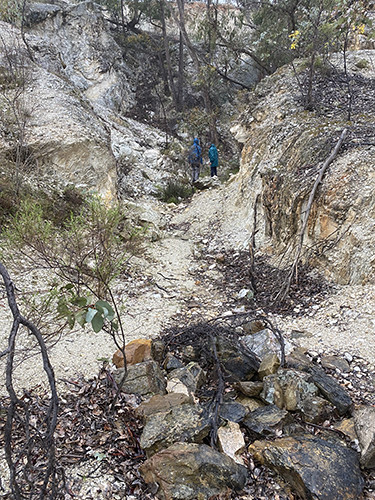
It was a glorious, warm, sunny day when FOBIF walkers took off from the poppet head mine in the Muckleford State Forest and Muckleford Conservation Reserve for the September walk. The mine has now been opened up so that you can stand on top of the grate and look down into the drop below. DEPI is in the middle of completing an information sign board.

The group meandered through the ironbarks, up to the ‘mini monk of Muckleford’ to have a break. Floral displays included plenty of gorse bitter pea, pink bells, pink fingers, wax lip orchids, common beard heath, and erect guinea flower. The lunch break featured the company of a well-put-upon shingleback, who was trying to get some rest in the sun.
We’re sorry we missed the climate change rally, but we were busy engaging with the Muckleford forest.

The following photos were taken by Noel Young. Click to enlarge.

Continue reading

Posted in News | Comments Off on Scaling the ‘mini Monk of Muckleford’