The time to get out is NOW

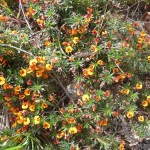
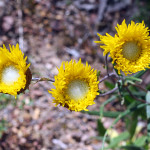
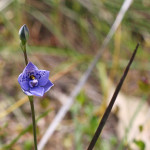
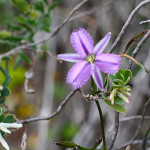
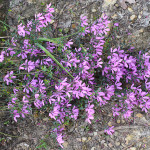
It’s always a good time to get out for a stroll in our bushlands: all seasons have their appeal. Arguably, though, this year seems to be peaking right now for orchids and wildflowers. Given that we’ve had a pretty dry few weeks, the peak might be short–so, to repeat the old commercial slogan: Season ends soon! Act now!

Chewton-Fryerstown Road, September 20: now's the time to get out and have a prowl around.

Chewton-Fryerstown Road, September 20: now’s the time to get out and have a prowl around.

Posted in Nature Observations | Comments Off on The time to get out is NOW

A cracking day

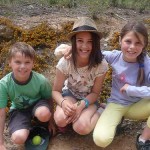
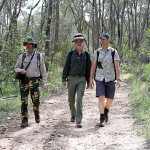
About 20 people gathered for the second Youth Walk of the year, funded with a Youth Grant from the Mount Alexander Shire Council. Young FOBIF member, Nioka, led the walk through the Eureka Reef interpretive trail, taking in some historic sites and stopping to look at the Billy Buttons and Greenhood orchids. Then the walkers went up to the Monk to take in the views and have a quick break. They then walked down the Monk and on to the Poverty Gully Water Race, taking in a couple of patches of Crimson Spider Orchids on the way.

Mmmm...Stackhousia or orchid? Walkers take a look at what's on offer at the Monk.

Mmmm…Stackhousia or orchid? Walkers take a look at what’s on offer at the Monk.

The walked finished after two hours, ending back at the Eureka Reef carpark for a feed of Bubble and Squeak Burgers hot off the BBQ. It was a cracking day, and the group went off happy and full. One young walker, Holly, was met at the end of the walk by her parents and off they went to Fryerstown for a second bush walk for the day!

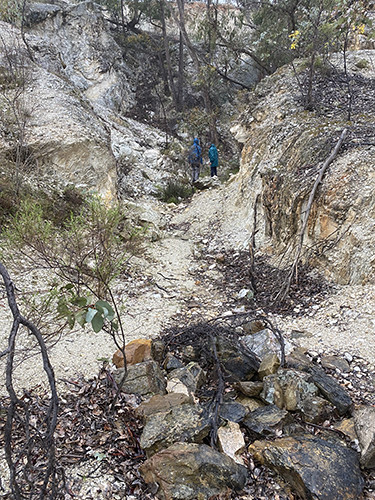
Um...where did they come from? Poverty gully: cheaper than the East West tunnel, and more interesting and useful.

Um…where did they come from?

On September 28 the spring walk for children up to the age of 12 with their families will take place at Kaweka Reserve between 10am and 12pm.  Walkers are meeting in Hargreaves Street between Turner St and Halford Street at 10 am. For more information on this walk contact Naomi Raftery on 0422 585 585.

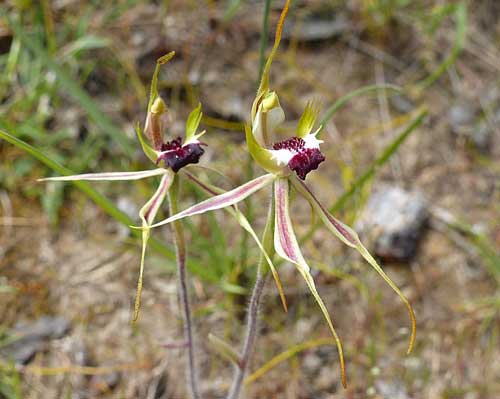
Among the delights on offer to Sunday's walkers: Spider orchid and Billy Buttons.

Among the delights on offer to Sunday’s walkers: Spider orchid and Billy Buttons.

Posted in News | Comments Off on A cracking day

Fire protection: what should be the priorities?

The Victorian National Parks Association has made its submission to the current draft Fire Operations Plan. Since the VNPA covers statewide fire protection problems much better than we could do, we print its ‘general overview’ of its submission below:

******

The VNPA has long held concerns about the level of planned burning in Victoria, and the justifications given for the Fire Operations Plans.

In short, the level of burning is dictated by the 5% annual burn target recommended by the Victoria Bushfires Royal Commission (VBRC). However we note that in the last three reports from the VBRC’s Implementation Monitor, Neil Comrie has strongly advised that the target be reconsidered, because it is unachievable and counterproductive. He says in his last (and final) report that it “will not necessarily reduce the bushfire risk to life and property, and may have adverse environmental outcomes”.

Further, Mr Comrie also pointed out that the VBRC’s recommendations were not to be taken in isolation from each other. That means that Recommendation 56, to burn 5% of public land annually, should be considered in the context of other recommendations that are also designed to save lives, such as:

• Recommendation 57, which asks for an annual report on “prescribed burning outcomes in a manner that meets public accountability objectives”. Although not specifically mentioned in Rec 57, “public accountability” would clearly include the effectiveness of the burn program, especially the cost-effectiveness of the program in reaching the prime objective of the program: saving lives. There has never been a public assessment of the actual effectiveness of the program, despite outcries from the scientific community.

We believe it is high time for an independent assessment of the cost-effectiveness of the burn program as a tool to save lives, and an independent assessment of its impacts on biodiversity.

• Recommendation 4, which asks for the “encouragement of personal shelters around homes”. This recommendation emerged after the urgent call by the VBRC, in its earlier interim report, for the development of an Australian Standard for home bushfire shelters/bunkers. As far as we can see, there is no material widely distributed by DEPI that advises householders to install bunkers, even though well-designed bunkers clearly save lives and avoid the high risk of trying to flee a fire.

• Recommendation 20, which stresses the importance of rapid despatch of aircraft. While aspects of this recommendation have been adopted, and in many instances DEPI’s capability for rapid attack has been demonstrated very successfully, there have been other instances when aircraft have not been available, rendering the call for staff to be ‘on standby’ somewhat purposeless. FOPs should include the need for a rapid attack capability appropriate to the area concerned.

• Recommendation 1, which asks that “local solutions are tailored to and known to local communities through local bushfire planning”.

Continue reading

Posted in News | Comments Off on Fire protection: what should be the priorities?

What are our ‘high value ecosystem areas’ [and how do we know?]

On Monday August 25 the Department of the Environment and Primary Industries hosted a meeting with representatives of enviro groups from the West Central Risk Management area.

The point of the meeting was to discuss current and future fire planning in this area, which extends from north east of Huntly to south west of Ballarat, and includes Werribee, the Macedon Ranges and Sunbury. Given that only about a dozen community representatives were able to attend [most of them from the Mount Alexander region] the meeting didn’t actually represent environmental groups of communities throughout this area.

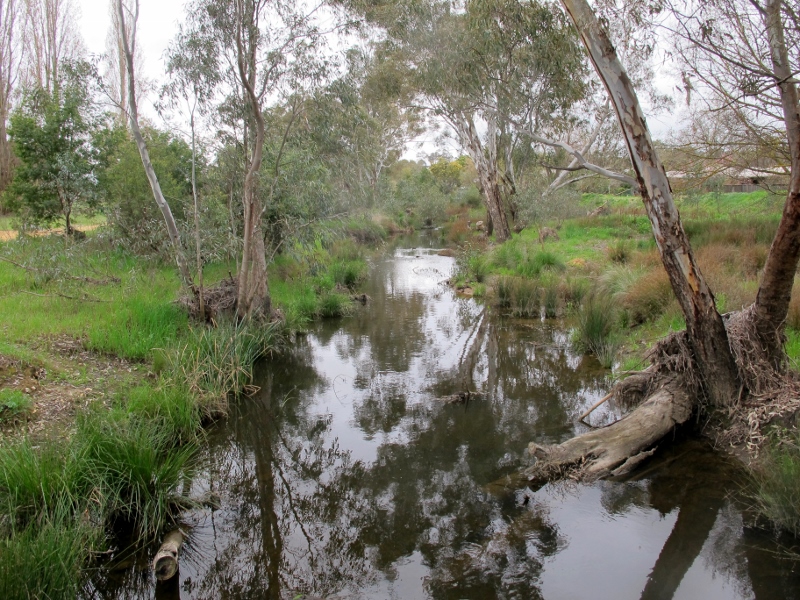
Middleton Creek, declared a 'high value ecosystem area' in the government's risk management strategy. here's a question: is 'risk management' compatible with a blunt policy of burning five per cent of public land?

Middleton Creek, declared a ‘high value ecosystem area’ in the government’s risk management strategy. Here’s a question: is ‘risk management’ compatible with a blunt policy of burning five per cent of public land?

As we have reported previously, the Department is talking a lot about ‘risk management’, the approach which, it has been hinted, may take over in fire protection from the very crude and destructive ‘five per cent’ approach, which has involved trashing huge areas of Victoria to no good effect.

Risk management was the talking point at Monday’s meeting. It’s been hard to find out exactly what this means on the ground, so the big achievement on Monday was the unveiling of a map of the area identifying assets for which serious risk assessments are to be made for the purposes of strategic bushfire management.

These assets come in three categories: priority communities, priority infrastructure and high value ecosystems.

The first two of these categories are relatively uncontroversial. In our area, for example, priority communities are Maldon, Harcourt, Castlemaine, McKenzie Hill, Chewton, Elphinstone, Taradale and Fryerstown. Priority infrastructure includes transmission lines and water treatment plant.

From our point of view, the interesting part of the briefing was the nomination of four ‘high value ecosystem areas’ in our region: Mount Alexander, Muckleford forest, a section of Kalimna Park, and a section of bushland apparently encompassing parts of the Tarilta valley and the south end of the Diggings Park near Middleton Creek and Wewak Track.
While we don’t dispute the value of these places, FOBIF representatives at the meeting couldn’t figure out the criteria whereby they, and no other places, were so nominated. The decision making process was outlined, but without access to the supporting documents attendees found it hard to judge this process.

The crude maps supplied by DEPI, for example, seemed to show that the nominated section of Kalimna does not correspond to Eltham Copper Butterfly colonies, which should be a major reason for the park’s special treatment.

The Muckleford Forest section includes areas severely burned in 2012, and others slated for future burns.

And the Tarilta-Middleton Creek area includes sections trashed by DSE in ‘control burns’ in recent years. It also includes the Amanda’s Track area, slated for burning in the current Fire Operations Plan.

Continue reading

Posted in Fire Management, News | Comments Off on What are our ‘high value ecosystem areas’ [and how do we know?]

7 & 28 September 2014 – Youth & Family Bushwalks

youth-poster

Click to enlarge.

The Spring Youth Bushwalk will be held on Sunday 7 September in Poverty Gully. Young FOBIF member, Nioka Mellick-Cooper, received a grant last year from the Mount Alexander Shire Council’s Youth Grants Program to run bush walks around Castlemaine for younger people.

The first youth bushwalk in March saw an eager group of people walk 5km through the Muckleford Forest and explore Dunn’s Reef and the Red White and Blue Mine.

The next walk will be a bit longer. It will start with the Eureka Reef interpretive trail and walkers will make our way up to the Monk for some wonderful views, and then back down to walk along the Poverty Gully water race, and through the Box and Ironbark forests of the Castlemaine Diggings National Heritage Park.

“It’s great exercise, and it’s a lot of fun to explore the bush,” say Nioka. “You never know what you might see when you’re in the forest.”

The walk is supervised by adults, and participants are taken to and from the walk site by buses.Walkers are meeting at Continuing Education in Templeton Street at 10am. Both adults and teenagers are welcome. Lunch is provided at the end of the walk, and interested people are encouraged to book on 5472 4609.

Click to enlarge.

Click to enlarge.

Three weeks later (September 28) the spring walk for children up to the age of 12 with their families will take place at Kaweka Reserve between 10am and 12pm.  Walkers are meeting in Hargreaves Street between Turner St and Halford Street at 10 am. For more information on this walk click on the flyer at left or contact Naomi Raftery on 0422 585 585.

Cassia Read with children on the Autumn walk.

Cassia Read with children on the Autumn walk.

Posted in News | Comments Off on 7 & 28 September 2014 – Youth & Family Bushwalks