Stinker

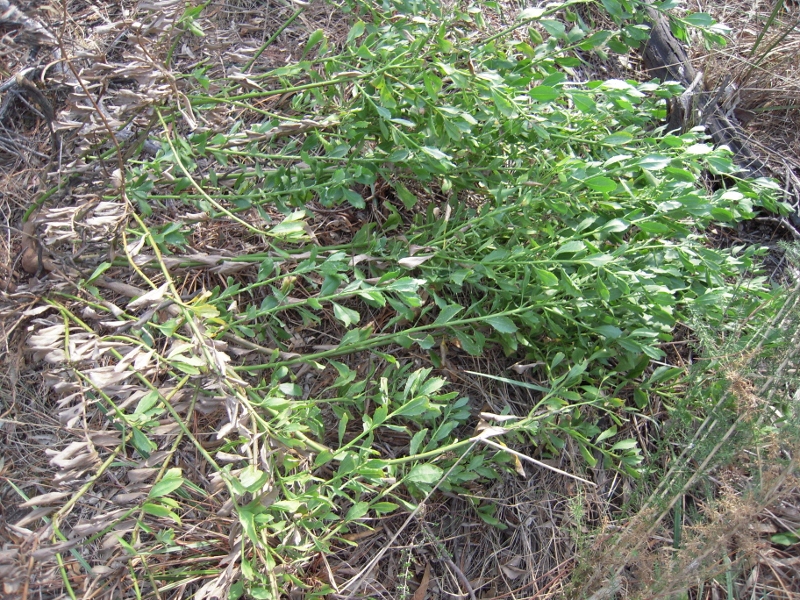
FOBIF has alerted Mount Alexander Shire council of an outbreak of Stinkwort in the newly developed section of the Wesley Hill industrial estate.

The plant, Dittrichia graveolens, is a declared noxious weed because of its capacity to get into pasture land. Stock refuse to eat it. It will not normally invade undisturbed bushland, but can spread along disturbed roadsides.
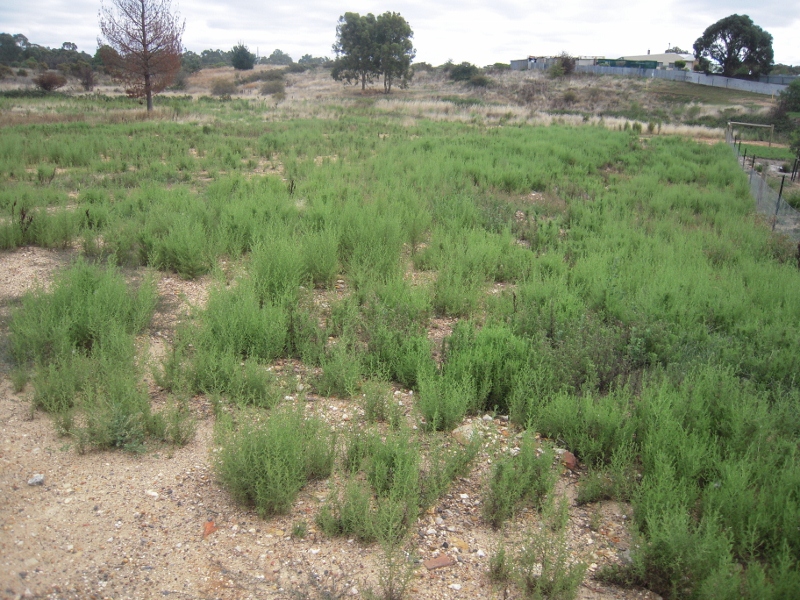
Stinkwort on the Wesley Hill industrial estate. The infestation is confined to the landscaped area, and may have been brought in by machinery.


Stinkwort is a smallish shrub to about a metre tall, with slightly sticky foliage. If you rub the leaves you get a very strong, not over pleasant camphor smell on your fingers. It has a small yellow daisy like flower. It seems clear that the present infestation has been brought in on machinery doing the landscaping of the new estate, because there are few plants outside the estate boundary.

Stinkwort has a history in our area. Local environmental history researcher Doug Ralph has unearthed a report of a heated meeting in the Metcalfe area in 1931 where farmers berated authorities for allowing the weed to get out of control on Mount Alexander. The Argus reported partly as follows:
Continue reading

Posted in News | Comments Off on Stinker

Fire Briefing

Radio National’s Background Briefing program ‘Fighting Fire with Fire’ [broadcast on February 19 and available for podcast here] was a very fair effort to canvass all points of view on fuel management issues. The fact that it seems to have been treated with respect by people with markedly different views is an indicator of the efforts made by the programmers to give all relevant people a say.

Dense head high regrowth less than two years after a severe 'reduction burn', Castlemaine Diggings NHP, January 2012. Management burns are complex exercises: FOBIF believes DSE is often underequipped for the task, especially since there is little evidence that monitoring is being used to improve practice.

The following comment on fuel reduction burns, by Victoria’s Deputy Premier Peter Ryan, is worth quoting:

‘In the public eye there’s a notion of a match being dropped and everybody walks away. It could not be further from the fact. These are very very carefully planned and carefully conducted and they are modified to accord with whatever might be the topography, what is the biodiversity, do we need a cool burn which can be just lit and allowed to creep through, do we need something stronger? You have to adjust all these things…all these things are taken into account by the experts we have engaged to undertake this task.’

On potential damage to the environment by the present system of burning, he added:

Continue reading

Posted in Fire Management, News | Comments Off on Fire Briefing

Weeds are for burning

In December we criticised DSE’s management of the Quartz Hill management burn [see ‘The uses of fire‘] on the grounds that the exercise failed to do anything about the prolific weeds in the area. FOBIF has now written to local Parks Victoria rangers urging that fuel reduction exercises in our region concentrate on areas close to settlement, and that they be integrated with a weed eradication strategy.

In our opinion such programs are not only ecologically sounder than broad area burning of remoter forests but also have better safety outcomes: and this view seems to have been confirmed by documentation widely aired in January [see our posts here and here].

In particular, however, we believe that a detailed plan needs to be devised and carefully implemented for the management of the section of Kalimna Park west of the tourist road and running up to housing on the town edge.

African boneseed collected by Friends of Kalimna Park: FOBIF believes that fuel reduction programs should be concentrated close to settlement, and be combined with weed clearance.


A section of this area has been marked for burning by DSE for weed clearance, but we believe that a much more comprehensive approach needs to be devised for the whole of this important area. It is heavily infested with flammable [gorse, pines] or potentially flammable weeds, but sections of it are botanically very rich: it can’t be simply ‘swept clean’ in a simple operation, but needs detailed understanding and a careful implementation strategy involving a range of fuel reduction techniques.

Obviously such an approach would be more labour intensive than, for example, the proposed burning of Tarilta Gorge. In our opinion, however, it would be far more useful from the point of view of public safety.

Moreover, an effort by Parks Victoria to come to grips with the detailed management of Kalimna and other areas close to townships offers opportunities to engage Park neighbours and Friends groups in actively attacking the problem of weeds as well as getting a better understanding of fire safety issues.

Parks Victoria has been developing a weeds strategy for this region for some time. We’ve made enquiries as to what stage this is up to, and whether it considers the fire dimensions of environmental weeds. Watch this space


Posted in Fire Management, News | Comments Off on Weeds are for burning

2012 Autumn Fungi Workshops

The Central Victorian Fungi Ecology Workshop Series is running again this coming autumn.

If you would like to know more about this curious kingdom, workshops include interactive displays, illustrated seminars and exciting forest forays deep into our local forests.

Full details are listed at www.alisonpouliot.com

Workshops book up fast so perhaps don’t delay making a reservation if you’d like to attend.

Posted in News | Comments Off on 2012 Autumn Fungi Workshops

Maniac?

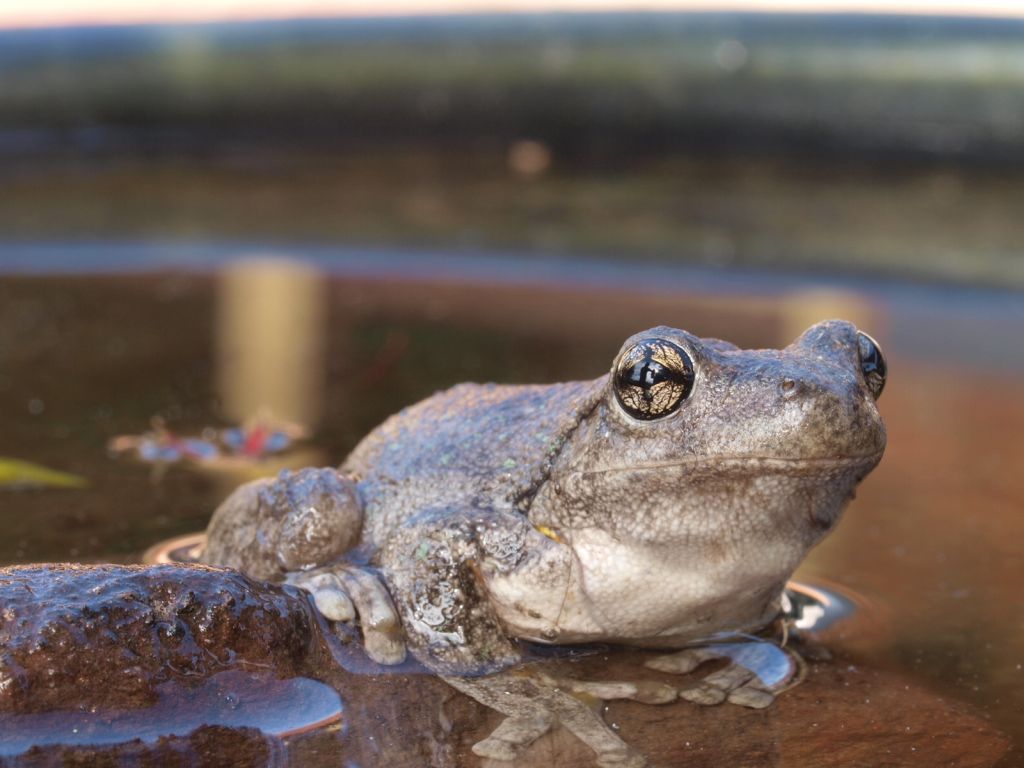
The endearing creature below is a Peron’s Tree Frog, sometimes uncharitably called the Maniacal Cackle Frog, owing to its distinctive ‘machine gun’ cackle. It’s not uncommon for frogs to be seen in household gardens in our district, and for that reason alone North Central Waterwatch’s recent publication Frogs Field Guide is welcome. It contains detailed info on the twelve species of indigenous frogs known in the region, and systematic and helpful advice on how to recognise them.

The little booklet isn’t only informative, it’s very readable as well. Each frog has a double page of info, including notes on habitat, breeding habits, conservation, and an ‘interesting facts’ section. It can be obtained from the Connecting Country office at the Hub, on the corner of Templeton and Barker Streets in Castlemaine–and it’s free.

Peron's Tree Frog in a household garden at Golden Point. Photo: John Ellis, February 2012

Posted in Nature Observations, News | Comments Off on Maniac?

Right plant, wrong place

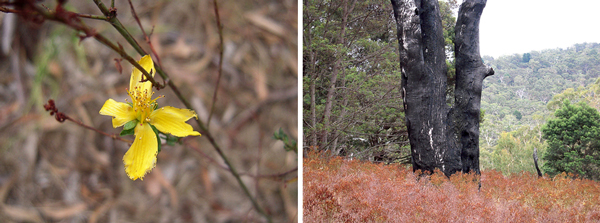
The flower below is St John’s Wort [Hypericum perforatum], a pretty plant which has been used for over a thousand years as a herbal remedy. Flowers are sparse, but seeds many at this time of the year on Mount Alexander. [For a picture of the plant in full flower, see the weeds section of our picture gallery].

St John’s Wort was introduced to Australia as an ornamental plant and for medicinal reasons in the 19th century, and is a perfect example of a plant which is virtuous in its native situation and a raging menace when exported: when it becomes dominant it radically alters the vegetation community and destroys important habitat. It currently infests over 200,000 hectares of land in Victoria and NSW, particularly open woodland. It is a noxious weed: if ingested by stock at the wrong time of the year it can weaken the animals and even result in death. About 80% of the infested area is in native woodlands.

A single St John’s Wort plant can produce 30,000 seeds annually, and these can last in the soil for 12 years—so it’s obvious that control is difficult. Even fire, if not used correctly, can increase infestations. The only serious possibility of control is by biological means, and a mite [Aculus hyperici] was released on the Mount some 20 years ago, with initially very encouraging results. It seems however  that this weed, like many others, is having a boom year.

Posted in Weeds | Comments Off on Right plant, wrong place

Government under fire over fire

Following the release of ANU research showing that current fuel reduction practices are not improving public safety [see our post below], the press has reported that DSE has been burning widely in remote bushland, but has neglected to effectively reduce fuel loads close to settlements identified by the CFA as being at risk from major fire.

The Age reported on January 23 that ‘both Labor and the Coalition adopted the royal commission’s recommendation to burn 5 per cent of public land, or 415,412 hectares annually, by 2013-2014, tripling planned burning across Victoria. But one of Australia’s leading fire experts has told The Age the target has little to do with protecting human life and assets and he would like to see it ”disappear in due course”.

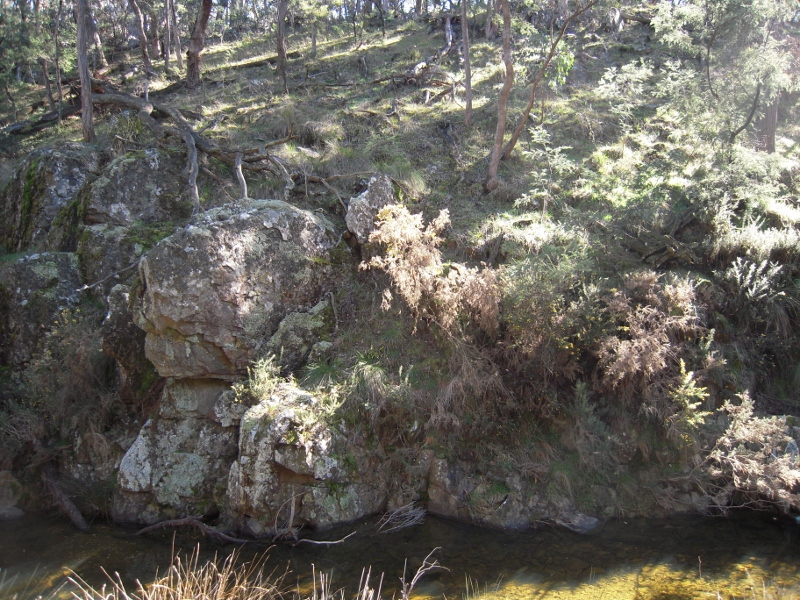
Tarilta Creek, in the Upper Loddon State Forest. DSE is preparing to burn this remote area as part of its current fire operations plan. FOBIF believes that the Department should concentrate its resources on using a variety of methods to reduce fire risk closer to settlements.


‘Melbourne University’s Kevin Tolhurst, one of the commission’s expert panelists, told The Age that while the government’s planned burning program factored in the most fire-prone parts of the state, the target itself was not directly linked to protecting communities.

“The unintended consequences of [the target] will be that prescribed burning is done with minimal benefit to the protection of human life and property. It may reduce the extent and severity of major wildfires, but it may not directly reduce the impact on human life and property,” Dr Tolhurst said.’

Continue reading

Posted in News | Comments Off on Government under fire over fire

Does fire protect us from fire?

Calls for more ‘fuel reduction burns’ have been insistent for years, particularly since the Black Saturday fires which burned over 2,100 homes and killed 173 people. The pressure for more management burns culminated in the Royal Commission’s recommendation that at least 5% of the public land estate be burned every year.

Most conservation organisations, including FOBIF, questioned the value of this policy, accurately predicting that it would force land managers to mindlessly burn vast tracts of country causing significant environmental damage with no improvement to public safety.

Now new research by the Australian National University seems to back up most of this case. Researchers looked at the homes destroyed on Black Saturday and assessed what had been the main factors contributing to their destruction.

The research showed that prescribed burning was only half as effective at protecting houses as clearing vegetation around buildings.

On ABC radio on January 19 ANU’s Dr Philip Gibbons said: ‘Prescribed burning is not the silver bullet that some people suggest it is… When the weather gets up to the extremes that we experienced on Black Saturday then we know that…the effect of prescribed burning becomes diminished…Prescribed burning is typically done distant from houses…The average distance from a house of prescribed burning on Black Saturday was eight kilometres. But we found that at that distance from houses prescribed burning had virtually no effect in terms of protecting houses.’

The researchers also looked at the effects of logging in making forests less flammable.

In Dr Gibbons’ words:   ‘We found that indeed a house that is close to forest is at greater risk. But it didn’t matter if that forest was national park or state forest that was managed for logging. In other words logging had no effect in terms of protecting houses on Black Saturday. They take out all the really big logs. They take out the trunks of trees and they leave the leaves on the ground. They leave the fine fuels, okay. So they’re the ones that contribute to the intensity of the fire.

‘And also if you log an area heavily you end up with a young forest that’s very dense and that can also add to the fuel in a forest. It’s like having a big thick layer of shrubs in the forest and the crowns are all connected. ‘

The full ANU research report, ‘Land Management Practices Associated with House Loss in Wildfires’, can be found here.

Posted in Fire Management, News | Comments Off on Does fire protect us from fire?

Snapshots in time

About 70 people crowded into the small Chewton Town Hall on January 16 for the launch of Ken McKimmie’s Chewton Then and Now, a collection of articles written over a number of years for the Chewton Chat.

These articles are remembered with great affection and interest by readers of the Chat, and the publication of the collection is welcome. It’s a series of photos, paintings and drawings showing selected sites around Chewton, usually about 100 years apart. As such, it is a set of snapshots in time, and is a poignant and instructive illustration of how things have changed in our district since white settlement. Though of course centred on the Chewton area, it will be of interest to anyone keen to look at how things have been happening in the whole goldfields area over the last hundred plus years.

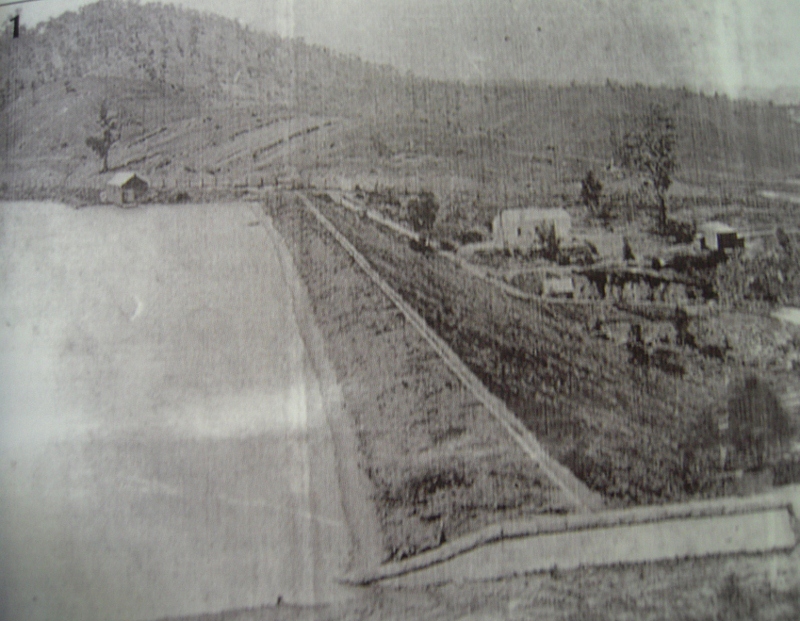
Although most of the interest in the book is in the areas of work, and social observation, there are some remarkable images of the natural environment, the most striking of which is the photo of the Expedition Pass reservoir taken in 1878. The stripped hills around the reservoir are a reminder of the reckless exploitation of timber in that era, and show just how dramatic the recovery has been.

Expedition Pass reservoir, 1878: the stripped hillside provides a striking contrast to the regrowth vegetation we can see today. Illustration from Chewton then and now.


Posted in News | Comments Off on Snapshots in time

Scottish, but not Scotch

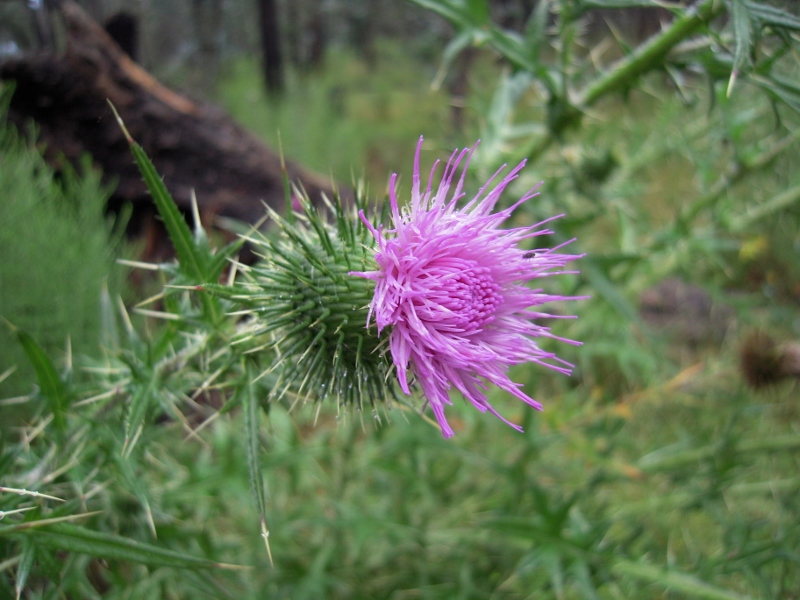
The plant below is Spear Thistle, Cirsium vulgare, the most widespread plant in Victoria and, according to naturalist Ern Perkins, by far the most common thistle in this region. It’s commonly but wrongly called Scotch thistle. That ‘honour’ belongs to a vaguely similar looking plant, Onopordum acanthium which, interestingly, isn’t of Scottish origin at all, and is not even common in Scotland–unlike Cirsium, which is. Figure that out: or, if you can’t, check out the Viridans data base, which has some curious facts about the legend surrounding the name ‘Scotch thistle.’ [As far as we know, the Scots never refer to themselves or anything in their country–even whisky– as ‘Scotch’, anyway.]

Cirsium was one of the earliest plants to be declared a weed in Victoria, in 1856. Our photo was taken in a management burn zone at the south end of the Diggings Park, where FOBIF members have pulled out many plants vigorously regrowing in the ash.

Spear Thistle, Wewak track, Castlemaine Diggings NHP, December 2011

Posted in Weeds | Comments Off on Scottish, but not Scotch