Fire planning: safety, yes–AND healthy forests

FOBIF has made a submission to the Department of Environment’s fire planning process. In it, we’ve repeated a few of the concerns we expressed in our 2014 submission. We’ve received a number of assurances about these concerns–mainly to do with large area burns–but still maintain a keen interest in the practical outcomes.

The substance of the submission is set out below:

***

Because we live close to bushlands we have an obvious interest in fire safety as a priority, but we do not believe this should be achieved by laying waste to bushlands. Our priorities are the same as those repeated in many DSE/DELWP documents: fire safety and ecological health.

General

  • We would like to know how the planned burning program on public land fits with the ‘priority fuel management areas’ referred to in last year’s West Central Risk Landscape management plan, and how it relates to fuel management in the adjacent ‘priority areas’ on private land.
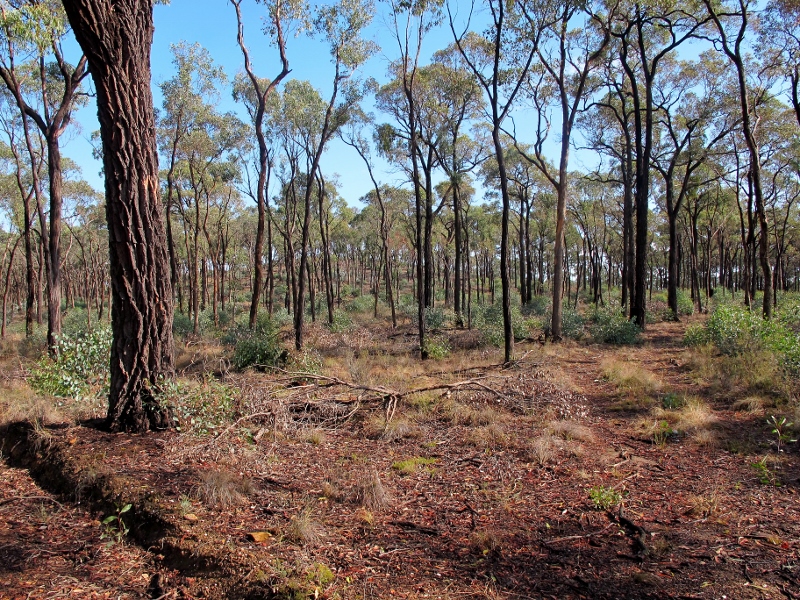
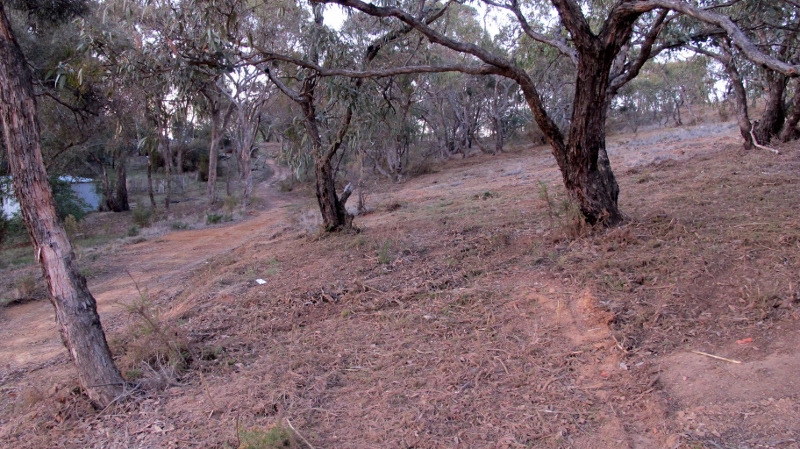
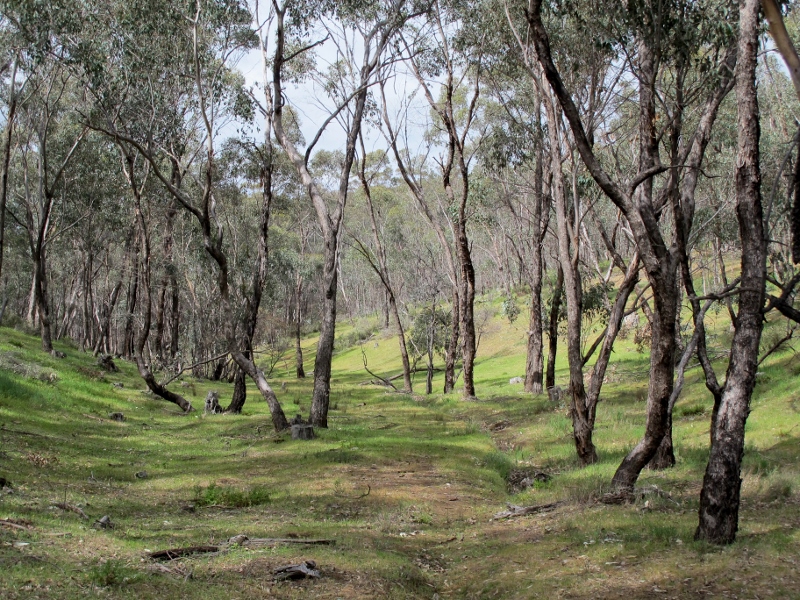
In the Gough's Range State Forest: FOBIF is taking a close interest in large scale burns planned for this and other remoter areas.

In the Gough’s Range State Forest: FOBIF is taking a close interest in large scale burns planned for this and other remoter areas.

Our concerns of last year remain:

  • We believe that the five per cent target is skewing burning operations away from strictly safety concerns towards achievement of burn coverage which has little relevance to safety or ecological health, and may be damaging to both.
  • We remain disturbed by the unavailability of burn plans and post burn assessments, in spite of the requirements explicitly set out in the Code of Practice.
  • We are particularly concerned about the relatively large area burns zoned LMZ [for example, in the Muckleford/Maldon and Amanda’s Track areas], and would like to see the risk management assessments and specific ecological intentions in these burns.

Specific

  • We remain concerned over the Amanda’s Track, Tarilta valley, Tarrengower, Sandon, Taradale, Gough’s Range and Muckleford/Maldon burns. [see our 2014 submission]

Continue reading

Posted in Fire Management, News | Comments Off on Fire planning: safety, yes–AND healthy forests

Green waste collection? Phasing out plastic bags?

FOBIF has made a number of specific suggestions in its submission to the MAS Shire council draft environment strategy. Readers will remember we criticised the draft strategy for being abstract and general…tending to waffle, in fact.

The substance of the FOBIF submission is set out below:

‘We understand that a strategy designed to direct council activities for 10 years should be general and flexible enough to accommodate changed circumstances. Nevertheless, we are disappointed by the extreme vagueness of parts of the document.

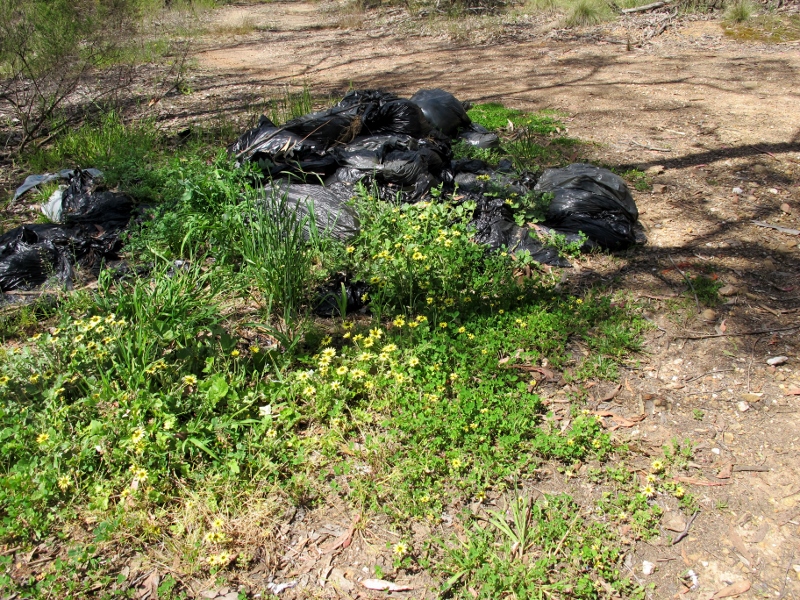
Green waste dumped near Morgan's Track: green rubbish is potentially more harmful than other types because of its capacity to spread. We suggest that Council should check out ways of reducing this problem.

Green waste dumped near Morgan’s Track: green rubbish is potentially more harmful than other types because of its capacity to spread. We suggest that Council should check out specific ways of reducing this problem.

‘We would like to make the following points:

  1. ‘On pages 10 and 12 reference is made to the ESD [‘ecologically sustainable development’] leadership, the ESD team, and the Council’s Green Team. Who are they? The fact that these terms are not defined makes the authority structure of the document quite vague.
  1. ‘Page 11: Council leadership by example: ‘appropriate ecotechnologies such as LED streetlights, and using Council’s unique statutory responsibilities to further ESD aims e.g. rate rebates for properties with a conservation covenant in place.’

‘We believe such aims need to be carefully thought through in the detail. For example, we would suggest that rate rebates should be considered for any landholder with positive conservation practices. The singling out of covenanted properties is certain to create counterproductive social tension, and would effectively penalise farmers with good land management practices.

Continue reading

Posted in News | 2 Comments

Eels, agro-forestry, banksias, fire: to find out more, go to…

Looking for  a few new ideas tossed up in good company?

The 2015 Mount Alexander Landcare Forum and Dinner will be held at the Campbells Creek Community Centre on Friday 19 June from 3.00 pm.

The program is as follows:

–3:00pm Welcome

–3:30pm Agroforestry & Landcare – A productive partnership? With Ben Boxshall from the Northern United Forestry Group and Wood 4 Good.

–Afternoon Tea

–4:30pm Applying Indigenous Fire Knowledge to Pasture management With Brendon Kennedy, Indigenous Facilitator from the North East CMA

–5:30pm Saving the Silver Banksias of Baynton Sidonia With Clare Claydon from Baynton Sidonia Landcare Group

–6:15pm Dinner and presentation on The Lake Bolac Eel Festival & Healing Walk with Una Allender & Brett Clarke – who will be performing some of his own songs at the forum.

The event is free to Landcare members and $10 for non members. RSVP to Max Schlachter by June 12 at max@connectingcountry.org.au or 5472 1594m

Posted in News | Comments Off on Eels, agro-forestry, banksias, fire: to find out more, go to…

Putting some facts on the table

Field Naturalist Richard Piesse met with DELWP officers last week to table surveys conducted by local naturalist Ern Perkins over the last ten years. The intention of the meeting was to highlight the necessity for burn operations to be conducted in full knowledge of the natural values at stake.

Some of the findings of the surveys were:

–A large percentage of the eucalypts in most of the forests are looking stressed due to the cup gum [moth?] caterpillar infestations and our ‘mini drought’ conditions.

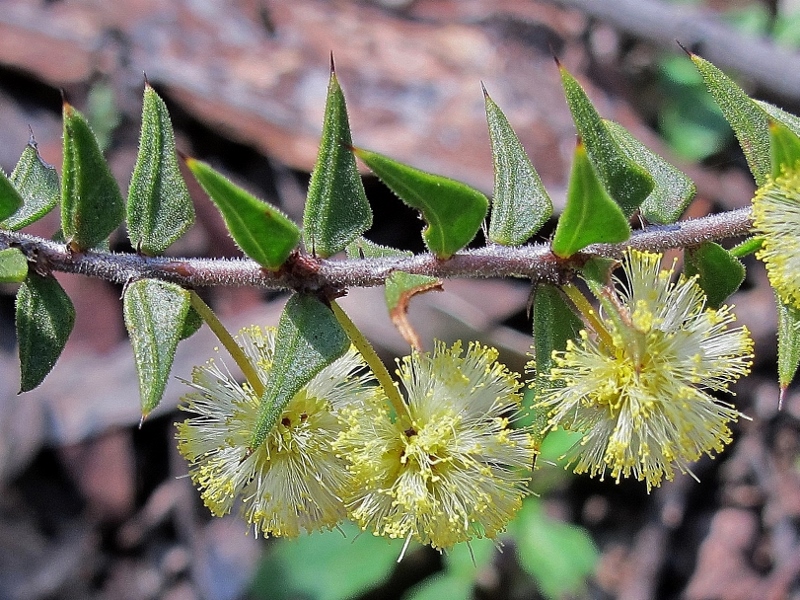
Acacia gunnii in the Fryers Ranges,'one of Victoria's best wildflower areas.'

Acacia gunnii in the Fryers Ranges,’one of Victoria’s best wildflower areas.’

–Kalimna Park: Castlemaine must be safe from fire; but lots of KP is a wildflower paradise which should be preserved for the community and visitors.

–Blowmine Track: the latest burn in 2011 destroyed good areas of bushland and the vast majority of the eucalypts

–Flame heath location on Tatt town track: a hot control burn in 2009 appears to have killed off all the flame heaths east of the Tatt Town track.

–Fryers Ridge: one of Victoria’s best wildflower areas; too many fires close to the ridge will destroy the amazing biodiversity. The last was in 2013.

–Southern end of Porcupine Ridge Road [in the vicinity of Wewak Track, Loop Track and the Great Dividing Trail] is similar to the Fryers Ridge, with a great diversity of plants, including threatened species.

FOBIF has consistently argued that all operations in our forests, including fuel reductions, should be conducted by workers fully briefed in detail on what they’re dealing with. There is a large amount of knowledge of these bushlands built up not only by field naturalists, but by Department researchers: but in the past it’s hard to believe any of it was seriously considered before fire operations began. Things may have changed: the survey info presented by Richard was positively received by the fire officers. We’ll see what happens in practice–and, of course, that mainly depends on the resources available to fire personnel.

Meanwhile, the Minister has had the Inspector General for Emergency Management’s report on fire management issues for over two weeks now, but is yet to release it.

Posted in Fire Management | Comments Off on Putting some facts on the table

Nuggetty Range walk

The weather on Sunday (17th May) was perfect for our FOBIF walk into the Nuggetty Range. Thirty-three people came along and it was good to see some newcomers to FOBIF on the walk.

Nuggety-walk_170515_2775

Walkers enjoying the sun and morning tea at a high point on the Range.

The group was ably led by geologist, Brian Cuffley, who had prepared maps and an introductory handout. The Nuggetty Range, he explained

is part of the metamorphic aureole surrounding the Harcourt Granite to the north. The granite has heated and hardened the slate and sandstone bedrock and has produced a hard flinty rock called hornfels. Hornfels is very resistant to erosion, thus it has formed a range about the granite which has weathered away more rapidly.

Nuggety-walk_170515_2781

This rock from the Nuggetty Gold Mine shows the contact between granite (right) and hornsfel (left).

web.Nuggety-walk_170515_2778

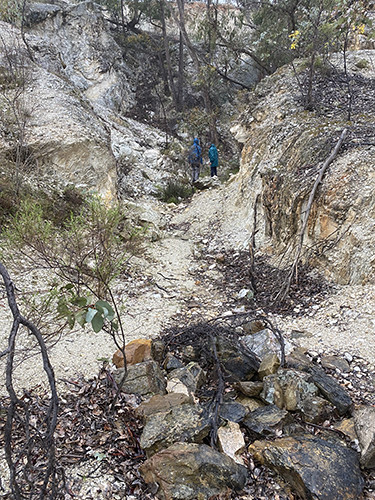
Looking into the Nuggetty Gold Mine.

From the Nuggetty Gold Mine, the walk continued in a westerly direction to the lunch spot at the Rock of Ages (Mt Moorul). This location also had a terrific scenic outlook. Walkers then proceeded along the Rock of Ages Track to the beginning point on the corner of Church Street and Davies Lane, Maldon.

Our next walk will be led by Bernard Slattery in the Goughs Range. See walks page for more info.

Posted in News | Comments Off on Nuggetty Range walk

Our friends the blackberries?

Walkers along the Moonlight Creek edge of Kalimna Park in the last week have been puzzled by the fact that DELWP seems to have gone to a lot of trouble to protect a mountain of blackberries from its recent management burn. This involved carving a fire break around the area, about 50 metres long, and grooming surrounding areas of vegetation.

The mountain of blackberries is more than it seems, however: it conceals–or mostly conceals–a nineteenth century ruin, with adjacent orchard. Looked at with that in mind, it’s quite an evocative sight.

You could walk past it and see only blackberries, but it's actually a historic site, probably dating from the 1870s. The wall of the ruin is to the right.

You could walk past it and see only blackberries, but it’s actually a historic site, probably dating from the 1870s. The wall of the ruin is to the right.

FOBIF had assumed that after the fire exercise had been finished, Parks Victoria would go back and remove the blackberries from the ruin. This is not the case: it’s a depressing fact that the weed is being left there, because it is seen as a deterrent to vandals who might be inclined to come and steal stone from the building.

This isn’t great news, given that there’s a big infestation of blackberry in nearby Moonlight Creek, and this particular weed has expanded its range dramatically since the breaking of the drought. But there’s logic in the managers’ position. Vandalism, in the form of graffiti on historic sites, and removal of relics and building materials, is an international problem. And, believe it or not, weeds have some kind of a record in protecting historic sites: as an example, an Aboriginal stone arrangement in the Western District was protected for many years by an infestation of thistles!


Posted in News | Comments Off on Our friends the blackberries?

Look again: there’s something there

Those interested in getting a better look at relatively obscure elements of our bushlands should get along to the Nature Abstracted exhibition at the Falkner Gallery in Templeton Street Castlemaine.

The exhibition of photographs by Bronwyn Silver concentrates on lichens, with a few quite spectacular moss photographs as well. Bronwyn was a major contributor to the FOBIF Guide to mosses in south eastern Australia.

Moss and lichen photos from the 'Nature abstracted' exhibition. The moss species are clearly identifiable, and the lichen photos are spectacularly evocative 'maps'.

Moss and lichen photos from the ‘Nature abstracted’ exhibition. The moss species are clearly identifiable, and the lichen photos are spectacularly evocative ‘landscape maps’.

To get an idea of what’s on offer, we can’t go past the artist’s own statement:

‘There are over 3000 known species of lichen in Australia; some are leafy, some are plant-like and some are flat. In this exhibition I have focussed on one of the flat types, Rhizcarpon geographicum, commonly known as map lichen.

‘This species is tightly encrusted to rock surfaces, comes in many colours and often has intricate abstract arrangements due to each lichen being surrounded by a black border and adjacent to another. Many of the rock surfaces covered with Rhizcarpon geographicum look like aerial maps.

‘Unless you watching out for this lichen, these subtle and often small formations can be easily overlooked. Once I became aware of its wonderful abstract qualities and sought it out, I found it to be quite common. It became an absorbing pastime to find and photograph the variety of its rock face displays.

‘Lichens are sometimes confused with moss but they are unrelated to moss or any other plant.  They represent one of the most remarkable alliances in nature: one species of alga or cyanobacteria or both and one species of fungus grow together in a mutually beneficial relationship known as symbiosis. These mysterious composite organisms can grow in widely diverse habitats and fossil lichens have been recorded back to the Mesozoic era (135-225 million years ago). They have been shown to remain largely unaffected when exposed to outer space.

‘Lichens can help with soil stabilization and the colonisation of barren environments.  Some animals eat them, insects shelter in them and people have used them for dyes, perfume, medicine and food. They form part of our aesthetic appreciation of the bush with their vivid colours, unusual shapes and wonderful patterns on the surfaces of rocks, trees, leaves and soil.

‘As well as lichens, I have included some photos of moss and eucalyptus leaves.  Despite these not having the strong abstract content of the map lichen photos, they share some of the same features. All are detailed images demonstrating the stunning beauty of our bushlands when viewed at close range. Moss species in each photo can be identified on request.’

The exhibition runs till June 21st.


Posted in Nature Observations | Comments Off on Look again: there’s something there

Kalimna fire

The Department of Environment, Land, Water and Fire completed its management burn at Kalimna Park on April 23. The treatment area is shown on the map below.

Kalimna Burn 2015


Representatives of FOBIF and the Friends of Kalimna Park have examined the site on several occasions since, and FOKP members walked the area with fire managers last Thursday. Managers Simon Brown and Paul Bates declared themselves satisfied that the Department’s fuel reduction objectives had been achieved.

Though locally severe, the burn was patchy, apparently inhibited by overcast, cool, still conditions. In any case, most of the area seems to carry a very low fuel load. Residents who have examined the area have expressed the view that the most serious damage done in the course of the operation was the crude preparatory track work. FOBIF has written to David Major, the responsible manager, about this [see our post], but has received no reply. In addition, in their laudable efforts to exclude an Eltham Copper Butterfly population from the burn, the managers have created a rough bare earth zone which could quickly become a damaging bike track unless quickly rehabilitated. We’re hoping this will be done within weeks.

Kalimna, late April 2015: a combination of low fuel loads and cool conditions created a patchy management burn.

Kalimna, late April 2015: a combination of low fuel loads and cool conditions created a patchy management burn.

As to the medium to long term effects of this fire, we’ll be visiting the area regularly in the coming months and reporting on what we see.

Meanwhile, the Inspector General for Emergency Management has finished his review of performance targets for fuel reduction on public land, and has submitted it to the State Government. We’ll report on details when they become available.

Posted in Fire Management, News | 2 Comments

FOBIF walks

Walks for young people

FOBIF are running lots of events for kids this year. We have bushwalks for small children with their families, youth walks for people who are secondary school age and a June School Holiday program based in the Castlemaine Botanical Gardens. 

Our flyer gives information about all of these events and contact details. Many of the events are free or free for members, so tell your friends and families so that we can foster a love and protection of our local wild places. Click here to see a report on our first young people’s walk for 2015.

FOBIF April walk

At Dunn's reef: a convenient guide was available for consultation on mosses  brought out by recent light rain.

At Dunn’s reef: a convenient guide was available for consultation on mosses brought out by recent light rain.

In spite of the months long dry, resilient moss came back after light rain in Muckleford in Mid April.

In spite of the months long dry, resilient moss came back after light rain in Muckleford in Mid April.

A wild and windy Sunday morning did not deter the 25 walkers who checked out the landscape of the Muckleford State Forest on Sunday 19th April. Capably led by Neville Cooper this 7 km walk starting from the Red, White and Blue Poppet Head Mine went past the proposed site for a Castlemaine Hot Rod Centre (CHRC) where plans for a Dynamic Vehicle Testing Facility, Events and Recreation development are being discussed, and then on to a tour of Dunn’s Reef and a quick lunch break. The understorey through this area is gradually recovering and the bird life was taking advantage of this – an always changing landscape!


Next month’s walk will be in the Nuggety Ranges. Check the program for details.

Posted in News | Comments Off on FOBIF walks

Kids walk and craft at Clinkers Hill

Eight families from across Castlemaine came together to hear about restoration work and environmental values at the Clinkers Hill Bushland reserve on Sunday the 26th April.

260415_2678

Elvyne explaining how to identify a Stringy Bark.

Elvyne Hogan gave an introduction to the site, outlining work done by the Victoria Gully Group, showing little ones which species of eucalypt that occupied the area lead to funding for a project with Connecting Country through their Yellow Box Woodland program.

Cassia Read then introduced the children and adults to the Cherry Ballart and collected insect galls which shortly afterwards became bush creatures with the addition of feathers, leaves and sticks found on site. After a snack and cuppa the children were encouraged to find some ‘habitat’, a big word when you’re four, for their creatures.

Kids and adults enjoyed the bush and company of other like minded families.

A lichen that Cassia pointed out on the walk back.

A lichen that Cassia pointed out on the walk back.

On the return walk Cassia contiuned to share her knowlege about the plant and moss species found in the reserve.

Thanks to Elvyne and Cassia for their time in presenting to our small people and their families.

(Click on photos below to enlarge.)

Posted in News | 1 Comment