State of the environment 3: this fact isn’t so fun

‘Species introduced to Australia from other regions and countries can have a crippling effect on economies and further impact the health and wellbeing of local communities. The cost to Australia of managing problem species over the past 50 years is in the order of hundreds of billions of dollars. These costs are borne both by the economy and the environment…

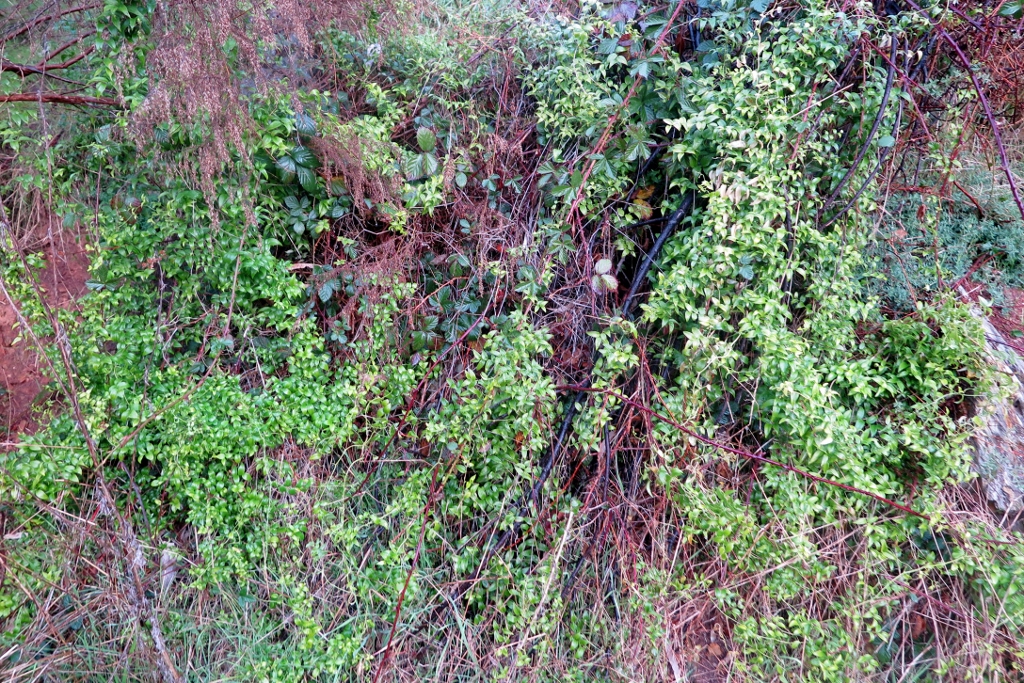
Bridal Creeper and Blackberry infestation on the Vaughan to Glenluce water race track, July 2022. Infestation along this stretch of the Loddon has doubled in size in 12 months.

‘There are 2,383 introduced species with at least one occurrence record in the Atlas of Living Australia based on observations up to and including 2020 (Table 9). The actual number of introduced species in Australia is expected to be much higher, because many occurrence datasets are not publicly available due to sensitivities, or are not aggregated in one place. For example, there are known to be more introduced plant species (27,500) in Australia than native species, of which around 2,800 have naturalised . As a general rule, around 10% of those that have naturalised in the wild are thought to become impactful invasive species.’

Posted in News | Comments Off on State of the environment 3: this fact isn’t so fun

OK, things are not great. In the mean time, from day to day…

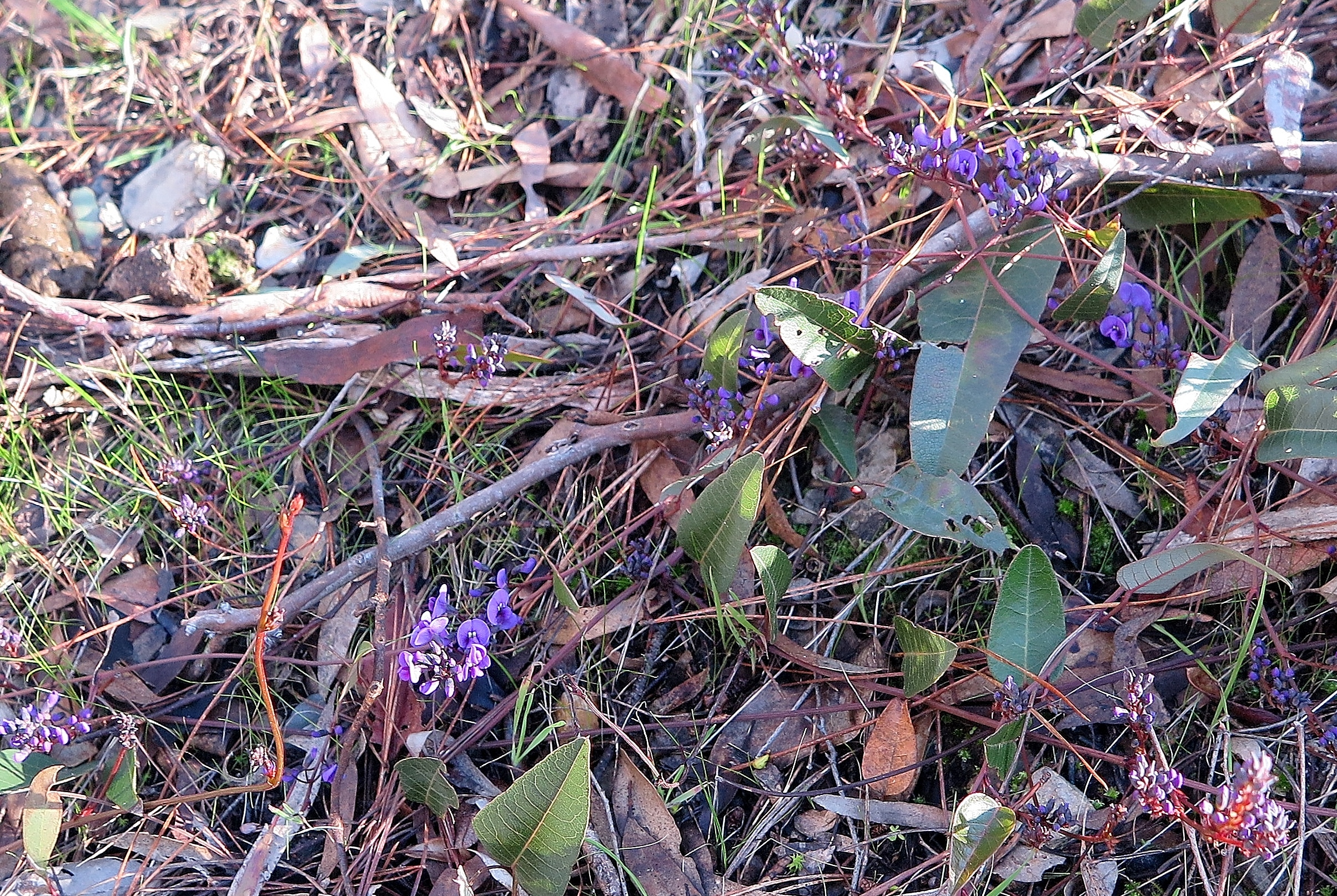
…From day to day, the signs of spring are popping up everywhere:

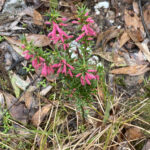
Hardenbergia on unpromising ground near the Welsh Village, July 21. In European terms, it’s winter…but it’s looking more and more like spring to us.

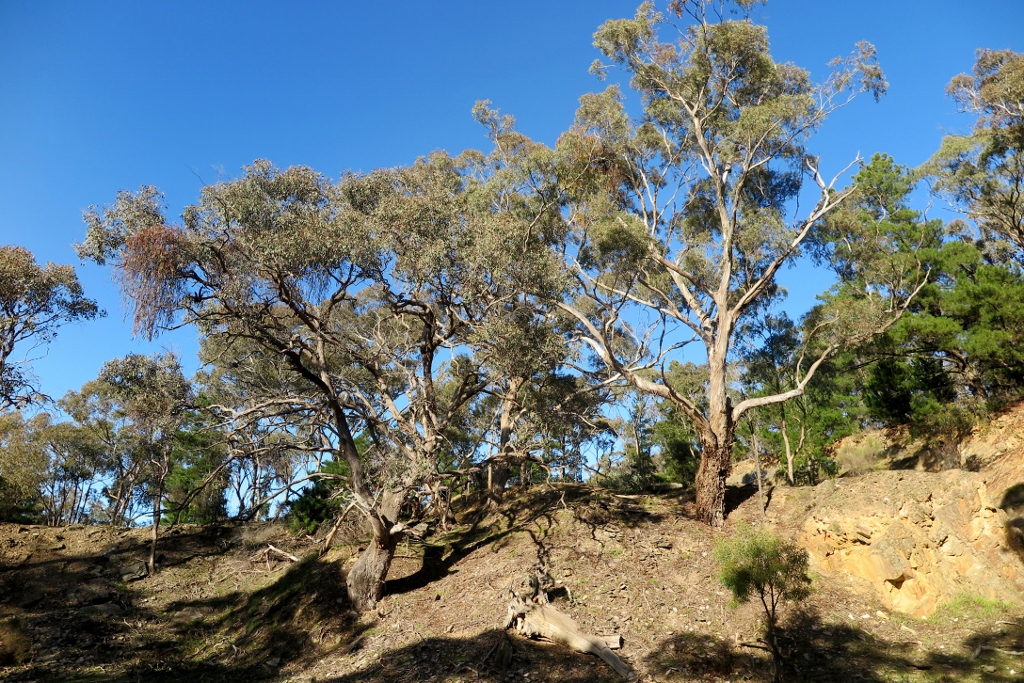
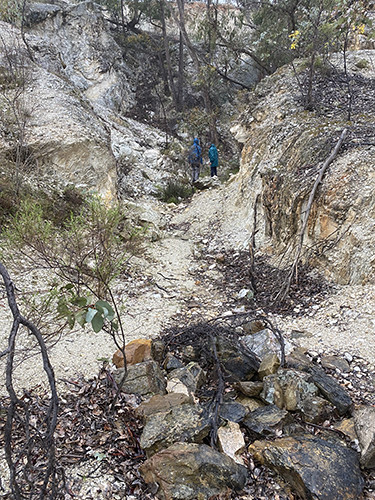
And just as heroic: Eucalypts growing out of nothing, on mullock heaps at the slate quarry near the Welsh Village:

Eucalypts finding nourishment in the rocks: to keep your morale up, avoid looking at the feral pines in the background.

Posted in News | 1 Comment

Sunshine…and a few clouds

Long Walk

A small group rocked up for FOBIF’s July long walk yesterday, undeterred by black clouds, sober weather forecasts and the prospect of an energetic 16 kms trek across hilly terrain. The weather actually delivered everything except snow: squally gusts, slippery tracks, curtains of rain and magnificent but threatening cloud formations—but mostly cool, pleasant walking conditions, with passages of unexpected sunshine.

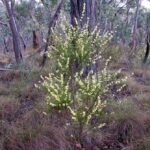
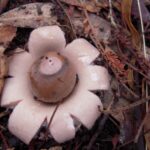
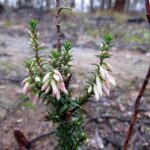
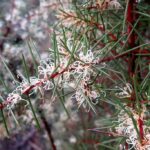
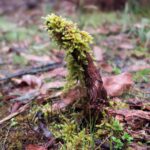
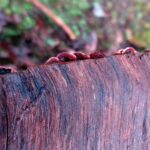
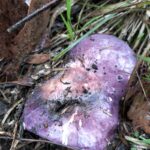
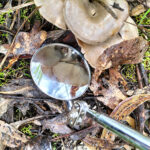
The stimulating route wound through some of the more obscure corners of the south end of the Diggings Park, including the high ridges north of Sebastopol Creek, slated for burning by DELWP in 2024 or 2025. This is one of the most intriguing and diverse sections of the Park. The walk ended in a stroll along the Loddon from Glenluce to Vaughan Springs. Fungi and mosses were abundant, five species of wattle are already in flower, and among other things there were great shows of Hakea and Common Heath.

The group took a little more than the predicted 6 hours to complete the course—OK, an hour more: that’s what happens when you pause too often to enjoy the scene.

Many thanks to Jeremy Holland for devising a terrifically interesting journey. Next month’s walk is in the Metcalfe NCR: check the program for details.

Short Walk

Eighteen people came along to the 5 km walk led by Frances Cincotta. The loop walk began at the junction of Lower Kangaroo Creek and Upper Kangaroo Creek Tracks in the Fryers Ridge Nature Conservation Reserve. The route was west along Upper Kangaroo Creek Track, north along Bottom Track, north along Fryers Ridge Road, and south-east along an unnamed Telecom Track back to the starting point.

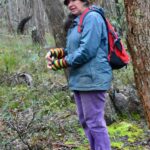
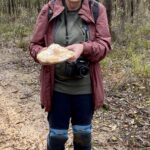
The pace was leisurely giving plenty of opportunity for flora observation and identification. Here Frances with her expert plant knowledge and fungi authority Joy Clusker were continuously helpful. Plants in flower included Ploughshare Wattle, Woolly Wattle, Rough Wattle, Golden Wattle, Bushy Needlewood, Common Correa, Common Heath and Downy Grevillea. Moss, lichens and fungi were abundant. There were plenty of other plants about to flower so the area is well worth another visit in the next few weeks.

Thanks to Frances and Mike for planning the walk and Joy, Judy and Philip for sending in photos.

Posted in News | Comments Off on Sunshine…and a few clouds

Does logging add to bushfire risk?

Are logged forests less prone to dangerous fire than forests left to themselves? There is a common perception that if you log a forest, you reduce the danger of severe bushfire. The question is, can this opinion be supported by the evidence?

Forest scientist David Lindenmayer cites ‘detailed studies following the 2009 fires and again after the 2019-20 Black Summer fires’ to say, no, the opposite is true: ‘logged forests always burn at greater severity than intact forests.’

Why?

‘At first glance, one might think that logging and then removing fallen trees would reduce fire risks. Why do peer-reviewed scientific studies show that the opposite is actually the case? First, logging removes solid tree trunks but leaves behind branches, tree heads, bark and other debris. These remaining fine and medium fuels add to fire risk. Second, logging dries forest soils for up to 80 years after cutting. Third, important moisture-maintaining plants like tree ferns are almost completely lost from logged forest. Fourth, forests that are logged and regenerated are much hotter and subject to more extreme conditions than intact forests. Fifth, the dense understorey plants in young logged forest can create “ladder” fuels that drive surface fires into the canopy….

‘Our research following the 2009 Black Saturday fires showed that approximately 10 years after logging there was a seven times increase in the risk of high-severity fire. This sharply elevated risk lasts for around 30 years (that is, until the forest is about 40 years old). It then declines. The lowest risk is for forests 100 or more years old. That is, old forests burn at significantly lower severity than young forests.’

Lindenmayer’s article was published in the Age on Saturday. He is strongly of the view that ‘salvage logging’ in the Wombat forest should be stopped: ‘today’.

You can find the article online here

It’s another contribution to what should be a debate, but isn’t: between those who believe that our forests can be managed into submission–by logging, control burning, etc; and those who believe that respect for the forests’ own control systems is the best way of guaranteeing their health.

Lindenmayer says that ‘all of the key scientific information on logging impacts has been provided to VicForests – but they have chosen to ignore the science.’ Why? it’s another example of the ongoing ‘dialogue of the deaf.’

Posted in Fire Management | 2 Comments

Two FOBIF walks next Sunday (July 17)

Short walk led by Frances Cincotta

We are going to park at the junction of Upper Kangaroo Creek Track and Lower Kangaroo Creek Track and will do a 5 km loop in which we will see Common Heath and Common Correa in flower, Woolly Wattle finishing up flowering and Rough Wattle just beginning to flower.

Meet at 9:30 am in Castlemaine at the Community House in Templeton Street or 9:45 am in Taradale at the start of Old Drummond Road on the opposite side of the road to the service station. We will then go in convoy to the start of the walk. 

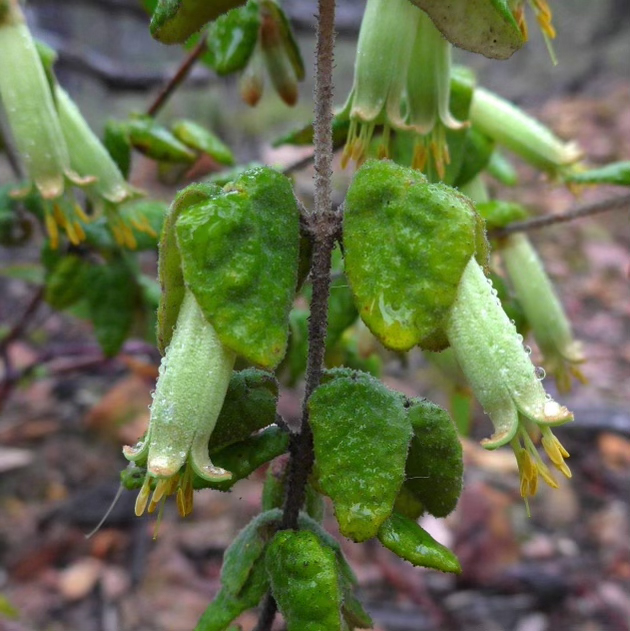
Correa reflexa (Common Correa)

Long walk led by Jeremy Holland

Being 16 km in distance this walk is designed for those who enjoy a more energetic walk at a good steady pace.

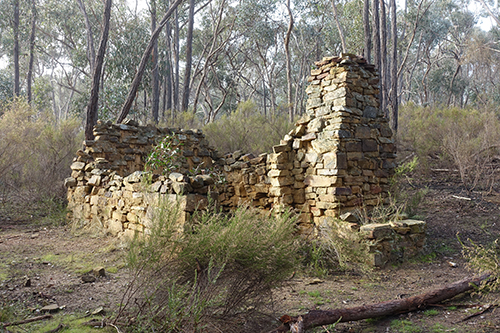
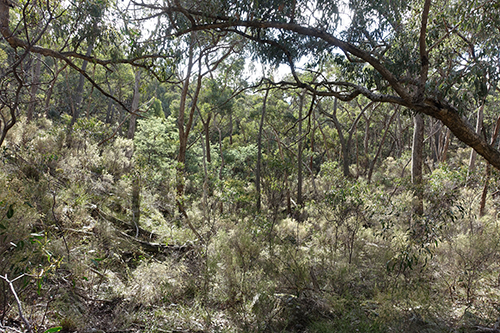
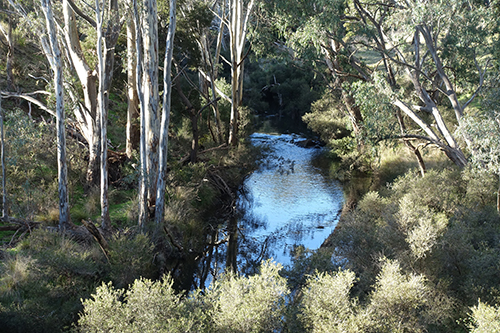
The route has been tweaked a bit and a mixture of tracks and off-track in gullies and ridges gives plenty of interest and variety. (See photos below.) 

Duration is estimated at 6 hours total being 16 km@4 km/hr = 4 hours plus 1 hour for slower off-track sections plus 1 hour for breaks.

Remember we leave the Community House in Templeton Street at 9.00 am before driving in convoy to Vaughan Springs.

Posted in Walks | 2 Comments