New Biodiversity Council

This news arrived last Tuesday and could be worth following to see how the huge environmental problems we all face can be successfully tackled …

Welcome to the first Biodiversity Council news!  

Biodiversity Council

The Australian Government’s response to Graeme Samuel’s 2020 review of our Federal environmental laws promises substantial advances. Minister Plibersek has announced an independent Federal Environmental Protection Agency, strong national standards including for forests (which are currently exempted from close scrutiny through Regional Forest Agreements), and regional planning to ensure …

Right now, Australia’s biodiversity is seeing catastrophic declines. This presents a major threat to all of us.

To make a difference, leading experts including Indigenous knowledge holders have united with philanthropists and 11 universities to form a new, independent council to bring forward the key issues facing our biodiversity and the solutions needed to halt its decline.

Our vision is that Australia’s biodiversity is recognised and valued nationally and globally as a priceless heritage, a foundation for our life and a defining feature of our country, and its future is recovered or secured.

Many solutions exist, and we can find others. But making these a reality requires working together.

So we’re working with communities, Traditional Owners, government, farmers and industries to solve Australia’s biodiversity crisis.

Posted in News | Comments Off on New Biodiversity Council

FOBIF turns 25 show

Patrick Kavanagh’s contribution to the FOBIF turns 25 show. 

The first sound we heard when we first walked onto our place in 1994 was the haunting call of White-winged Choughs, Mooyin-unkil in Dja Dja Wurrung. They are such a presence in our bush at Strangways that we really imagine them as the landlords and landladies. They delight us constantly with their antics, especially when they are building their wonderful mud nests and come into our bird baths covered with mud from their labours.

Posted in FOBIF turns 25, News | 1 Comment

FOBIF turns 25

This is Bernard Slattery’s contribution to the FOBIF turns 25 show.

Disaster chic

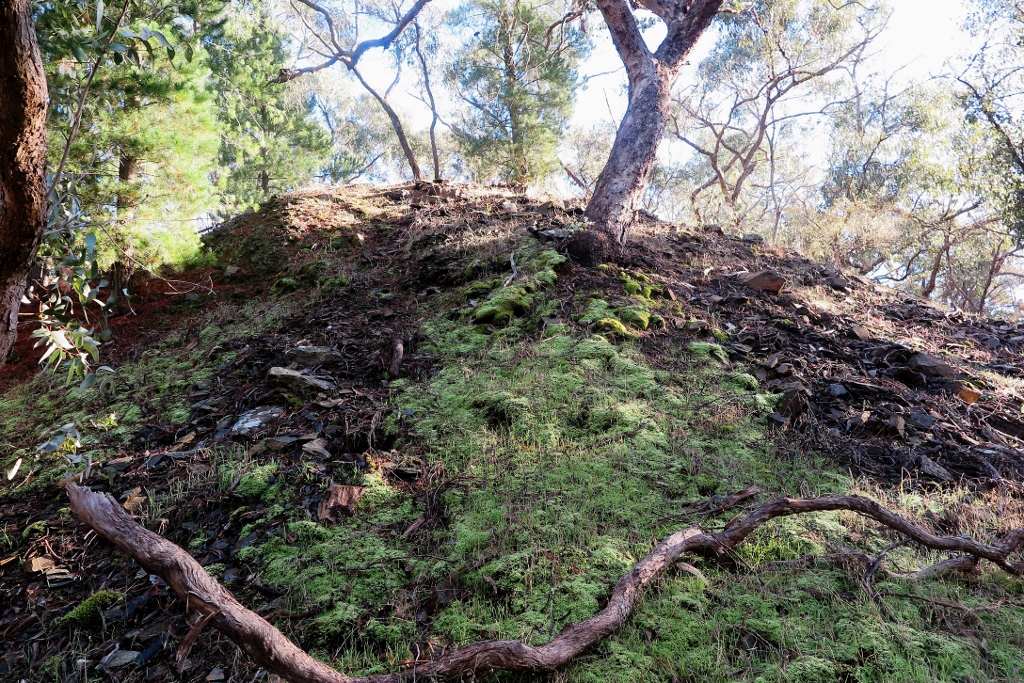
Bushland reserves are often blocks of land left over after being thoroughly thrashed: having been exploited to the hilt, they’re rather flatteringly named ‘reserves’ and left to a kind of benign neglect. Battered though they are, some of them are amazing biodiversity reserves.

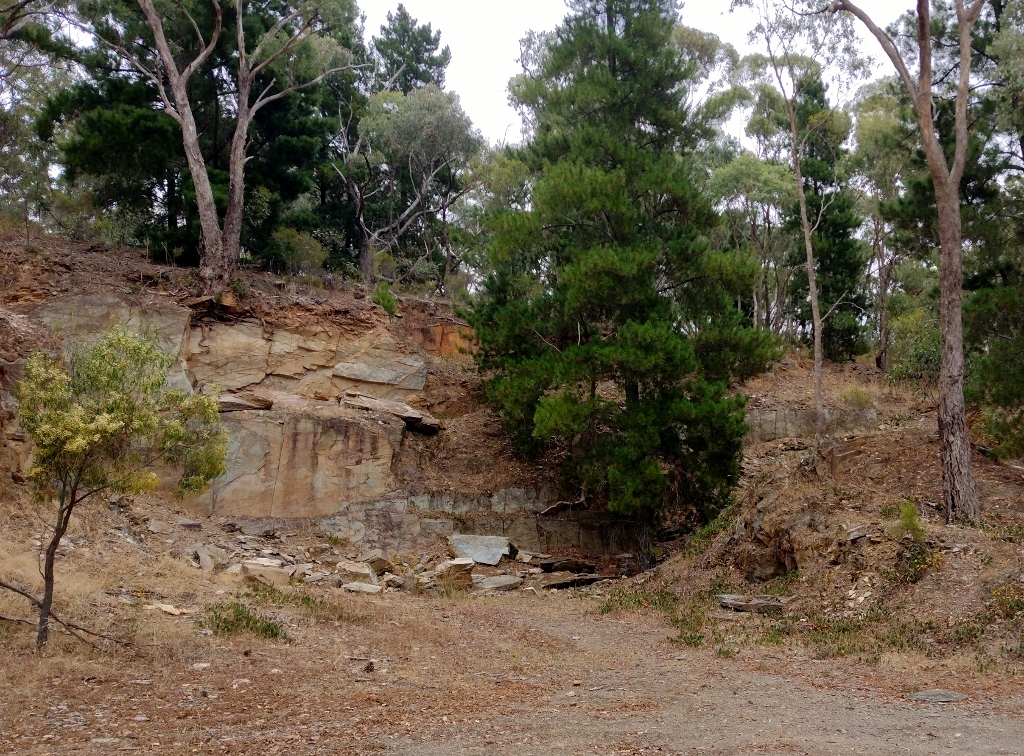
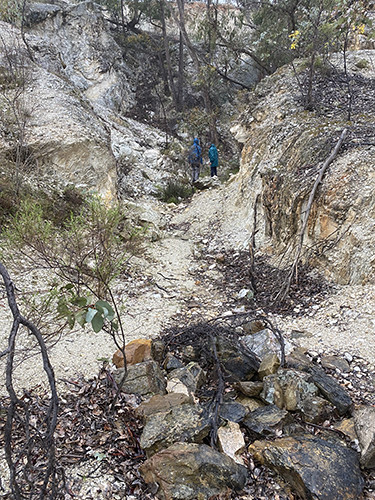
There are quite a few in this region, and I used to have a compulsion to cycle around the country checking them out. One of the most striking is the disused mine and quarry workings at the south end of Blanket Gully road: Guildford Bushland Reserve.

What can you say about this amazing place? It’s hard not to be horrified by the impression that some monster has torn through it in a fury, then left without a backward look. In a way this is true: the site seems to be a relic of times when miners weren’t obliged to rehabilitate their works.

On the other hand, there’s something mesmerising about the place: the colours, the extraordinary scars torn through the landscape, the heroic efforts of the vegetation to re-establish itself—all this tells a dramatic story, and, what’s more, a story which has a way to go.

And there’s a certain embarrassment in the site, as well. We may choose to be disapproving of past practices, but there’s a bit of truth in the aggressive bumper sticker proclaiming that ‘everything you own, wear, use, and eat has been cut down or dug up from the ground’. This site is challenge: ‘you don’t like it? Well, do better.’

As explained in a previous post all contributions to the FOBIF turns 25 exhibition are welcome and will be posted on this site. A selection will be chosen for display in at the Arts Hub, which will run between 25 February to 13 March 2023. You can see the current contributions here.

Posted in FOBIF turns 25, News | Comments Off on FOBIF turns 25

Fuel breaks: the story so far

Local enviro groups have been briefed on the progress of Strategic Fuel Breaks in the region. As with most things to do with fire and biodiversity management, the picture so far is patchy and its final effects hard to assess.

On the one hand, the quality of DELWP consultation on the project has been unusually good, and every attempt seems to have been made to adjust works to local conditions.

On the other, we have to face the fact that, like every state wide project, this one has a kind of juggernaut effect: lines have been drawn on maps, and local adjustments to these lines—if any adjustments are possible—are going to have to be hard fought.

FOBIF’s immediate concerns include the following:

  • The fuel breaks proposed for the Fryers Ridge and Porcupine Ridge. We have been told that works in these areas will not be started for at least 12 months, but the prospect of their going ahead at all brings no joy to anyone interested in local biodiversity. Although we are fully aware of the importance of firefighter access and safety in these areas, we’re not convinced that it’s best achieved by mowing down the bush. FOBIF has suggested alternatives to slashing and mulching in sensitive areas: these seem to have gone nowhere
  • Monitoring: We believe that baseline monitoring of Break sites, and ongoing monitoring of works, are essential. Recent discussions suggest that these will not be as rigorously implemented as we’d like. We’re not sure if these works are governed by the transparency requirements of the Code of Practice for Bushfire Management. They should be…but on the other hand, the Code is not always followed.
  • Methods: Experimental use of brushcutters to manage vegetation along Bells Lane track in the Muckleford forest suggests that this method is as effective as tractor mounted machinery, and less damaging in terms of soil disturbance and weed growth. We’re interested in seeing it as the preferred method.

FOBIF has repeatedly made it clear we are not opposed to fire breaks close to settlements. As to more remote forested areas, we still have concerns on a number of levels, mainly to do with the thorny problem of reconciling safety and biodiversity concerns. Are these two objectives irreconcilable? We are occasionally invited to believe so  by  hard heads in land management, and it’s sobering to read in IGEM’s report into the 2019-20 fire season the suggestion that people should be prepared to ‘create safety by navigating complex trade-offs between irreconcilable goals.’ The same report, however, suggests that greater resourcing for land management might get better results all round. We’d agree with that.

We’ve been informed that this region has been a bit of a pilot project for fuel breaks, and that future works may not be as rigorously considered and implemented as they have so far in this area. That’s a very disturbing thought. We’ll see. We believe that any hope of getting a half way decent result on the ‘irreconcilable goals’ requires more, not less, attention to detail.

In the meantime, we hope that consultations on these and other matters can continue.

Posted in News | 1 Comment

What do we know, and where does it lead us?

On the subject of monitoring (see above), how do you decide whether to continue with a project you’ve been working on?

Well, you probably check to see how successful you’ve been with your approach so far. On this, we offer the following two apparently contradictory findings of the report on the 2020 fire season by the Inspector General for Emergency Management (IGEM):

Finding 4.19 Forest Fire Management Victoria has established a strong foundation of monitoring, evaluation and research that has resulted in regular reporting against clear objectives.

Finding 4.21 The effectiveness of Victoria’s fuel management program cannot be comprehensively measured due to a lack of measurable objectives adopted by all land and fire agencies, gaps in the current tools and models used, and a lack of capacity and capability to support the requirements of this work across the sector.’

How do these two findings, which are printed on the same page, sit together? We’re not sure.

Posted in News | Comments Off on What do we know, and where does it lead us?