Fuel breaks: the story so far

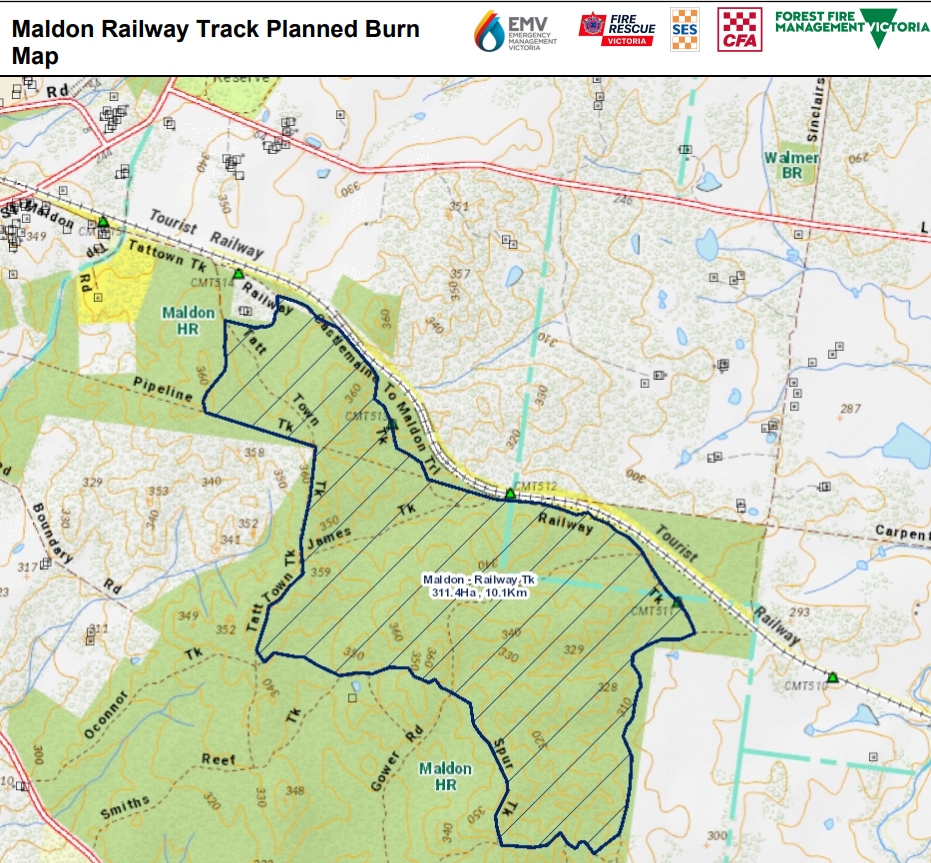
Local enviro groups have been briefed on the progress of Strategic Fuel Breaks in the region. As with most things to do with fire and biodiversity management, the picture so far is patchy and its final effects hard to assess.

On the one hand, the quality of DELWP consultation on the project has been unusually good, and every attempt seems to have been made to adjust works to local conditions.

On the other, we have to face the fact that, like every state wide project, this one has a kind of juggernaut effect: lines have been drawn on maps, and local adjustments to these lines—if any adjustments are possible—are going to have to be hard fought.

FOBIF’s immediate concerns include the following:

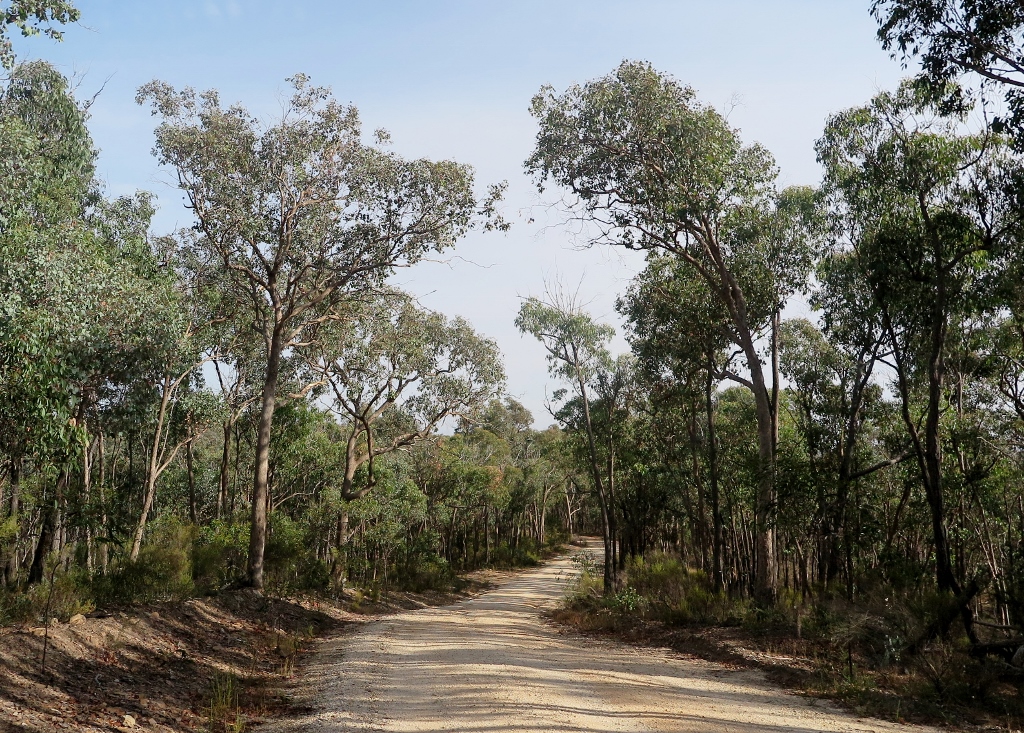
  • The fuel breaks proposed for the Fryers Ridge and Porcupine Ridge. We have been told that works in these areas will not be started for at least 12 months, but the prospect of their going ahead at all brings no joy to anyone interested in local biodiversity. Although we are fully aware of the importance of firefighter access and safety in these areas, we’re not convinced that it’s best achieved by mowing down the bush. FOBIF has suggested alternatives to slashing and mulching in sensitive areas: these seem to have gone nowhere
  • Monitoring: We believe that baseline monitoring of Break sites, and ongoing monitoring of works, are essential. Recent discussions suggest that these will not be as rigorously implemented as we’d like. We’re not sure if these works are governed by the transparency requirements of the Code of Practice for Bushfire Management. They should be…but on the other hand, the Code is not always followed.
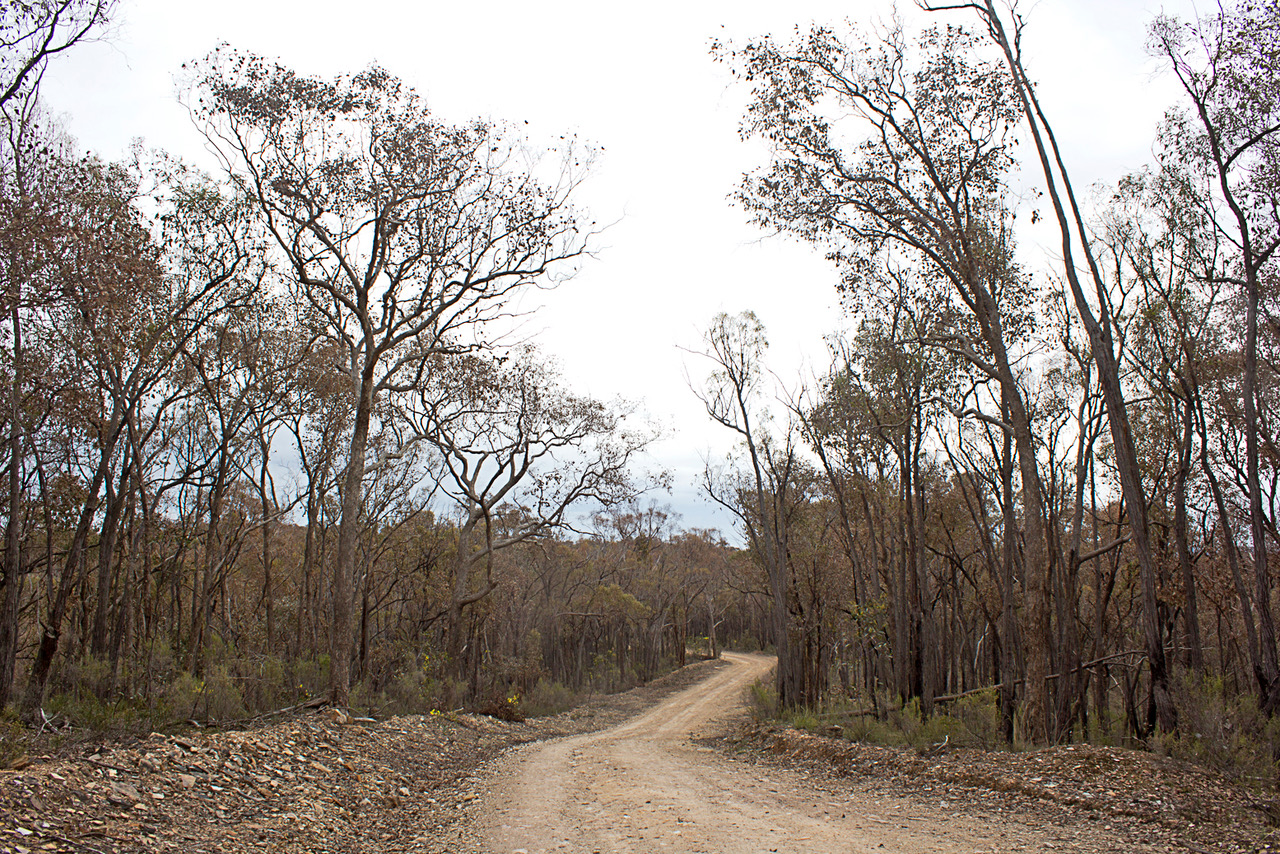
  • Methods: Experimental use of brushcutters to manage vegetation along Bells Lane track in the Muckleford forest suggests that this method is as effective as tractor mounted machinery, and less damaging in terms of soil disturbance and weed growth. We’re interested in seeing it as the preferred method.

FOBIF has repeatedly made it clear we are not opposed to fire breaks close to settlements. As to more remote forested areas, we still have concerns on a number of levels, mainly to do with the thorny problem of reconciling safety and biodiversity concerns. Are these two objectives irreconcilable? We are occasionally invited to believe so  by  hard heads in land management, and it’s sobering to read in IGEM’s report into the 2019-20 fire season the suggestion that people should be prepared to ‘create safety by navigating complex trade-offs between irreconcilable goals.’ The same report, however, suggests that greater resourcing for land management might get better results all round. We’d agree with that.

We’ve been informed that this region has been a bit of a pilot project for fuel breaks, and that future works may not be as rigorously considered and implemented as they have so far in this area. That’s a very disturbing thought. We’ll see. We believe that any hope of getting a half way decent result on the ‘irreconcilable goals’ requires more, not less, attention to detail.

In the meantime, we hope that consultations on these and other matters can continue.

Posted in News | 1 Comment

What do we know, and where does it lead us?

On the subject of monitoring (see above), how do you decide whether to continue with a project you’ve been working on?

Well, you probably check to see how successful you’ve been with your approach so far. On this, we offer the following two apparently contradictory findings of the report on the 2020 fire season by the Inspector General for Emergency Management (IGEM):

Finding 4.19 Forest Fire Management Victoria has established a strong foundation of monitoring, evaluation and research that has resulted in regular reporting against clear objectives.

Finding 4.21 The effectiveness of Victoria’s fuel management program cannot be comprehensively measured due to a lack of measurable objectives adopted by all land and fire agencies, gaps in the current tools and models used, and a lack of capacity and capability to support the requirements of this work across the sector.’

How do these two findings, which are printed on the same page, sit together? We’re not sure.

Posted in News | Comments Off on What do we know, and where does it lead us?

Oh no–another menace

Not wanting to be depressing or anything as the ‘festive season’ approaches, but here’s the Department of Agriculture on a potentially serious local menace:

‘Chilean needle grass is becoming a serious pasture and environmental weed in south-eastern Australia. It is very invasive and forms dense stands in pastures, bushland and roadsides.

‘It tolerates drought and heavy grazing, giving it great potential to spread and over-run existing vegetation. The potential distribution of Chilean needle grass in Australia is estimated to exceed 40 million hectares.’

On a more constructive note, have a look at the sheet below, produced by Margaret Panter to help landowners identify and respond to the needlegrass menace (click on it to see it full size):

Click to see full size.


Posted in News | Comments Off on Oh no–another menace

FOBIF turns 25 show

This is Alex Panelli’s contribution to the FOBIF turns 25 show.

What matters to me about this country is its happening. It happens with me now, up close and all around. I am immersed in it, psychologically entangled. There are foreshadowings here and absences; offerings and traces.

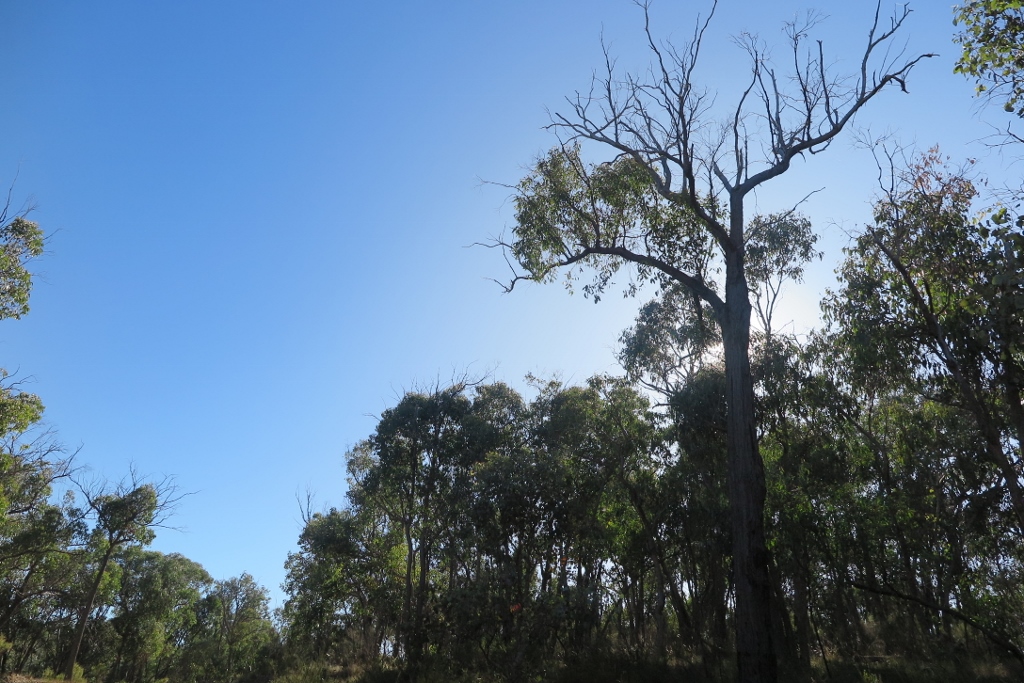
It was in my childhood and with my family that I first came – to an ancestral place, seemingly empty, waiting for us. Much later, in 2009, it drew me again. I came, this time alone. At first then I took photos mainly of flowers, but there were also the slim trunks of Candlebarks wavering in the glow that comes through fog when the sun is rising. I moved on to tangled bush and singular trees, still often in fog or deeply shaded frost with the sun beyond them. I lay on the ground, took photos through grass. In the dust of summer, photos of shadows, myself amongst them. Torsos of bravely dying trees, and of human things discarded. Of fallen leaves in amber water in the hollows of a stream, and of reflections on a pool of water’s surface.

Looking at these things later, I was disappointed. I am not a great photographer but that was not the problem. Slowly and more deeply I came to realise, however consummate a photo may appear, each thing that joins our gaze – the intense self-presence of an opening flower, the living poise of a bird, whether at rest or in motion, or the decaying, life-giving looming of an ancient tree that waits to fall – they are with us, we meet. Each meeting – a mutual exposure – we are in it, it can surprise us, it leaves a trace. And each one joins us intimately with all that is unfocussed and still unsaid around it. I would like my photos to acknowledge this.

Click on the thumbnail sized photos to enlarge.

As explained in a previous post all contributions to the FOBIF turns 25 exhibition are welcome and will be posted on this site. A selection will be chosen for display in at the Arts Hub, which will run between 25 February to 13 March 2023. 

Posted in FOBIF turns 25 | Comments Off on FOBIF turns 25 show

2022 FOBIF breakup

Friends of the Box-Ironbark Forests is having a BBQ at Bronwyn Silver’s place in Walmer on Monday 12 December.

It starts at 6 pm and the address is 1036 Muckleford-Walmer Road, Walmer.

BYO
*  food to share, including something for the BBQ if you like
*  plates, glasses, cutlery
*  drinks
*  a chair

All FOBIF members and supporters are welcome. Enquires Bronwyn: 0448751111.

2021 Fobif breakup

Posted in News | 1 Comment