It’s winter in Mount Alexander

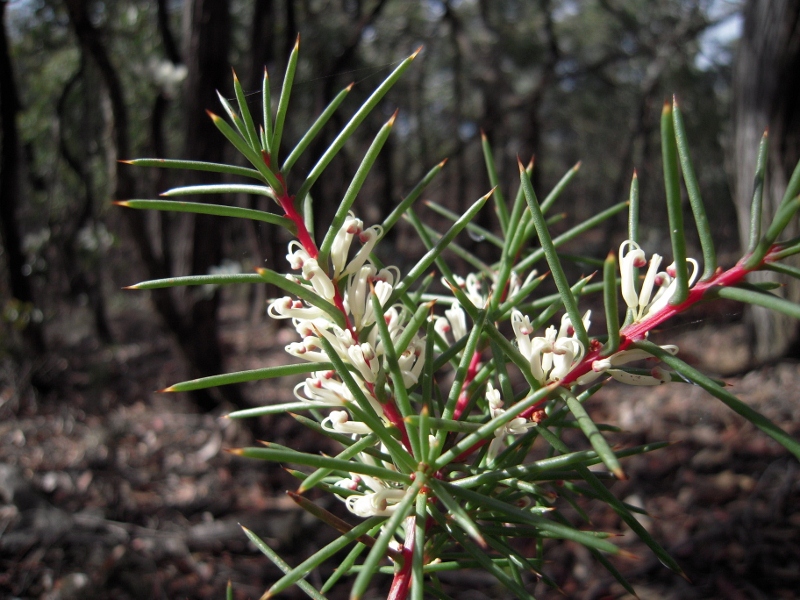
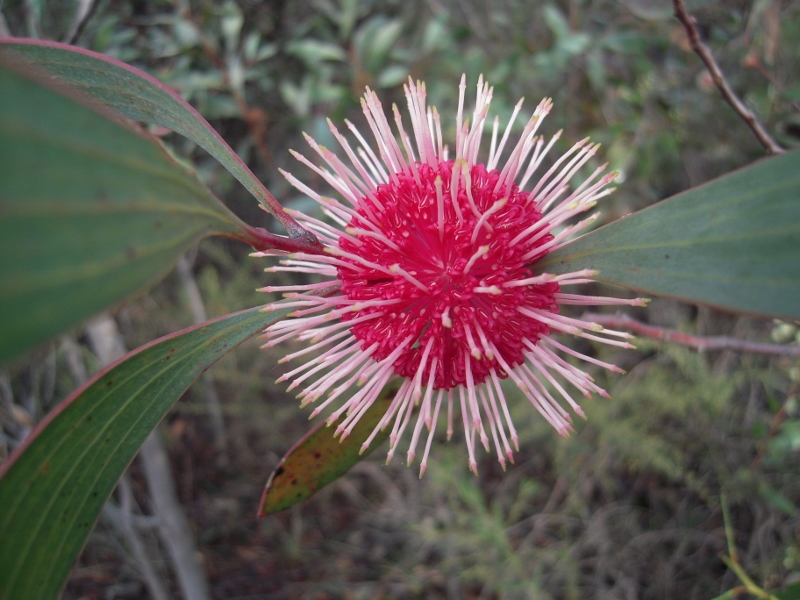
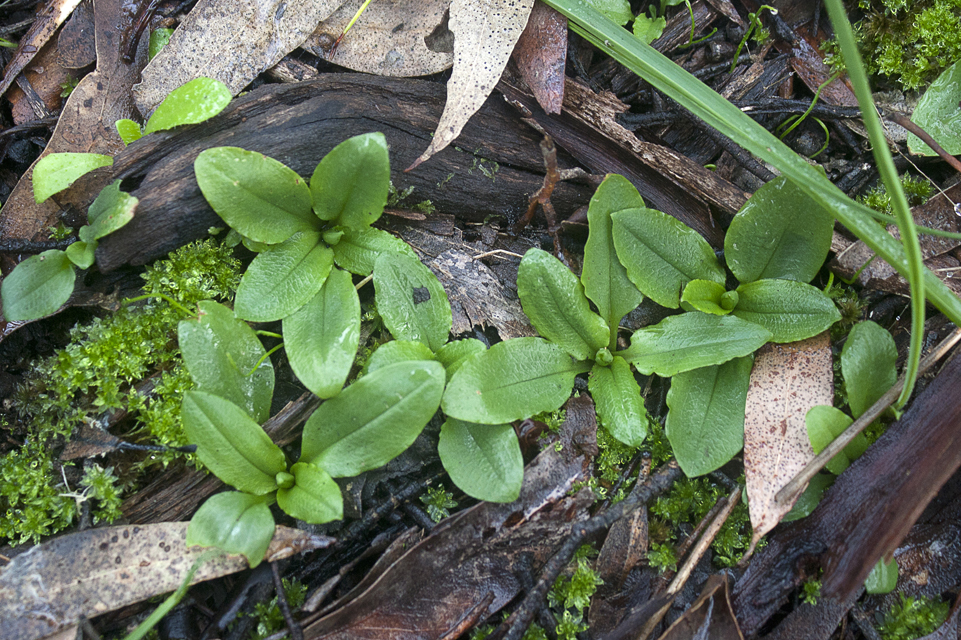
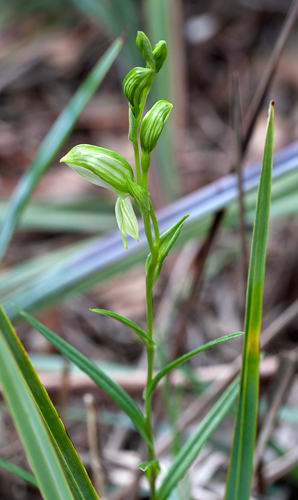
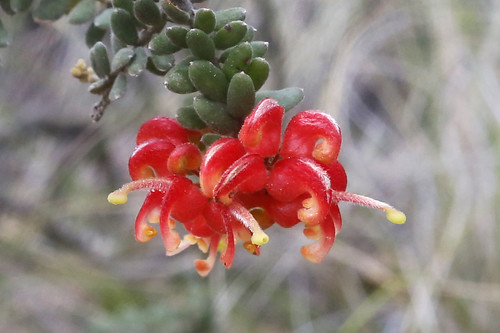
It looks like we’re going to get another real winter: cold, and a sense of moisture in the air, whether as mist, drizzle or proper rain. There’s still plenty to see in the bush, however, even as we approach the shortest day–patches of persistent or early flowers [Spreading wattle, Cranberry heath, Hakea, Wahlenbergia, Parsons Bands orchids, Chocolate lilies] and lots of interesting fungi and mosses. And if you’re looking closely, you notice that even the commonest sights on the ground are worth looking at: drops of water on a leaf, for example.

Red Box leaf, Sebastopol Creek. Photo by Bronwyn Silver, 6 June 2011


Posted in Nature Observations | Comments Off on It’s winter in Mount Alexander

Alteration to DSE planned burning structure

In line with changes to its Code of Practice, and with recommendations of the Bushfire Royal Commission, DSE has reduced the number of fire management zones to four:

  1. Asset Protection
  2. Strategic wildfire moderation
  3. Ecological management
  4. Prescribed burning exclusion

Asset Protection zones are those which on the whole are treated most severely, ecologically speaking, because they are designed to protect human settlement. Nevertheless, all zones are supposed to be treated in a way which respects the environment: obviously there is no point in reducing the bush to a desert, or a dried out scrub even more fire prone than it was before.

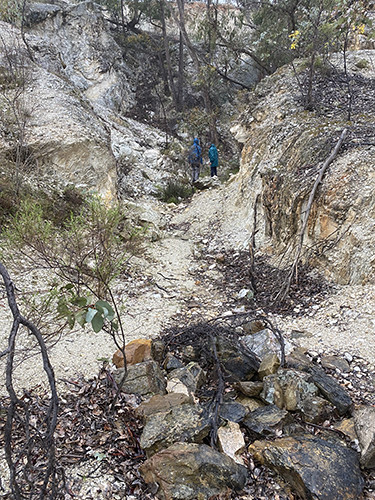
DSE burned a section of the Diggings Park in Autumn 2010. FOBIF believes the burn was so severe in parts that it killed large trees, and caused massive regeneration of stringybark seedlings. The net result is probably an increase in fuel load in the zone. The picture was taken in November 2010


We persist in the belief that with sensible policies over a range of issues [including controls on building in fire prone areas] safety and ecological health can be achieved. It’s not yet clear how the new zoning system will affect practice on the ground.

Posted in News | 1 Comment

North Central Enviro groups meet with DSE over fire

Richard Goonan met with Alan Goodwin (DSE state wide burning program manager) and Damian Drum’s assistant in May to discuss fuel reduction issues. Richard is part of the North Central Victorian Combined Environment Groups [NCVCEG]. FOBIF has generally supported the positions taken by the CEG on the fire issue. Richard has also written a detailed account of the fire which burnt into Bendigo on Black Saturday 2009, in which his own house was destroyed. This account can be read  at https://www.fobif.org.au/admin/wp-content/uploads/2011/02/Bracewell-St-Fire-Bendigo_Landscape-Attrinbute-Mapping-and-Analysis-Report.pdf.

Reporting on the generally positive meeting, Richard says that ‘It has become apparent that far better outcomes could be achieved if the [DSE] burn team had better direction about what or what not to burn, and if biodiversity assets were explicitly recognised… Greater emphasis needs to be placed on alternatives to burning especially in this region, where fuel levels are generally low and biodiversity impacts potentially very high.’

At the meeting Richard presented a CEG account of appropriate approaches to fire management. We produce part of it below, for the interest of our readers. FOBIF’s own position on fire can be read in our Documents section [see, for example, our submission to the Royal Commission at https://www.fobif.org.au/documents_2_2587903812.pdf ] . We believe that Box Ironbark woodlands can under some circumstances be very dangerous: but that each area should be treated on its own merits, and that our bushlands should not be treated in the same way as forests in other parts of the state.

‘Fire Management Principles [for Box Ironbark country]:

  • ‘Fuel layers are discontinuous (heterogeneous), generally lacking fine grassy fuels, with significant mineral earth fuel breaks such as roads, tracks, and utility easements throughout the forest.

Continue reading

Posted in Fire Management | Comments Off on North Central Enviro groups meet with DSE over fire

Fire consultation process starts

The Victorian Environment Assessment Council pointed out in its recent report that DSE possesses ‘vast’ amounts of information about forest ecology, but suggested that DSE workers are not necessarily in possession of this knowldge when it recommended the implementation of training schemes for those working in the bush [see item below].

This is one problem with DSE and Parks Victoria land management practices. The other one is intense political pressure to conduct large fuel reduction burns without particular regard to local conditions.

In this context, DSE has begun to plan the next stage of its fuel reduction strategy by inviting interested groups, including FOBIF, to participate in this planning process.

FOBIF’s position on fire has been consistent for many years: use of fire as a management tool should be no different from any other management activity. That is, it should be guided by the best available knowledge; and each exercise should be conducted with the lessons of the previous one in mind, in the effort to improve results, both for safety and for the bush environment.

This is, in fact, DSE’s own policy of adaptive management. Readers of our statements on fire [see https://www.fobif.org.au/documents/ and recent posts under Fire Management at https://www.fobif.org.au/category/fire-management/ ] will know of our dissatisfaction with the way it has been implemented. We will participate in the consultation process, however, in the belief that DSE and Parks officers want to do the best job possible with the resources available. Our submission is printed above.

Posted in News | Comments Off on Fire consultation process starts

Council to promote Environment Strategy

Mount Alexander Council budget papers show that $23,000 has been set aside for community education in relation to land management and, we assume, to help with the implementation of the recently adopted Environment Strategy. It seems that the money is to be used to employ a project officer for six months to promote the Shire’s recently released Environment Strategy.

FOBIF supports this initiative, but we believe that it doesn’t go far enough, given the challenges such an officer will face. It seems that it is envisaged that the officer will be involved in producing an information kit, running workshops, promoting community gardens, and possibly being involved in the proposed Roadside Management  Plan review.

The success of the Environment Strategy is dependent on Council being able to employ someone who can communicate sensibly and practically with landholders and other ratepayers about Council’s environment objectives.

Roadside management, with its double objective of preserving biodiversity and keeping consideration of fire safety, is an especially complicated matter which has caused some anxiety in the past. It seems to us that only a properly qualified Council officer with good ability to see all sides of this challenge and communicate in a down to earth matter with residents can bring a proper management program to success.

Such an officer would need more than six months to make any headway with these questions. In addition, it is harder to attract good candidates for jobs which are perceived to have only short term viability.

An additional consideration: if Council community education initiatives only reduce the number of people chucking their rubbish into the bush, the taxpayer would be saved a bit of money.

Posted in News | Comments Off on Council to promote Environment Strategy