Reports come flooding in

Coincidentally, the Comrie Report on the 2010-11 floods has just been released. Although the report concentrates on the performance of emergency services, it does contain some enlightening remarks which underline Damian Wells’s  argument. For example:

‘It is important to understand that the application of appropriate land use planning controls as part of municipal planning schemes is considered to be an effective means of minimising flood damage. Municipal councils are required to take into account flood risk when considering appropriate development on floodplains.’ [page 6]

Expedition Pass spillway, January 2010. The sheer volume of water guarantees that flood plains will flood. Repeated enquiries have urged tighter building controls on floodplains, to minimise asset damage. Photo: Bernard Slattery

The Comrie report makes reference to a document with which we were not familiar: the 1998 Victoria Flood Management Strategy. This document, currently under revision, is available here

Among other things, the Strategy says

‘Appropriate land use strategies are the most effective means of reducing the growth in flood risk and damages. With the introduction of Victoria Planning Provisions [VPPS], the ability of Victorian councils to carry out their land use planning role will be strengthened. The VPPs provide uniform statewide policy and control for development and works on floodplains. They require that flood risk must be considered in the preparation of planning schemes and in making land use planning decisions, and that land affected by flooding must be shown on planning scheme maps.’ [Page 9]

It seems from the substance of Damian Wells’s talk to the AGM that this has not happened.

The Parliamentary Environment and Natural Resources committee is due to present a report on the floods later in the year.


Posted in News | Comments Off on Reports come flooding in

FOBIF Elections 2011

At the AGM on Monday July 11, Public Officer Chris Morris announced that the following nominations had been received before the meeting:

President: Marie Jones

Vice President: Nev Cooper

Secretary: Bernard Slattery

Treasurer: Bronwyn Silver

Committee Members: Frank Panter, Kylie McIndoe

As the number of nominated candidates equalled the number of positions on the committee, according to the Constitution, the above were declared elected.


Posted in News | Comments Off on FOBIF Elections 2011

What’s happening up at Morgan’s Track?

The rather sad sign below is a marker on Morgan’s Track Chewton of the Ecological Thinnings Trial conducted by Parks Victoria beginning in 2003.

Despondent sign at Morgan's Track, July 2011: we hope that ongoing research on this trial will prove valuable. We have been assured that the research continues. Photo by Bronwyn Silver

The trial was proposed by the Environment Conservation Council when it recommended the establishment of new Box Ironbark reserves in 2001. The intention is to experimentally aim at the restoration of a pre white settlement forest structure by strategically thinning selected plots in the aim of getting a woodland of more widely spaced, larger trees, and a healthier, more diverse understory. In fact, our woodlands are on the whole gradually thinning themselves as weaker trees die: so the trial is an effort to speed up the work of Nature.

FOBIF did not oppose the trials, even though we thought that in our region they were misconceived, and the money and resources could have been better spent elsewhere—on weed control, for example. We did concede, however, that the accompanying monitoring and research could prove very valuable for our understanding of these ecosystems. For a more detailed account of our views, you can read an item from our 2008 newsletter here.

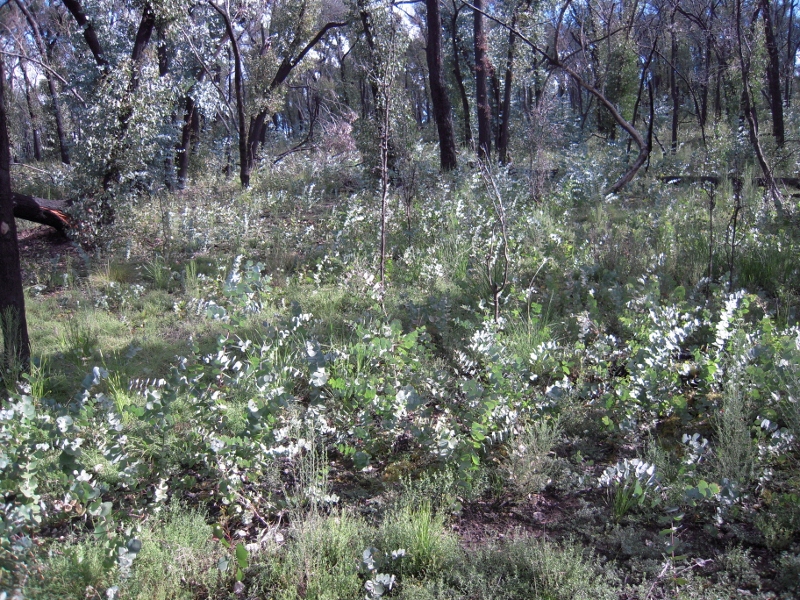
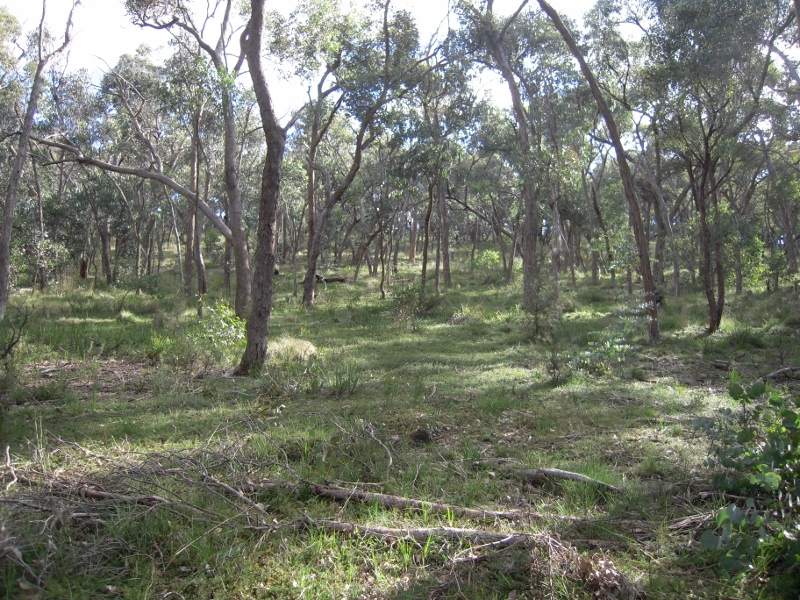
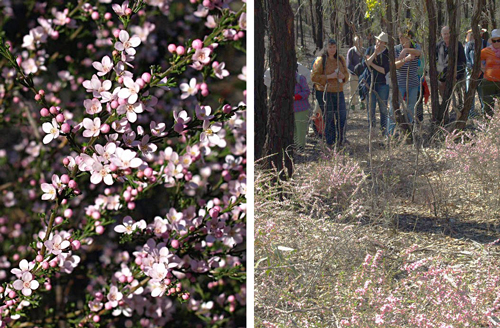
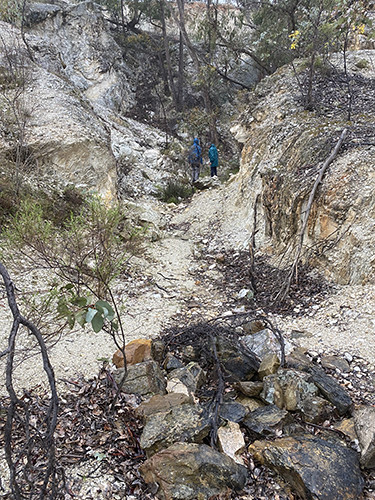
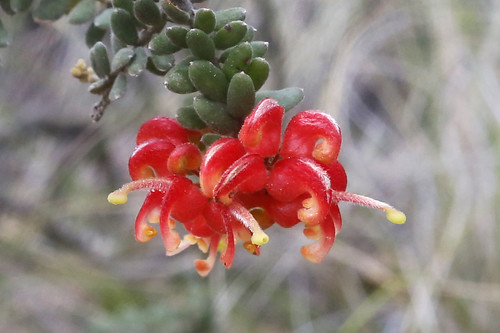
FOBIF members did a prowl around the Morgan’s site on July 8. This area has always been rich in wildflowers, and it looks like the coming spring will not disappoint. Even in the dead of winter there’s plenty to see, as the pictures show.

Even in the dead of winter, there's plenty to see at Morgan's Track. Photos by Bronwyn Silver, July 2011

And the effect of the trial? Monitoring up to 2008 cautiously suggested that the thinning had up to that point been positive in encouraging understorey diversity.

Continue reading

Posted in News | Comments Off on What’s happening up at Morgan’s Track?

Mount Alexander environment officer: an update

We have received a response from the Mount Alexander Shire to our budget submission on the appointment of a ‘Natural resource officer’ [see post June 3  ]. We had expressed concern that the position was a six month only appointment. Council informs us that ‘it is intended that the position will be for at least twelve months and will be reviewed annually during the budget process. There is only provision for six months salary in the Budget for 2011/12 as the position is expected to commence in January 2012.’

Posted in News | Comments Off on Mount Alexander environment officer: an update

Lichens galore

One feature of the relatively good rains we’ve had in the last year or so has been the great shows of lichens.

Lichens are partnerships between a fungus and an alga. The algal partner enables the organism to use photosynthesis to produce carbohydrate, something a fungus can’t do by itself. They are maybe the most widespread life form on the planet, flourishing from the polar regions to the tropics. Being sensitive to pollution, however, they’re not so common in cities.

There are over 20,000 species of lichens world wide, and 3,000 in Australia. Sometimes they just seem to be a colour on a rock, as in this orange Caloplaca sp:

Caloplaca sp, Poverty Gully water race, near Castlemaine: crustose lichens can seem to be simple discolorations on rock. Photo: Bernard Slattery

Caloplaca is a crustose lichen: you  can’t see its undersurface because it’s completely encrusted onto its substrate. But maybe the commonest and most widespread Australian genus of lichen is the Xanthoparmelia, a foliose lichen: that is, it grows more or less flat to the ground in sheets, but not entirely attached [though sometimes it seems pretty tightly stuck to the ground]. Australia has 300 species of this genus, of which over 200 are endemic.

We’ve all seen one or other species of Xanthoparmelia. At the moment, they’re all over our bushland.

Here’s one, from the Newstead Cemetery:

Xanthoparmelia, Newstead cemetery: the grey green, yellow green or grey brown colours of this species can be seen on rocks, roof tiles and even roadways all over the shire.

And here’s another, on a bottle in Chewton:

Lichens can grow nearly anywhere, but they are sensitive to air pollution. Photo by Bronwyn Silver, 15 October 2010.

Of course, things are never as simple as they might be. If you see a greenish, foliose lichen growing on live or dead trees [and, at the moment, it’s hard not to see them–they’re all over the place] it is most likely to be the genus Flavoparmelia. Xanthoparmelia grows mostly on rock or rock like surfaces.

Continue reading

Posted in Nature Observations, News | Comments Off on Lichens galore