Mount Alexander in history

It was an important place to the Jaara people; grazed by sheep for nearly 100 years; listed as having been entirely denuded of useful trees by 1876; burned out by bushfire in 1901, and then washed out by a heavy thunderstorm which stripped the bare slopes of soil and dumped it into the Bendigo water channel: now it’s a State Park much loved by walkers, picnickers and cyclists who regularly grind their way over Joseph Young Drive.

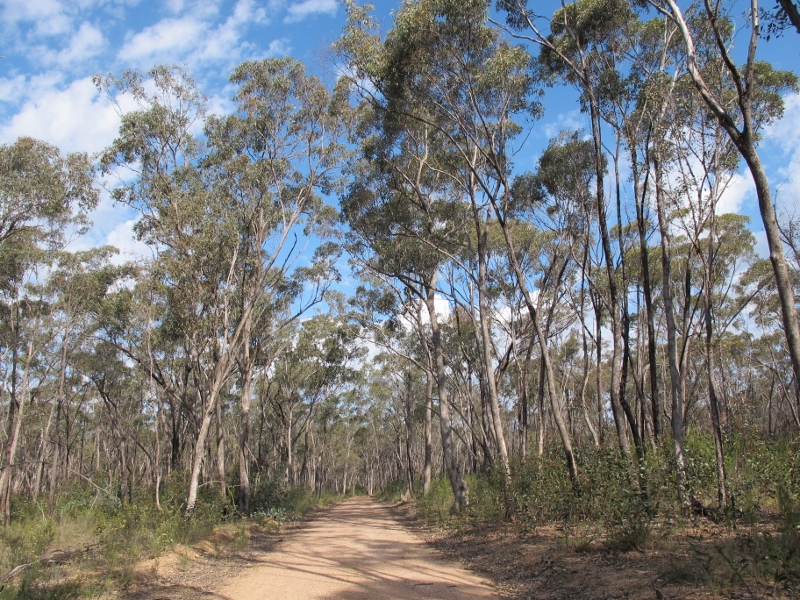
FOBIF walkers passing a giant stringybark on Mount Alexander, August 2013: by 1876 the Mount had been 'denuded' of useful trees.

FOBIF walkers passing a giant stringybark on Mount Alexander, August 2013: by 1876 the Mount had been ‘denuded’ of useful trees. The chequered history of the Mount will be the subject of George Milford’s talk at the FOBIF AGM.

Through all this it remains the biggest landmark in our district, and its history is the subject of a talk to be given by George Milford at the FOBIF AGM at 7.30 on Monday August 11 at the Castlemaine Continuing Education Building. Put it in your diary.

Members interested in nominating for the FOBIF committee should send their nominations in before that date. Contact Bernard Slattery (5472 2892) if you would like a nomination form.

Posted in News | Comments Off on Mount Alexander in history

A stroll into the Gorge

Twenty two walkers enjoyed a fine winter’s day for the July FOBIF walk into Muckleford Gorge on Sunday the 20th. The walk was led by Deirdre and Bernard Slattery, and the group heard an informative talk from farmer Ian Garsed before descending into the spectacular valley. Ian and his family manage the Gorge largely for conservation, and he gave an engaging account of the difficulties and rewards of having responsiblity for such an important part of the landscape.

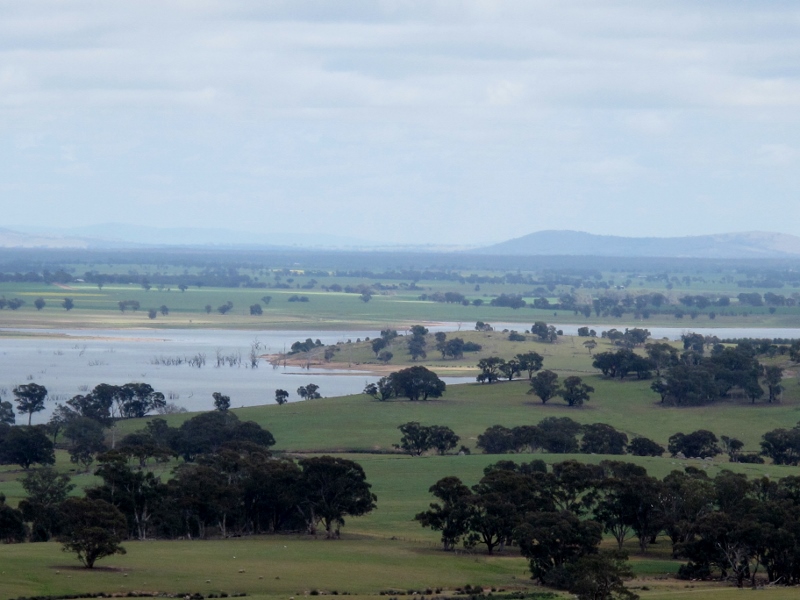
Walkers look across the gorge to the edge of the lava flow, before making the descent. Mount Franklin is in the distance.

Walkers look across the gorge to the edge of the lava flow, before making the descent. Mount Franklin is in the distance.

Although the Muckleford Creek is not flowing at this point, there are enough substantial pools to preserve the picturesqueness of the situation; and the dry sections allowed the group to criss cross the creek for easier walking–though it has to be said that some of the crossings were easier than others. Once again our thanks go to Ian for his unfailing generosity to our walking groups. Thanks also to Barb Guerin for her lucid explanations of the geological formations along the Creek. The August walk will be in the Fryers Ranges. Check the program for details.

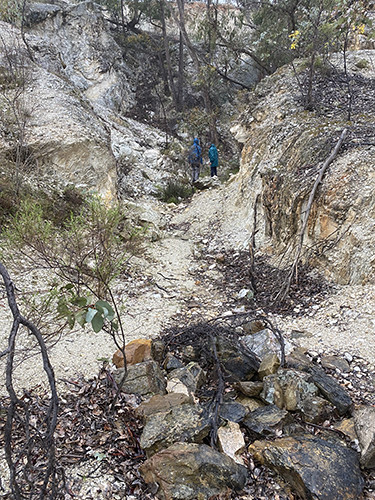
FOBIF walkers checking out the cliffs at the bottom of the Muckleford Gorge.

FOBIF walkers checking out the cliffs at the bottom of the Muckleford Gorge.

Continue reading

Posted in News | Comments Off on A stroll into the Gorge

Have another look at the Mount

It’s a special place to the Jaara people, has been exploited for its timber and heavily grazed; and now its role is primarily for conservation and recreation. It’s the biggest place in our region: Mount Alexander.

Mount Alexander faces winter, July 17 2014: the Mount has many moods, and an interesting history, which will be the subject of George Milford's talk at the FOBIF AGM on July 11.

Mount Alexander faces winter, July 17 2014: the Mount has many moods, and an interesting history, which will be the subject of George Milford’s talk at the FOBIF AGM on July 11. Photo: John Ellis

At the FOBIF AGM on August 11 George Milford will talk about the history of  Mount Alexander–more details later.

Members are reminded that nominations to the FOBIF committee are open now. Nominations should be signed by the nominee and two other FOBIF members.

For more pictures of Mount Alexander during that winter blast on the 17th, have a look at https://www.facebook.com/pages/Chewtonnet/288889464550308

Posted in News | Comments Off on Have another look at the Mount

Fire planning starts again

Along with other interested parties, FOBIF has been invited by DEPI to express its ‘fire management priorities, issues or concerns as they relate to DEPI’s strategic fire management priorities, and also about fire prevention works’ in our area.
This is a standard annual consultation about the Fire Operations Plan and its implementation. It’s both a sensible method of consultation and an intensely frustrating merry go round: the important features of the burning program have already been set by

Highly flammable weeds, mainly gorse, on the northern edge of Chewton: FOBIF believes that public safety is best served by careful management of fuel close to settlements, not indiscriminate burning of large areas of remote bushland.

Highly flammable weeds, mainly gorse, on the northern edge of Chewton: FOBIF believes that public safety is best served by careful management of fuel close to settlements, not indiscriminate burning of large areas of remote bushland.

the State Government, and any submissions will necessarily be picking at details of  the Plan. Nevertheless, FOBIF believes that fire managers are generally prepared to listen to community input, and for that reason we will be making a submission to the process. Our emphases will be essentially consistent with past submissions: we believe that dangerous areas close to settlement should be DEPI’s priority, and that where these include high quality bushland, especial care should be taken to protect biodiversity in any operation. Our most recent detailed submission on the Fire Protection Plan can be found here, and DEPI’s response to that submission here. Member suggestions about any aspect of the local fire plan are welcomed.


Posted in Fire Management, News | Comments Off on Fire planning starts again

Why we should like ants

‘I like ants and this talk is about why you should like ants.’ That’s how entomologist Alex Wild started his talk to his audience of 140 at the Newstead Landcare event on Sunday.
In a hugely entertaining talk, peppered with questions from the audience, Alex ranged widely over matters to do with ants, structured around the ‘three reasons why ants are important, and why they run everything in Australia’.

Bullant [genus Myrmecia] exploring a DSE 'control burn' in the Diggings Park, 2010: ants are not only intriguing, they're good for the soil. Photo: John Ellis

Bullant [genus Myrmecia] exploring a DSE ‘control burn’ in the Diggings Park, 2010: ants are not only intriguing, they’re good for the soil. Almost all bullant species are endemic to Australia. Photo: John Ellis


First, they eat practically anything, and therefore channel biomass around; second, they dig down sometimes to surprising depths, aerating soil and allowing water penetration: in a dry climate they are more important than earthworms, and there’s strong experimental evidence to show that they increase crop yields; and third, they are so numerous that many other organisms are dependent on them for survival, for one reason or another.

Among many other fascinating observations about ants, their social organisation and their territorial wars, Alex pointed out that feral scourges like the Argentine and Fire Ants flourish in disturbed situations: the implication being that looking after the environment is a sensible preventive measure against foreign invasions. And he finished by showing a common enough picture of a bush track, with the comment: ‘There are probably 100 species of ants in this picture.’ Enough reason for us all to pay more attention to the detail: and one way to do this is by checking out the CSIRO’s Ants Down Under website.

Posted in Nature Observations, News | Comments Off on Why we should like ants