Biodiversity [2]: guess what the key is?

Having registered this depressing fact, we need to look at the current document, and ask: what does it add up to?

It adds up to money. Here’s a key passage:

‘The degraded health of Victoria’s biodiversity is the result of many individual decisions and actions, or inactions, over two centuries. Under-investment in planning, management, protection, evaluation and reporting for biodiversity and the natural environment has been conspicuous. Even today, decision makers in government, business and land management too often fail to fully consider the impacts of their actions on biodiversity – and are not routinely required to do so.

‘There has been persistent under-investment in programs and measures to address the legacy of biodiversity loss (particularly for terrestrial biodiversity) and to counter-balance the ongoing losses that occur due to decisions and activities today…’

Unfortunately the document doesn’t follow up statements like this by guaranteeing appropriate funding for the environment. Instead, it gestures at new efficiencies, strategic approaches, and ‘Victorian Government-backed funding model that leverages government investment to create more significant investment in biodiversity conservation across Victoria.’ The 64 dollar question is, by whom? This could be a creative approach to engaging private commitment to conservation. It could also be a slide into the kind of sinister proposals we’ve been offered lately which amount to privatising parts of our National Parks [see our Parkwatch post below].

In any case, the success or otherwise of biodiversity conservation won’t depend on brilliant short term ideas. It will hang on the long term proper resourcing of those departments responsible for managing our public land: that’s the real implication of the above passages, and it’s to be hoped the treasurer, Tim Pallas, takes them seriously.

Posted in News | Comments Off on Biodiversity [2]: guess what the key is?

Biodiversity [3]: here are some challenges

The document is full of praiseworthy but often vague aspirations, but on occasions it does get specific, as in this:

‘Estimate of relative area required to deliver statewide targets [by 2037]:

St John’s Wort infestation on Mount Alexander: successive biodiversity strategies have recommended tackling pest species, but action has been inadequate for lack of resources.

  • 4 million hectares of control of pest herbivores (e.g. deer, rabbits, goats, feral horses) in priority locations.
  • 1.5 million hectares of control of pest predators (e.g. foxes, feral cats) in priority locations.
  • 1.5 million hectares of weed control in priority locations.
  • 200,000 hectares of revegetation in priority areas for connectivity between habitats.
  • 200,000 hectares of new permanently protected areas on private land.’

These figures are a standing indictment of neglect on the part of past governments, and of the failure of past Biodiversity strategies. Feral animals like horses and deer, for example, continue to wreak spectacular havoc in the Alps while governments nervously consider targets over the next 20 years; overstressed land managers confess that feral plants are more or less out of control; and the state is proposing to open logging in our vulnerable western forests. Will this document make a difference? We’ll see.

Posted in News | Comments Off on Biodiversity [3]: here are some challenges

Biodiversity [4]: provocations

Here are some interestingly provocative quotes from Biodiversity 2037:

  • ‘Native plants and animals have an intrinsic right to exist, thrive and flourish.’ But elsewhere in the document we read: ‘Human-induced changes to the environment have, in some situations, led to native species such as kangaroos, Noisy Miners, sea urchins, Sweet Pittosporum and Burgan becoming locally overabundant, often to the detriment of other native species. Coordinated planning and implementation may be needed to address over-abundance where there are significant impacts on biodiversity assets.’ This would seem to point in the direction of culling, though the document hedges its bets by considering ‘non-lethal methods of managing wildlife impacts’.
  • ‘Climate change and population growth are expected to exacerbate existing threats and bring new challenges for Victoria’s biodiversity.’…But there’s no mention in the document of what, if anything,  to do about population growth.
  • ‘Effective monitoring and evaluation will require increased, systematic and consistent data collection to ensure that management effectiveness and the assumptions built into the program (e.g. the impact of climate change) are clearly understood.’ It’s a pity that’s in the future tense: such monitoring should have been underpinning government actions for decades.
  • ‘Continue to provide world class nature-based experiences through Zoos Victoria, Museum Victoria, Parks Victoria, the Royal Botanic Gardens Victoria, Philip Island Nature Park and alpine resorts.’ Mmm…the alpine resorts? Downhill skiing takes place on hills with a view, but is it a ‘nature based’ experience?

The Biodiversity document, like its predecessors, contains much of value. The fact that it’s so like its predecessors, however, suggests that there’s a long way to go.

Posted in News | Comments Off on Biodiversity [4]: provocations

Check this out

The March edition of the VNPA’s Parkwatch magazine is now out, and can be found online here. It contains, among much else, informative stuff about Crusoe Reservoir, between Castlemaine and Bendigo; plans to log the wonderful Wellsford Forest, north of Bendigo; and details on truly awful projects to introduce commercial operations into the Alpine NP, Mount Buffalo NP and Wilson’s Prom. The outcome of some of these issues will be a real indicator of how serious the State Government is about biodiversity [see above].

Posted in News | Comments Off on Check this out

Small group of walkers braved the heat

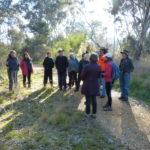
Despite the unseasonably warm weather a small but select group of nine kicked off the 2017 walks season by visiting Mt Alexander.

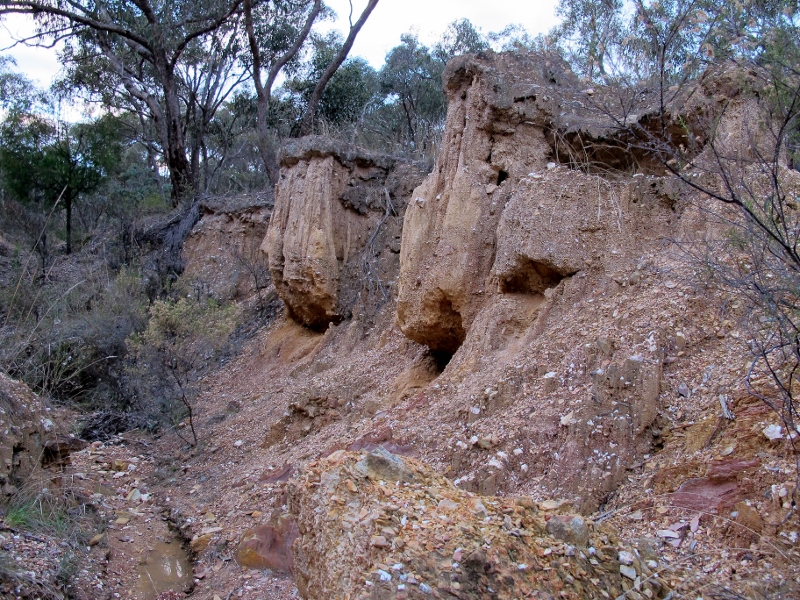
Starting from Coopers Lane we climbed to Roxanne Pass, then off track we contoured above Laytons Quarry and up to Harcourt Granite.

Golden Orb and Jewel spiders were out in force and we tried to avoid damaging their webs. There were also lengthy debates trying to identify individual trees, eventually the Eucalyptus Guide was produced and a consensus reached.

Lunch was had in a shady spot on West Spur near the lookout before heading down this very attractive spur and back to the cars.

Lionel and Barb always produce a really good walk and this was no exception.

Noel Young sent us a further report on the walk which includes a list of birds observed: Continue reading

Posted in Nature Observations, News, Walks, Weeds | Comments Off on Small group of walkers braved the heat