Winter reading

OK, it’s cold, and maybe not wet enough. Some quality reading to brighten a winter evening: the June newsletter of our neighbours, Wombat Forestcare, available online here.

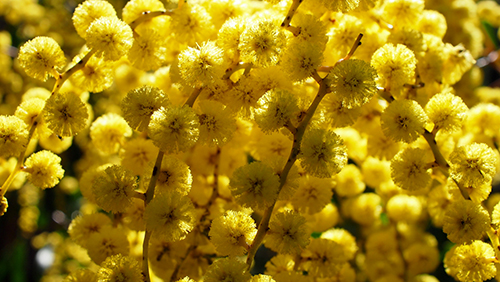
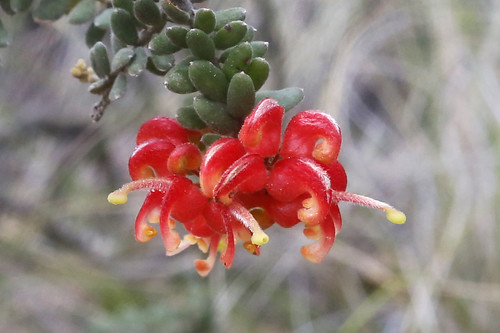
Narrow leaf bitter pea, Castlemaine Botanic Gardens, Spring 2013. There are three Daviesia species in the Mount Alexander region.

This edition has the usual terrific info on fungi, the case against logging the Wombat and [among other things],  the third article in John Walter’s series on ‘egg and bacon’ plants. This one is on three species of Daviesia found in the Wombat: Hop Bitter Pea, Narrow Leaf Bitter Pea and Gorse Bitter Pea. All three can be found in the Mount Alexander region too. If you [like many of us] are frustrated by the difficulty of telling the difference between pea plants, you should find this article pretty useful.

Posted in News | Comments Off on Winter reading

Impressive regeneration along Campbells Creek

Ian Higgins led 18 people on a terrific walk along Campbells Creek last Sunday on the fourth FOBIF excursion for the year. The group joined the walking and cycling track at the back of Tonks in Lewis Drive, followed the track for several kilometres and then crossed the creek heading back through varied landscapes to the starting point.

Ian has been a driving force in the regeneration of this area as part of Friends of Campbells Creek Landcare over a number of decades. He gave an account of its history, identifying what had been planted, the progress of the plantings, and weeds that had been tackled. The efforts of many people have achieved a remarkable transformation of public land that used to be inaccessible, weed infested, and used for private grazing and rubbish dumping. McKenzies Hill Landcare Group has also been part of this project.

There were many highlights in the morning including the female flower of the Drooping She-oak and numerous large Hakeas in bloom.

Left, Female flower of Drooping She-oak, photo by Frances Cincotta. Right, Bushy Needlewood, photo by Noel Young.

The following photos were taken by Noel Young.

The next walk on 16 July will be through Faraday, taking in some interesting vegetation corridors with lovely remnant trees, and the shire’s only stand of Narrow-leaved Peppermints Eucalyptus radiata. Easy walking, about 7 km. For more information contact Bernard Slattery on 5470 5161.

Posted in News, Walks | Comments Off on Impressive regeneration along Campbells Creek

What can we learn from the ruins?

FOBIF has made a submission to the process of updating the Castlemaine Diggings NHP Heritage Action Plan [now known as the Heritage Landscape Management Framework].

Our view can be roughly summed up in the words of the old Heritage Plan: ‘The current forest setting is not an interpretive problem, but rather an interpretive bonus for the Park. It highlights the transience of mining, demonstrates the severe environmental impact that can result from inadequate environmental constraint, and illustrates some of the resilience of Australia’s native vegetation.’ [Our emphasis]

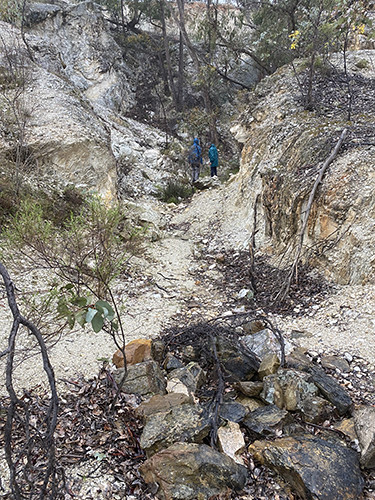
In Norwood Hill. This is not a natural scene, it’s part of our cultural history: the destruction of our waterways is part of the epic of gold, and needs to be explained to visitors.

Essentially, our submission urges consideration of the natural landscape as an important element in our heritage: consideration of mining ruins in isolation from the way mining affected the environment is to lose sight of one of the most important consequences of the gold rush: environmental change. That’s part of our heritage too.

The essentials of FOBIF’s submission are set out below:

Continue reading

Posted in News | 2 Comments

A walk on misty Mount Alex

A solid group of walkers was guided by Jeremy Holland through some remote corners of Mount Alexander east on Sunday. The walk started with a pleasant stroll  along the water race, before angling up the mountain south of Aqueduct Creek: a reasonably strenuous ascent through lovely bushland [including some magnificent Red Gums and monumental granite boulders]. We returned along the Ballantinia Track. The walk was enhanced by a dense mist, which obscured possible views but more than made up for it by endowing the bush with an intriguingly mysterious air.

Is anybody there? Jeremy Holland and Lionel Guerin survey the mist.

Many thanks to Jeremy for navigating us through a route none of us had seen before, to corners of the Mount rarely visited. And our thanks to Coliban Water for permission to walk along this closed section of the race.

Part of the group negotiating the ridge through Manna Gum woodland south of Aqueduct Creek, ascending to Ballantiinia Track.

June’s walk will be led by Ian Higgins along Campbell’s Creek. Check the walks program on this website for details.

St John’s Wort is a terrible pest on the Mount, but on Sunday it hosted hundreds of picturesque spider webs, like this one. Photo: Dominique Lavie


More walk photos follow:

Continue reading

Posted in News | 1 Comment

What’s the Diggings Park good for?

Parks Victoria has released the results of its survey of users of the Castlemaine Diggings NHP.

There were 265 responses to the online survey. While such a voluntary survey has inbuilt problems of reliability, the results are probably a good indicator of public attitudes to the park.

The following details are worth reporting:

Hunts huts, Browns Gully, CDNHP: the recovering vegetation tells a story as eloquent as that of the ruins. It’s important that those presenting the Park to visitors acknowledge this fact.

‘Comparing the reasons for visiting to the frequency of visiting revealed that those who visit for ‘walking or hiking’ are the most frequent visitors, followed by those who ‘enjoy nature, birdwatching’, and ‘cycling, mountain biking’…

‘A key purpose of the online survey was to understand the importance of CDNHP to visitors. Looking at five implied values – aesthetic, historic, scientific, social, spiritual – ‘Historic’ values were the most commonly mentioned, followed by scientific/natural values and aesthetic values. ‘A place for prospecting’ was also an important value or activity associated with the park…

‘High priority overall was given to: tackling vandalism; reducing weeds; and addressing fire risk. The next highest priority actions were: information to help me find specific sites; better standard of access tracks; and restoration of specific structures. Other suggested management activities were: improved signage; interactive and digital interpretation; reducing weeds; and preventing disturbance from prospecting’…

In the ‘site walkovers’ organised by Parks, it’s worth noting that ‘Discussions referenced the ‘multi-layered’ landscape and a timeline of pre-gold rush Jaara landscape followed by the gold rush period and the post-gold era recovery. There were also references to tranquillity in the forest, bird-life, native flora and the importance of low-key ‘atmospheric’ sites requiring sensitive management.’

Parks has produced a set of direction themes as a result of the process:

Continue reading

Posted in News | Comments Off on What’s the Diggings Park good for?