FOBIF tilts at a very large windmill

Readers will remember our irritation at the plethora of Television commercials for recreational vehicles, encouraging irresponsible and environmentally damaging driving practices. We’ve decided to see if we can get an opinion on this matter from responsible authorities, and have written the  enquiry below to the Minister Road Safety, the Federal Chamber of Automotive Industries and others. We’re not optimistic about a response. The gist of the letter follows [we’ll print responses if any as they come]:

We draw your attention to the current Television advertising campaign for Suzuki with the slogan ‘for fun’s sake’. The video can be found at https://www.bestadsontv.com/ad/102250/Suzuki-For-Funs-Sake . It has run frequently on broadcasts of AFL football. The film features a car careering through water and mud, and mindlessly circling a suburban roundabout.

Continue reading

Posted in News | 1 Comment

Along the ridges

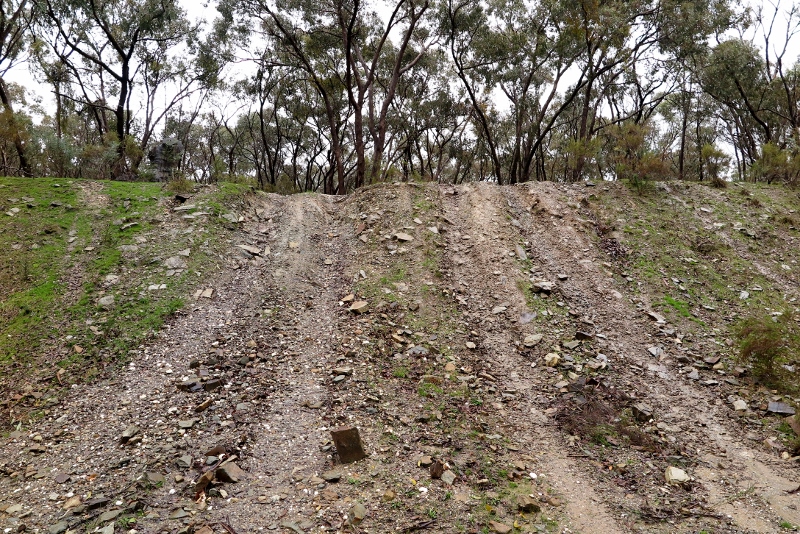
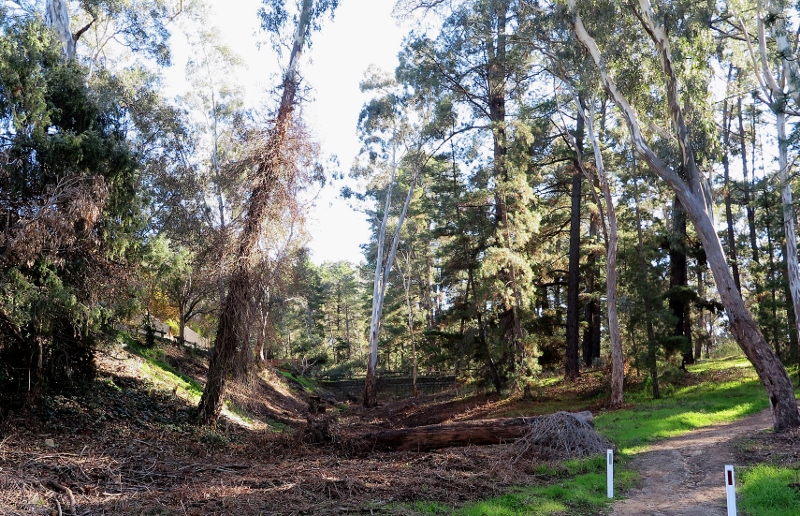
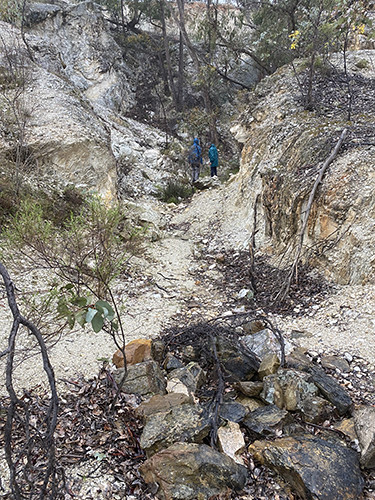
A small group of walkers embarked on FOBIF’s May expedition to the south end of the Diggings Park.  The group followed one of the little known ridges between Helge Track and Sebastopol Creek before angling up Stones Gully to return. There are impressively large trees in this part of the park, and those on the higher ridges had suffered epic damage in recent storms: some had snapped off mid-trunk, others had virtually disintegrated as they fell.

Wildflowers are still rare in this part of the bush, though there’s impressive moss cover after recent rains, and the large mats of Matted Bush Pea along Wewak track promise good displays in the coming Spring.  Walkers survived a zig zag route around numerous fallen trees without mishap, and a, er, small miscalculation of the route length by leader Bernard Slattery has so far led to no litigation. Yes, it was 9 kilometres, not 7.

Fungi expert, Joy Clusker, sent us these photos. 

More photos from the walk.

Next month’s walk will be led by Jeremy Holland in a great part of Mount Alexander. See the program for details.

Posted in News, Walks | 1 Comment

Mining in the Muckleford Forest?

FOBIF has supported an objection by the Muckleford Forest Friends group to a mining exploration application for the forest by Kalamazoo resources.

Our objection is based on extreme caution about such exploration, mixed with bad experience with exploration and sampling exercises in the past. If you want an example, have a look at Dunn’s Reef in the adjoining Maldon Historic Reserve: the surrounding bush still hasn’t recovered from reckless bulldozing dating back 15 years.

The relevant parts of the Friends’ objection are set out below:

Continue reading

Posted in News | 2 Comments

Call for an effective deer strategy

It’s becoming increasingly obvious even to those not interested in conservation that deer are now a serious problem in large areas of Victoria. Reports of serious damage to wineries, and safety concerns over illegal shooting and potential road accidents appear to have increase political pressure for control that the trashing of our bushland hasn’t been able to do.

FOBIF has joined its name to an open letter calling for a strong and effective feral deer management strategy for Victoria. The letter was coordinated by the Victorian National Parks Association, and has been signed by over 90 Landcare organisations, leading ecologists, agricultural groups and a range of other affected organisations and groups from across the state. The substance of the letter is as follows:

We are concerned that Victoria’s Draft Deer Management Strategy (2018) fell far short of addressing the considerable problems feral deer bring to peri-urban and regional communities, and to wetlands, catchments and the natural environment. We offer here some recommendations for the final strategy; it is a critical opportunity to control deer populations and to reverse the increasing impacts they are having.We agree with the rough estimate for the state’s deer population, as documented in the draft strategy, at ‘between several hundred thousand up to one million or more’. The population is growing rapidly at an exponential rate, and far exceeds the capacity for control by recreational hunters. Research into the native habitats of the four main species of deer in Victoria indicates that they can continue to extend their range, potentially occupying almost every habitat in the nation. Victoria’s biodiversity is at risk. Deer are seriously impacting Victoria’s finest natural areas, from the coast to the Grampians, from rainforest gullies to the high country. Almost every type of native plant is browsed by Sambar Deer, and trampling, breaking and ringbarking plants by antler rubbing all add to those impacts. Decades of volunteer and government-funded revegetation programs across Victoria have already been damaged or are now threatened by deer. The two largest species of deer, Sambar and Red, are both adapted to wet climates and make extensive use of bogs and wetlands where their wallowing, trampling and browsing has a major impact on water quality and quantity in our catchments.The livelihoods of farmers, especially in orchards, vineyards and market gardens, are being threatened; even backyards and gardens are invaded. The growth of illegal hunting due to the easy availability of deer has become a safety concern in many rural and semi-rural areas. Deer are an increasing hazard on our roads.

Continue reading

Posted in News | Comments Off on Call for an effective deer strategy

What a difference lack of water can make

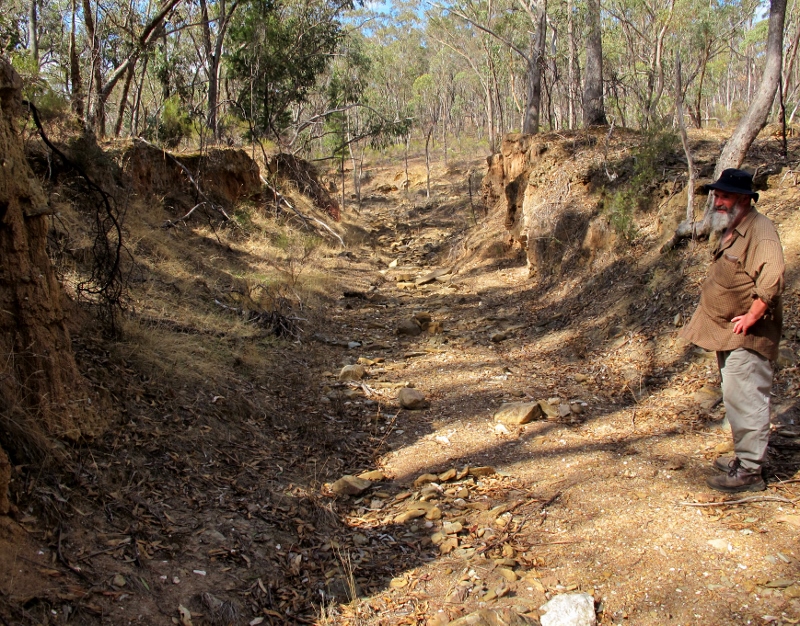
A good group rocked up for FOBIF’s April walk into the Salter’s Creek-Smutta’s Track area on Sunday. As expected, the bush is showing numerous signs of drought stress, including a significant number of dying Golden Wattles. Nevertheless, this corner of the Diggings Park has plenty of charm even in its present desolate state, and the walk was completed in good spirits, although it must be said that no one sprinted up the almost vertical track out of the Bradfield flumes.

The following photos will give an idea of the different faces of this little valley. First, after a week of heavy rain, in 2013:

Salters Creek, August 2013: after good rain, the creek filled nicely – but we were aware that this was an unusual event.

And here’s the same spot, as walkers passed it yesterday–almost unrecognisable:

The same spot, Easter 2019. The forked tree in the top photo has collapsed into the dry creek bed. Even the deepest pools in the creek are now dry.

Our thanks to Rex Odgers and Julie Hurley for taking the group into this great corner of the Park, and for the informed commentary on the history of the water race.

Noel Young sent us these photos of the walk.

Next month’s walk is in the area of Stone’s Gully, south of Vaughan Springs. Check the program for details.

Posted in News, Walks | Comments Off on What a difference lack of water can make