Mount Alexander 2: How wide should Joseph Young Drive be?

As to providing enough space on the roadside for parking vehicles we’re  sceptical. If DELWP workers are forced to intrude on the road, they could possibly do what workers do on highways: put witches hats out, and warning signs.

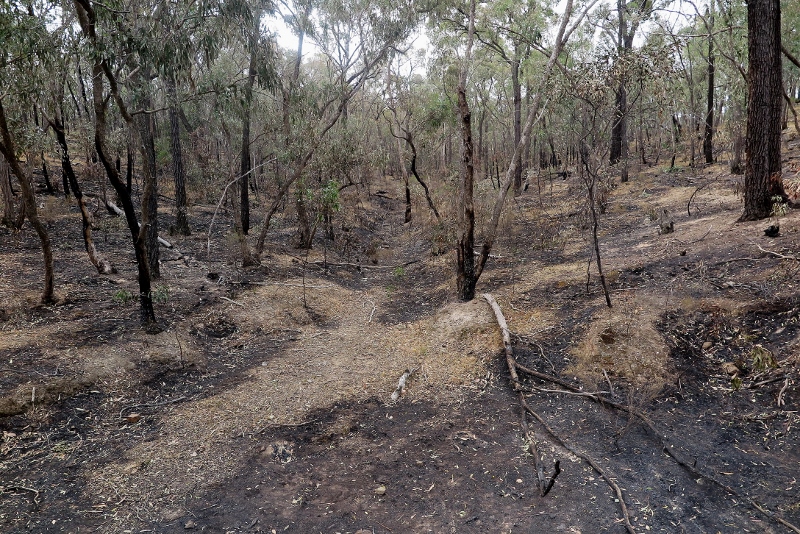
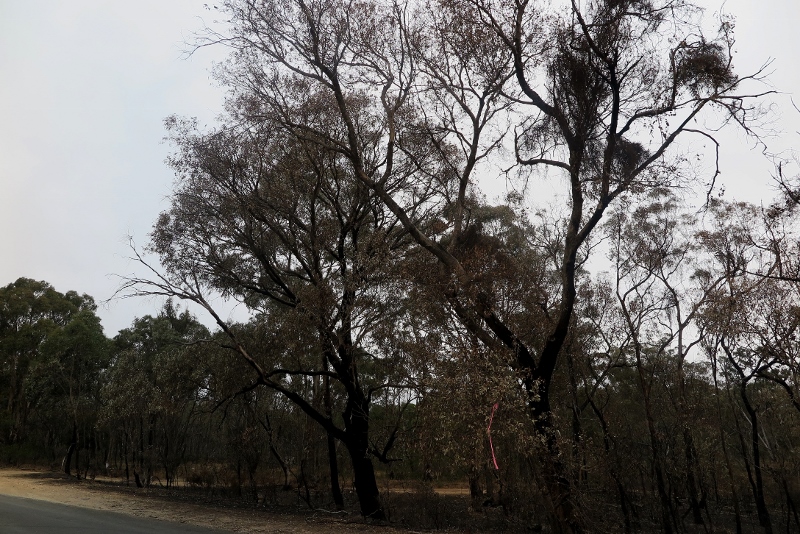
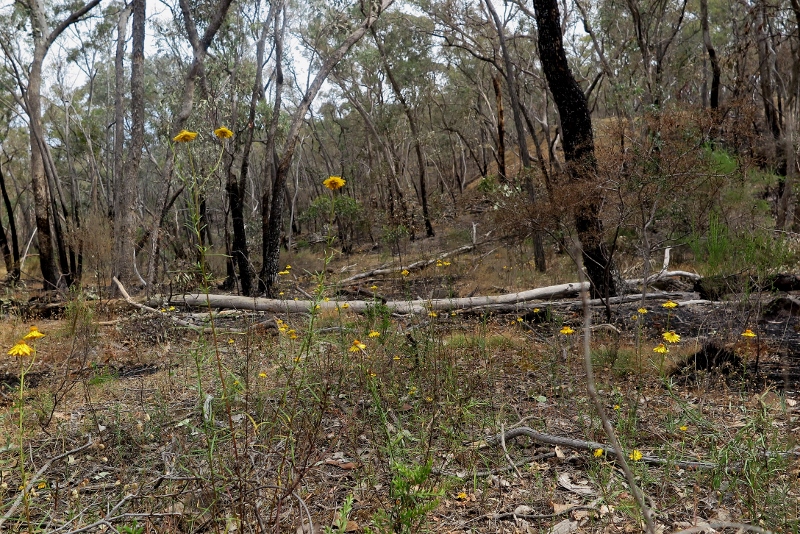
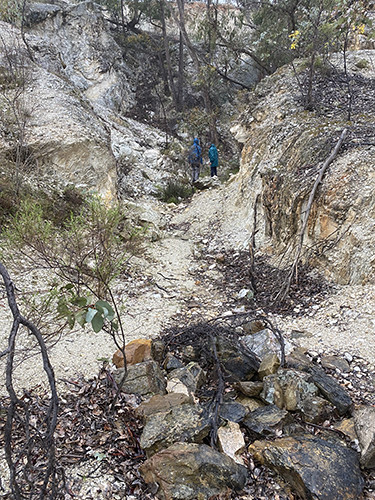
Roadside works, Mount Alexander. Correct us if we’re wrong, but it looks like the works have actually reduced the amount of space on the roadside. Would judicious pruning have done the job better?

Of course, if you really wanted roadside parking space all along the road you’d have to bulldoze plenty of embankments and do all sorts of major engineering works.

And on the subject of there being enough room for vehicles to pass each other abreast: the day after the snowfall on the Mount a few weeks ago, there were hundreds of sightseers up there enjoying the snow. Cars manoeuvred around each other without any trouble. It’s a mountain road, you see, and has to be handled like one.

Lastly, on the question of safety for general traffic: if there’s concern about this [and we haven’t seen statistics for accidents on this road] one answer is perfectly clear. Reduce the speed limit. Joseph Young Drive is not a highway or a major transport link. It’s very popular with road cyclists. No one should be driving on it in a hurry–on the contrary, it’s very definitely a road from which to enjoy the environment–or was, until the recent massacre.

But reducing the speed limit would offend one of our society’s most sacred principles. Or that should possibly be sacred cows. As we’ve seen repeatedly in recent times, the environment is being made to pay for our obsession with speed and mobility.

Posted in News | Comments Off on Mount Alexander 2: How wide should Joseph Young Drive be?

And while we’re on the subject, here’s a little reason to slow down

That little blob below is an echidna. We think the pictures speak for themselves.

Pyrenees Highway, October 3. The echidna is heading across to the right, then changes its mind…

…which turned out to be a very good idea. Both drivers were travelling slowly enough to avoid the animal.

Posted in Nature Observations | Comments Off on And while we’re on the subject, here’s a little reason to slow down

Track maintenance: DELWP 1,000, FOBIF 0

In the last 20 years the problem most regularly confronted by FOBIF is that of track ‘improvements.’ We have complained with boring frequency to DELWP and Parks Victoria that almost every time a track is ‘improved’, the ‘improvement’ includes a widening of about a foot each side.

And we’re prepared to admit that our boring persistence has been completely useless. Usually we get the bland response, ‘Yes, the contractor was supervised; yes, our brief is to keep all works inside the track footprint. Really? Your photo shows the track has been gouged dramatically, taking out all that vegetation? That can’t be true!’ Oh, yes it can.

We believe that under new native title regulations any such widening now requires special authorisation—maybe that will bring a bit more attentiveness to the job?

In the mean time here are some recent works, courtesy of the taxpayer– you. Does it make any difference that a bit of vegetation has been scalped here and there? You decide: in our opinion the incremental effects over time make a very big difference.

Phillips Track, Maldon. This track has been significantly widened, with the occasional plant gouged out…evidently for safety reasons?

Gough’s Range State Forest: this benign track has had a good half metre added to it, for good measure.

Posted in News | Comments Off on Track maintenance: DELWP 1,000, FOBIF 0

TOGS show runs until 24 October

FOBIF’s TOGS Cafe photo exhibition in Lyttleton Street has had a good response from the public. There is no need to have coffee or food ~ just drop in and have a look at the photos. It runs until the 24th October. You can see the catalogue with a description of each photo here.

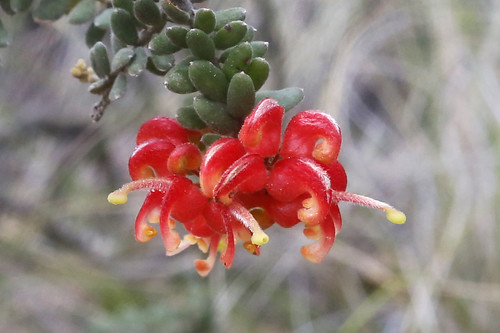
Bushy Needlewood Hakea decurrens. Photo by Julie Millowick, 2019

Northern edge of Crocodile Reservoir, July 2019. The flowering local Bushy Needlewood is growing through some of the Box Ironbark trees chopped down for the Ecological Thinning Trial. This 50 year trial by Parks Victoria is an attempt to return the Box-Ironbark Forest to a pre-goldrush state—that is trees of different heights and growth stage instead of the uniform post-goldrush regrowth. 

Posted in News, Photo Exhibitions | Comments Off on TOGS show runs until 24 October

Yet another survey: cabbages or machine guns?

Democracy is a wonderful thing, especially when you consider the alternatives, but democratic governments have a tricky task: they have to get on with the program they were elected to implement, but at the same time be aware of the complicated and sometimes contradictory demands the community makes of them.

They have to steer between two faults: they don’t want to be seen to ride roughshod over the community by being too decisive and tough minded; and they don’t want to be too indecisive, constantly wringing their hands and wondering what people want them to do.

In the matter of land management, the Victorian Government seems to be showing symptoms of the second of these ailments. As a result we’re getting deluged by invitations to online consultations asking us a lot of sometimes pretty strange questions.

In particular, Parks Victoria has apparently forgotten what it’s supposed to be doing, and has devised yet another consultation 

This latest consultation is on Parks Victoria’s Land Management Strategy. The justification for it is partly ‘1. Increasing demand for diverse visitor experiences, 2. A growing and changing population and 3. Changes in our environment and climate, with a rise in very hot days, fires and flash flooding placing pressure on our parks.’

Of course FOBIF believes that governments should represent the people. But, as in the present case, they should be guided by the basic principles of the job—looking after nature.

If you’re running a cabbage farm you should not be constantly running to the public to ask whether you should be producing machine guns instead.

In the current case, Parks Victoria should be keeping its eye on the National Parks Act: that’s its mission statement, one which is just as relevant now as it was in 1975, when it was passed by a Coalition Government. The arrival of lots of migrants has not changed its relevance one iota.

This belief has governed FOBIF’s response to the consultation. On the draft Aspiration Statement [‘Victoria’s parks are resilient, inclusive and valued; conserving nature and cultural heritage; supporting Traditional Owner aspirations; and contributing to healthy communities’] we said,

All of the material here is good, BUT we believe that it is unfortunately general enough to support many shades of interpretation. We would add ‘protected’ after ‘resilient’, to bring it in line with the National Parks Act—but then, this consultation strangely doesn’t mention National Parks, the core of the protected area system. And: we’re not sure why Parks Victoria needs any more aspiration than is contained in the National Parks Act: our parks are there for protection, preservation, study, etc. Are we going around in circles when the objectives have been clear since at least 1975?’

The survey set out Guiding Principles and asked respondents to tick approval or disapproval boxes:

  1. Maintain and strengthen the parks estate
  2. Prepare for the future
  3. Connect with community
  4. Use knowledge and evidence-based management
  5. Protect natural and cultural values
  6. Build Partnerships
  7. Promote public safety and adopt a risk-based approach
  8. Apply rational decision making

Most of these are motherhood statements. Our response was:

‘As with the guiding principles, we believe this material is good…but the devil is in the detail. Some of these aspirations could be in conflict. We do not believe that Parks Victoria should be in partnership with private business to develop profit making enterprises in national parks, for example. ‘Sound judgement will be used to consider all stakeholders involved.’ Yes, but we do not believe that all stakeholders are equally in tune with the National Parks Act and its objectives: deer hunters, for example, are more interested in hunting than they are in the damage inflicted on the environment by deer; horse lovers do not see waterways trampled by feral horses. We believe that in the case of National Parks, PV should be guided by the Act: and Parks officers should have the courage of their convictions in pursuing the objectives of the Act.

‘And we would add Guiding Principle 9: Adequately fund the protected area system, so as to avoid the possibility that all the above principles are just words.’

Posted in News | 2 Comments