Fire operations: have your say!

DSE’s proposed Fire Operations plans and Fire management zones for our region are available for comment until August 29, and FOBIF members are urged to seek them out and have a say about them.

The plans are available at

http://www.dse.vic.gov.au/fire-and-other-emergencies/planned-burning-an-introduction/proposed-fire-operations-plans-august-2011

or they can be seen at the Mathieson Rd Castlemaine office of DSE/Parks Victoria on Fridays from 9 am to 4 pm.

The amount of area proposed to be burned is significantly higher under this plan, presumably as a response to the Royal Commission recommendations.

FOBIF representatives will be attending a DSE briefing on the plans on Wednesday August 24. At this stage we have two main concerns:

First, we have been consistently disappointed by the conduct of burn operations. The photos below show the area burned by DSE at the Wewak track in Autumn last year. While we would love to see an independent expert assessment of this operation, common sense would suggest that the operation increased the fuel load in the area, while destroying a significant number of old trees.

Wewak Tk, August 2011: the management burn was so severe numerous trees were killed, causing this massive regrowth of seedlings. In a few years these will present a greater fire risk than existed before the burn.Photo: Bernard Slattery

Wewak tk, area adjacent to the management burn: the fuel load here seems lower than that created by the management burn. The forest structure also seems healthier and more open.

We are also very concerned about large [500+ hectare] burns planned in the Tarilta gorge and Muckleford forest. We cannot at this stage see the point of the first operation, and are concerned that the second is listed as an ‘asset protection’ burn—meaning that it will be burned more severely than would happen if it were zoned otherwise.

It seem to us that DSE is under political pressure to burn more hectares, and does not have the resources to do this properly. We will publish a more considered view on these operations after Wednesday’s meeting. In the mean time we urge FOBIF members to look at the plans, and to express an interest in them: it is important that DSE is aware that citizens are closely observing what they do.

Posted in Fire Management, News | Comments Off on Fire operations: have your say!

Small Birds, part 2

Harder to identify than Robins are the Thornbills – small and very active, often higher up in foliage, but some species frequent the ground at times.

The most common is the Brown Thornbill Acanthiza pusilla, which really on closer inspection is not overall brown but varies and has striations. Alas, people confuse this with the Striated Thornbill which is similar in size.

Brown Thornbill. Castlemaine. Photo by Damian Kelly, April 2011

The Buff-rumped Thornbill Acanthiza reguloidesis is common throughout a lot of the forests and often more easily seen as it forages along the ground and amongst low foliage.

Buff-rumped Thornbill. Walmer South Nature Conservation Reserve. Photo by Damian Kelly, 8 August 2011

Posted in News | Comments Off on Small Birds, part 2

Time bombs

FOBIF members have noted a rash of rubbish dumping in our public lands recently. All of it is unsightly, and some disgusting: the prize in this latter category going to the person who has dumped large amounts of meat offcuts in the Poverty Gully area.

It’s bad enough that piles of old mattresses and sundry household items are littering the bush—including plenty of stuff that would easily fit into a household or even street bin. What is much more serious is the dumping of garden rubbish, much of which is the source of serious weed outbreaks. It’s worth remembering that weeds cost Australian agriculture $4 billion a year, and that most of them are garden escapes. A few months ago FOBIF members discovered an infestation of English broom on Mount Alexander which was promptly dealt with by Parks Victoria: the potential for this weed to get into adjoining private land was high, and the costs would have been serious. We are pretty sure that the infestation was caused by dumping of garden rubbish.

FOBIF has written to Mount Alexander Shire urging the issue of free garden rubbish vouchers to residents. Although we don’t think this is a magic solution to the problem, we do believe that cost of tipping garden rubbish does deter people from doing the right thing. Anything which would ease this problem—and the burden on public land managers who have to deal with it – should be tried.

Posted in News | Comments Off on Time bombs

What’s that on the ground?

After the success of the Castlemaine Field Naturalists folder guide to the indigenous plants of Castlemaine and surrounds, FOBIF has embarked on a project to produce two more guides in the same style, this time on fungi, mosses and lichens. In view of the complexity of the subject matter, we’re aiming for a careful timetable, and a planned launch in Autumn 2013. The project has the support of the Norman Wettenhall foundation.

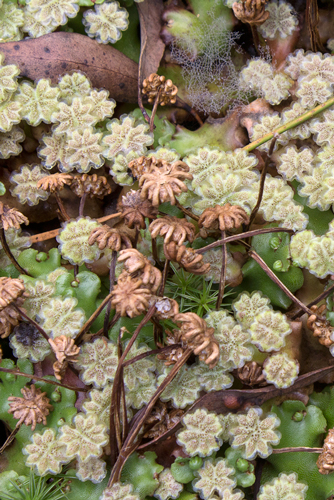
Ceratodon sp, Mcay reservoir road: You need to get down on your knees

An initial meeting to plan the project was held on August 12, and a field day to survey local mosses is planned for August 27. Members interested in having some input to the project are encouraged to contact us. Commitment to diligent and systematic observation and recording will be necessary—and a willingness to spend some time on the knees in the bush.

Posted in Moss and Liverwort Field Guide group, News | Comments Off on What’s that on the ground?

This bridal is creepy

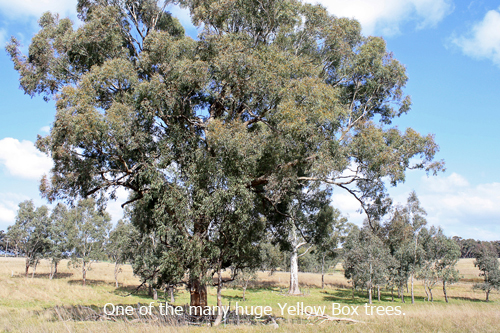
FOBIF is following up its initial 2010 attack on bridal creeper around the giant yellow box alongside the Great Dividing Trail, with another shot at making an impact on this unpleasant weed. The site is a hundred metres from the point where the GDT crosses Forest Creek, and is a veritable wilderness of every imaginable bad weed in this area.

Our efforts are clearly very modest, and a more coordinated effort will be needed taking into consideration the values of the area, the extensive revegetation work done by landcare groups from Golden Point right through to Castlemaine, and the important issues of flood mitigation and fire risk minimisation. Tentative efforts to devise a coordinated plan for Forest Creek have been mooted in recent years, and now Max Schlacter, a Melbourne University post graduate student, has undertaken to prepare such a plan, in cooperation with Connecting Country and interested other groups. We will update on this project as it develops.

The Friends of Kalimna Park have also embarked on an ambitious bridal creeper clearance program along Moonlight Creek, on the eastern edge of the Park.

Posted in News | 1 Comment