After the burning, what?

What can we expect to see in the months and years after the burning of Kalimna Park?

Part of an answer can be found in a pamphlet produced by the Castlemaine Field Naturalists after the previous burning of part of the park. We produce their tentative findings here on the spring 2010 Lawson Pde burn:

‘A group of naturalists has been monitoring the effects of burns in Kalimna and elsewhere in the district. This is done by setting up 20m by 20m sample areas [called quadrats],and by making a list of the plants in the quadrats, and for some plants [usually perennial shrubs and trees] counting the actual number of individual plants. Juveniles [ie, not yet flowering, mature and senescent plants are counted separately. After a burn, the quadrats are checked to see which parts of the quadrats  have been burned, and a map is made showing the burned and unburned areas.

‘Both burned and unburned areas are resurveyed from time to time to see what changes have taken place.

‘Some of the general conclusions so far are

  • Plant distribution is variable. Sites that are close together often have a quite different plant composition
  • Regeneration occurs in spring in burned and unburned sites
  • Some species [particularly legumes, eg ‘egg and bacon’ peas] may regenerate profusely afer a burn
  • There is much mortality of seedlings during summer and autumn
  • In a drought year, there may be as much as 100% death of seedling shrubs and trees
  • In a drought year, seedling success is much greater in unburned areas than in burned areas. This may be due in part to greater temperature extremes in the burned areas, and/or the lack of other vegetation to shelter the seedlings and protect them from predators
  • Erosion is much more common in burned areas
  • Multi-trunked trees with dry stumps are often burned out and fall…[this latest] burn was followed by a year with moderate rainfall, and so many seedlings have survived.’

[These notes are taken from the pamphlet A walk on the Kalimna Circuit Track, February 2013]

Posted in News | Comments Off on After the burning, what?

Grey Box now in flower

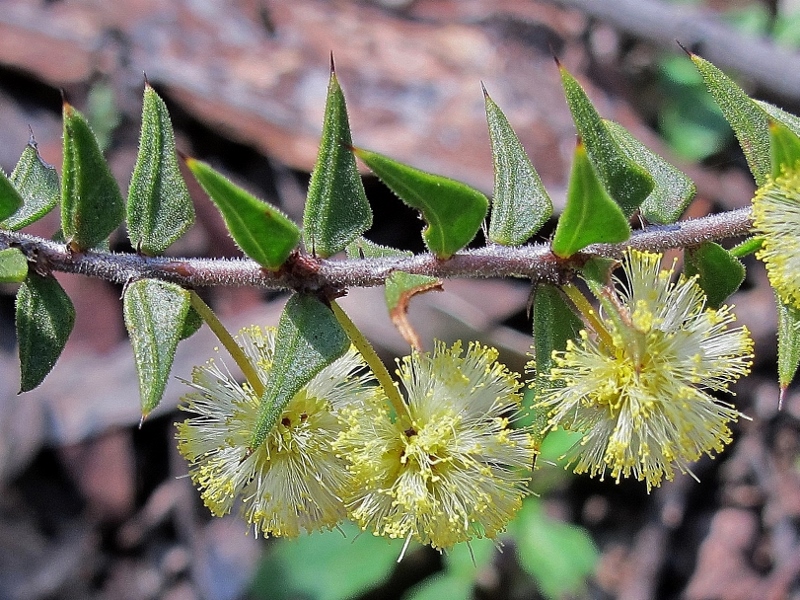
If you see a Eucalypt in flower at this time of the year it is likely to be a Grey Box Eucalyptus microcarpa. They generally flower here from mid-February to April. (Yellow Box Eucalyptus melliodora has just finished flowering and the next Box to flower after the Grey Box in this area is the Long-leafed Box Eucalyptus goniocalyx.) 

web.-[2]grey-box-blossom.-2025

Grey Box blossom and buds including some about to flower.  Walmer, 8 March 2015

Posted in News | Comments Off on Grey Box now in flower

Photos of Doug Ralph

We are in the process of setting up a page of photos of Doug on FOBIF’s Flickr site. So if you have any photos you would like to contribute to this page, send them to info@fobif.org.au. Photographers will be acknowledged.

AsleepSite3

Photo courtesy of Connecting Country

Posted in News | Comments Off on Photos of Doug Ralph

Celebrating Doug Ralph’s Life

There will be a gathering to celebrate Doug Ralph’s life next Saturday (March 7) at the Rotunda in the Botanic Gardens, Castlemaine. The group organising the event have provided the following information:

The celebration will start at 12 noon & the more ‘official’ proceedings will begin at 1 pm.

It is hoped that it will be a relaxed & informal gathering with the opportunity for people to offer something (word or song or anecdote etc) by way of celebration of the man we all loved so well & to pay our respects & give thanks for the oh so many ways he touched our lives

There will be a blackboard at the event for those who wish to participate & an MC to keep us in check.

Bring your own picnic lunch & your memories & let’s celebrate the life of Doug Ralph

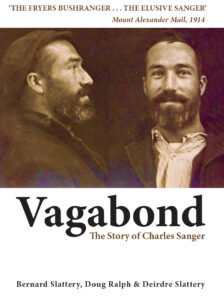
Two items on the day of particular interest to FOBIF members will be a talk by Phil Ingamells on Doug’s role in the formation of FOBIF in the 1990’s and a reading from Vagabond: the Story of Charles Sanger, which was written by Bernard Slattery, Doug Ralph and Deirdre Slattery.

For further information ring Bronwyn Silver on 5475 1o89.

Posted in News | Comments Off on Celebrating Doug Ralph’s Life

Fire review: it’s time to accept the obvious and the logical

As we reported last week, the State Government has asked the Inspector-General for Emergency Management (IGEM) to conduct a review of performance targets for the future bushfire fuel management program on public land. The review will ‘examine a risk-based approach to bushfire fuel management against the existing hectare-based performance target program.’

Submissions to this review will be received up to 5 pm on Friday March 13. They can be sent to

igem.info@justice.vic.gov.au, or to the

Inspector-General for Emergency Management, GPO Box 4356, Melbourne 3001.

FOBIF has made a submission, the main part of which is reprinted below:

*********

Target or Risk Strategy?

For some years we have argued that a fixed target is not a sensible approach to fire protection, that it would be damaging to biodiversity, would distract attention and resources from public safety measures, and that it would soon become an end in itself, separate from anything to do with actual bushfire risk.

From the beginning we were perplexed by the Royal Commission’s recommendation for  a fixed target of fuel reduction, arguing, with many other bodies, that it seemed to be quite detached from any precise strategy of community protection, and that it seemed to contradict the idea espoused by the Commission that local knowledge should be valued , and not straitjacketed into a preordained set of priorities.

The Commission did, however, in recommendations 57 and 58, imply that the target could be altered if monitoring of its effects showed that would improve public safety, or biodiversity, or both. Why else have a monitoring system, if you don’t think it’s going to improve your practice where necessary?

Continue reading

Posted in Fire Management | Comments Off on Fire review: it’s time to accept the obvious and the logical