Look again: there’s something there

Those interested in getting a better look at relatively obscure elements of our bushlands should get along to the Nature Abstracted exhibition at the Falkner Gallery in Templeton Street Castlemaine.

The exhibition of photographs by Bronwyn Silver concentrates on lichens, with a few quite spectacular moss photographs as well. Bronwyn was a major contributor to the FOBIF Guide to mosses in south eastern Australia.

Moss and lichen photos from the 'Nature abstracted' exhibition. The moss species are clearly identifiable, and the lichen photos are spectacularly evocative 'maps'.

Moss and lichen photos from the ‘Nature abstracted’ exhibition. The moss species are clearly identifiable, and the lichen photos are spectacularly evocative ‘landscape maps’.

To get an idea of what’s on offer, we can’t go past the artist’s own statement:

‘There are over 3000 known species of lichen in Australia; some are leafy, some are plant-like and some are flat. In this exhibition I have focussed on one of the flat types, Rhizcarpon geographicum, commonly known as map lichen.

‘This species is tightly encrusted to rock surfaces, comes in many colours and often has intricate abstract arrangements due to each lichen being surrounded by a black border and adjacent to another. Many of the rock surfaces covered with Rhizcarpon geographicum look like aerial maps.

‘Unless you watching out for this lichen, these subtle and often small formations can be easily overlooked. Once I became aware of its wonderful abstract qualities and sought it out, I found it to be quite common. It became an absorbing pastime to find and photograph the variety of its rock face displays.

‘Lichens are sometimes confused with moss but they are unrelated to moss or any other plant.  They represent one of the most remarkable alliances in nature: one species of alga or cyanobacteria or both and one species of fungus grow together in a mutually beneficial relationship known as symbiosis. These mysterious composite organisms can grow in widely diverse habitats and fossil lichens have been recorded back to the Mesozoic era (135-225 million years ago). They have been shown to remain largely unaffected when exposed to outer space.

‘Lichens can help with soil stabilization and the colonisation of barren environments.  Some animals eat them, insects shelter in them and people have used them for dyes, perfume, medicine and food. They form part of our aesthetic appreciation of the bush with their vivid colours, unusual shapes and wonderful patterns on the surfaces of rocks, trees, leaves and soil.

‘As well as lichens, I have included some photos of moss and eucalyptus leaves.  Despite these not having the strong abstract content of the map lichen photos, they share some of the same features. All are detailed images demonstrating the stunning beauty of our bushlands when viewed at close range. Moss species in each photo can be identified on request.’

The exhibition runs till June 21st.


Posted in Nature Observations | Comments Off on Look again: there’s something there

Kalimna fire

The Department of Environment, Land, Water and Fire completed its management burn at Kalimna Park on April 23. The treatment area is shown on the map below.

Kalimna Burn 2015


Representatives of FOBIF and the Friends of Kalimna Park have examined the site on several occasions since, and FOKP members walked the area with fire managers last Thursday. Managers Simon Brown and Paul Bates declared themselves satisfied that the Department’s fuel reduction objectives had been achieved.

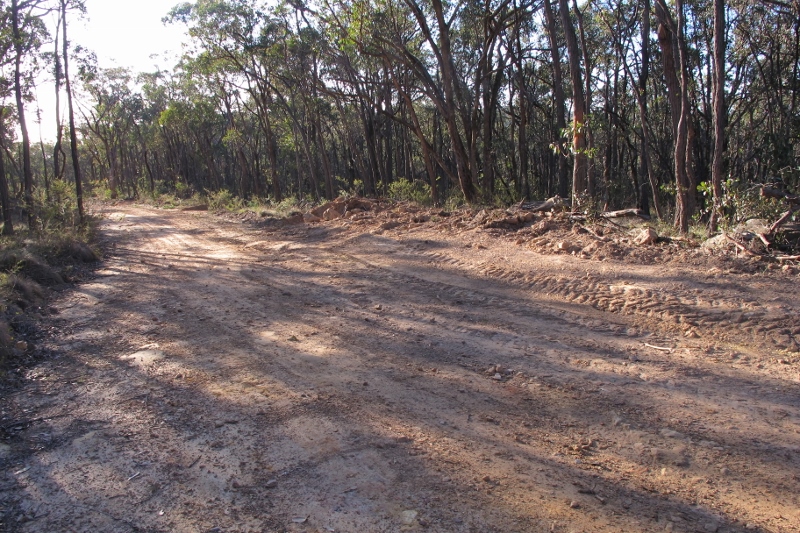
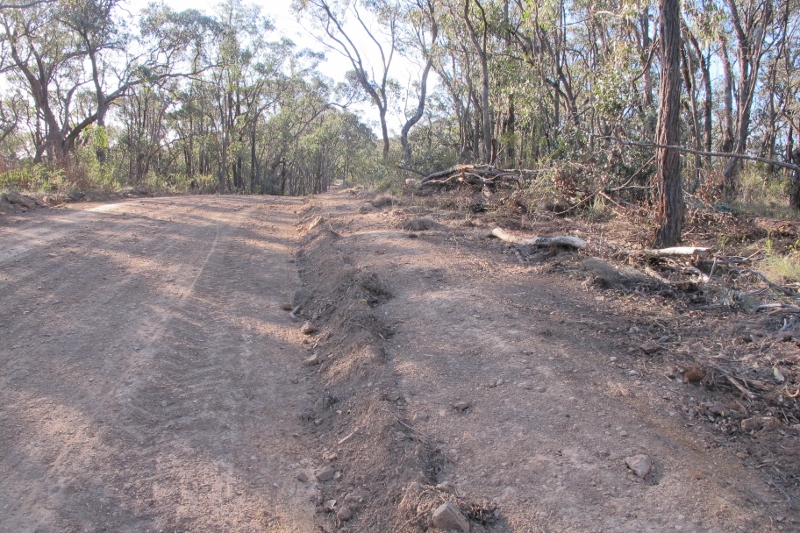
Though locally severe, the burn was patchy, apparently inhibited by overcast, cool, still conditions. In any case, most of the area seems to carry a very low fuel load. Residents who have examined the area have expressed the view that the most serious damage done in the course of the operation was the crude preparatory track work. FOBIF has written to David Major, the responsible manager, about this [see our post], but has received no reply. In addition, in their laudable efforts to exclude an Eltham Copper Butterfly population from the burn, the managers have created a rough bare earth zone which could quickly become a damaging bike track unless quickly rehabilitated. We’re hoping this will be done within weeks.

Kalimna, late April 2015: a combination of low fuel loads and cool conditions created a patchy management burn.

Kalimna, late April 2015: a combination of low fuel loads and cool conditions created a patchy management burn.

As to the medium to long term effects of this fire, we’ll be visiting the area regularly in the coming months and reporting on what we see.

Meanwhile, the Inspector General for Emergency Management has finished his review of performance targets for fuel reduction on public land, and has submitted it to the State Government. We’ll report on details when they become available.

Posted in Fire Management, News | 2 Comments

FOBIF walks

Walks for young people

FOBIF are running lots of events for kids this year. We have bushwalks for small children with their families, youth walks for people who are secondary school age and a June School Holiday program based in the Castlemaine Botanical Gardens. 

Our flyer gives information about all of these events and contact details. Many of the events are free or free for members, so tell your friends and families so that we can foster a love and protection of our local wild places. Click here to see a report on our first young people’s walk for 2015.

FOBIF April walk

At Dunn's reef: a convenient guide was available for consultation on mosses  brought out by recent light rain.

At Dunn’s reef: a convenient guide was available for consultation on mosses brought out by recent light rain.

In spite of the months long dry, resilient moss came back after light rain in Muckleford in Mid April.

In spite of the months long dry, resilient moss came back after light rain in Muckleford in Mid April.

A wild and windy Sunday morning did not deter the 25 walkers who checked out the landscape of the Muckleford State Forest on Sunday 19th April. Capably led by Neville Cooper this 7 km walk starting from the Red, White and Blue Poppet Head Mine went past the proposed site for a Castlemaine Hot Rod Centre (CHRC) where plans for a Dynamic Vehicle Testing Facility, Events and Recreation development are being discussed, and then on to a tour of Dunn’s Reef and a quick lunch break. The understorey through this area is gradually recovering and the bird life was taking advantage of this – an always changing landscape!


Next month’s walk will be in the Nuggety Ranges. Check the program for details.

Posted in News | Comments Off on FOBIF walks

Kids walk and craft at Clinkers Hill

Eight families from across Castlemaine came together to hear about restoration work and environmental values at the Clinkers Hill Bushland reserve on Sunday the 26th April.

260415_2678

Elvyne explaining how to identify a Stringy Bark.

Elvyne Hogan gave an introduction to the site, outlining work done by the Victoria Gully Group, showing little ones which species of eucalypt that occupied the area lead to funding for a project with Connecting Country through their Yellow Box Woodland program.

Cassia Read then introduced the children and adults to the Cherry Ballart and collected insect galls which shortly afterwards became bush creatures with the addition of feathers, leaves and sticks found on site. After a snack and cuppa the children were encouraged to find some ‘habitat’, a big word when you’re four, for their creatures.

Kids and adults enjoyed the bush and company of other like minded families.

A lichen that Cassia pointed out on the walk back.

A lichen that Cassia pointed out on the walk back.

On the return walk Cassia contiuned to share her knowlege about the plant and moss species found in the reserve.

Thanks to Elvyne and Cassia for their time in presenting to our small people and their families.

(Click on photos below to enlarge.)

Posted in News | 1 Comment

Long-leaved Box blossoming

Long-leaved Box E. Goniocalyx is now in flower in our region. It generally flowers from March to May. The following photos of the buds, blossom and fruit of a Long-leaved Box at the summit of Mount Tarrengower were taken on 31 March.  (click to enlarge)

Posted in News | Comments Off on Long-leaved Box blossoming