FOBIF September walk

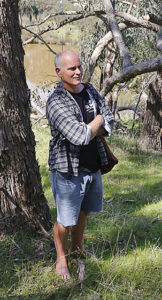
Damien Cook with Crocodile Reservoir in the background.

The sunny forecast for last Sunday meant a big group came to our second last FOBIF walk for 2017. We set out from near the corner of Spring Gully Road and Fryers Road and proceeded across country to Crocodile Reservoir before turning back to the starting point.

Leaders Damien Cook and Elaine Bayes once again provided an informative and entertaining commentary on interesting features of the landscape and local flora and fauna. Julian Hollis helped out with geological information as did Frances Cincotta with plant identification..

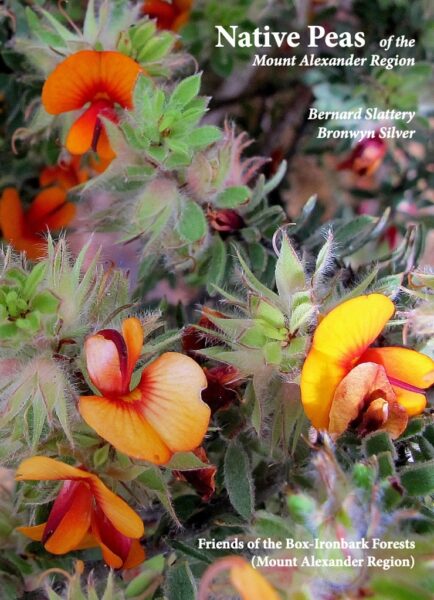
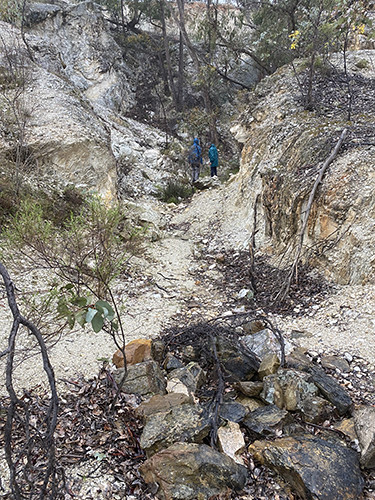
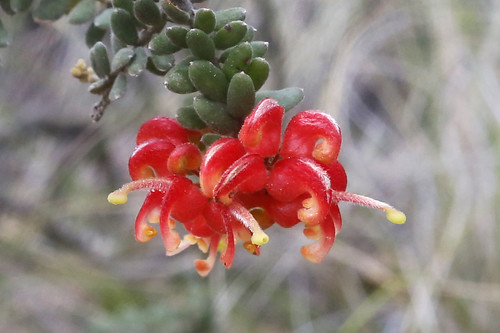
As you can see from the photos below there was a spectacular display of spring flowers. Click on photo to enlarge. Photos were contributed by Ruth, Rosemary and Bronwyn.

Our last walk for the year on 15 October will be in Muckleford Forest led by local Geoff Nevill. The focus will be on orchids, other wildflowers and some mining remains.

Posted in News, Walks | 1 Comment

Don’t miss this show

Mountains and Waterways, our latest photographic exhibition at TOGS cafe, finishes on Thursday 28 September. Photos range from a closeup of leaves underwater to landscapes of Mount Alexander and Mount Tarrengower. There are also 5 terrific birds on water images by Patrick Kavanagh, Damien Kelly, Geoff Park and Mitchell Parker. The response to the show has been very positive with a number of people commenting that the photos remind them of why they live here. 

All photos are for sale for under $100 including frames. Proceeds of sales go to FOBIF to cover costs. You can see more Mountains and Waterways photos on our Flickr site and on previous posts here and here.

We would like to thank TOGS once again for their support in mounting this exhibition. This is our fourth show at the cafe and our eighth in total. 

Harcourt reservoir. Photo by Frank Foster. The reservoir is not on most people’s list of local picturesque spots, but this photo makes a claim for it’s charms.

Posted in News, Photo Exhibitions | Comments Off on Don’t miss this show

Fires and misfires 1: how does a planned burn happen?

DELWP fire officers had two info sessions in this region last month to brief residents about the upcoming fire season, and planned burning operations. To see where these burns are taking place on the Department of Environment’s interactive map, click here.

It’s not the friendliest map, but a bit of persistence will give you a detailed look at where burns are planned for the next three years.

Among the information available at the drop in sessions was a useful A4 sheet, How does a planned burn happen? The sheet is divided into four sections: Planning the burn; Before the burn; On burn day; and After the burn. It would be fair to say that the info on the

sheet is a bit idealised: FOBIF has had experience with burns which don’t look quite as smoothly planned and implemented as the scenario on the sheet. In particular, the statement that firefighters ‘rake around trees to protect animal habitat’ will ring rather hollow to readers of this website, familiar with the apparently relentless destruction of habitat trees in Department operations.

More seriously, it’s a pity there was no room on the document to explain what the Department does to assess the actual achievement of its burns. The After the burn section is restricted to showing how firefighters patrol the burns to make sure it’s safe. There’s nothing to say how the burn is assessed for its actual fuel reduction, medium to long term. Nor is there mention of a critical overview of the burn from the environmental point of view. Well, it’s a short document, and only the really important stuff would fit on it…

…And on the subject of what’s important, and what’s less important, readers may want to look at Alison Pouliot’s provocative article in the latest edition of the invaluable Wombat Forestcare Newsletter. She poses the question, has our bush been reduced in the public mind to fuel? And has it become, simply, the enemy? ‘Summer is gone. Over. Finished. It is now officially the fire season…Not only has summer become the enemy, but so has the forest.’

Check it out.

Posted in Fire Management | Comments Off on Fires and misfires 1: how does a planned burn happen?

Fires and misfires 2: don’t be put off

In spite of these gloomy considerations, fire managers can point to some significant advances over past practices. Community consultation and information is certainly taken more seriously than it was 15 years ago. And the cautious reintroduction of indigenous burning to the region is to be welcomed—not least because this kind of burning takes seriously the whole question of land health, and is not directed simplistically at narrow questions of safety.

But blips can happen. As readers of our original notice can see, not all the information dispensed at the drop in sessions is necessarily reliable, and sometimes persistence is needed to get the facts. In the case in question, a member of the public was told that a zone in the Maldon area would be slashed, not burned, and that this would take place in Autumn. Both these ‘facts’ were wrong. A quick check of the map link above will show that the area, a reserve adjoining Rowe’s road, is a burn zone: and residents have already been informed by DELWP that the operation is to take place in spring.

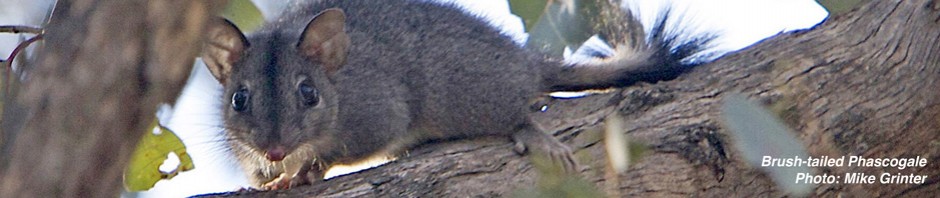
Maldon Urban Landcare is currently negotiating a meeting with DELWP on the matter, and has already received an undertaking that phascogale habitat will not be burned during the spring breeding season. Endangered phascogales and sugar gliders frequent the area in question. We’ll see what comes out of the negotiation.

The moral of the story seems to be: look very hard at the documentary info—and don’t be scared to persist if you think you’re being dealt a wrong hand…

Posted in Fire Management | Comments Off on Fires and misfires 2: don’t be put off

Gardening for Wildlife

On Sunday 22 October a seminar on Gardening for Wildlife will be held in St Arnaud. Expert speakers including Castlemaine-based Cassia Read will discuss how to create habitat for native wildlife in home gardens. The event is free and you can find out all the details in this flyer.

Posted in News | Comments Off on Gardening for Wildlife