Let’s go and tear up some country, fellas

There’s something very striking about advertisements for SUV’s: almost every one contains an image of a car either tearing up some country, plunging through a waterway, or driving along a remote beach. TV advertisements of these cars will sometimes do all three, as watchers of sporting broadcasts can attest.

The gist of this quite substantial propaganda barrage is: ‘go for it, rip up the country, that’s what these machines are for.’ There might be an additional message: ‘be a man: show the country who’s boss.’ We’re not sure about that one.

Isn’t it great tearing up the country? Illustration of a ‘review’ of Jeep Cherokee in the Age, which should know better.

This is just hoon behaviour, and most 4WD drivers don’t go for it, fortunately. In fact, the Code of Conduct of 4WD Australia includes the following:

‘1. Obey the laws and regulations for Recreational Vehicles that apply to public lands.
‘2. Respect the cultural, heritage and environmental values of public/private land,
by obeying restrictions that may apply.
‘3. Respect our flora and fauna. Stop and look, but never disturb…
‘7. Adopt minimal impact camping and driving practices.’

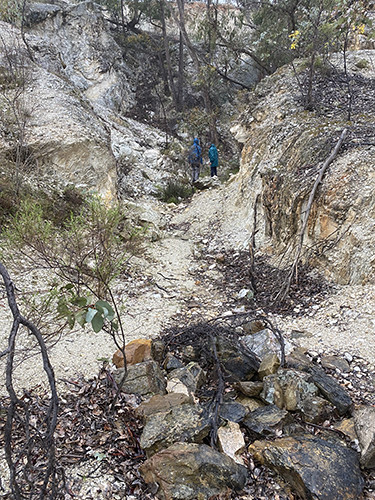
There are enough drivers around, however, who seem to think that ripping the country apart is what life is all about, and it’s a pity that they should be getting as much encouragement as they are. The results can be seen all over the country, and the photo below is a sample.

Section of the Goldfields Track near Irishtown, October 2: this kind of destruction is the direct consequence of irresponsible advertising of recreational vehicles.

Most drivers don’t behave like this, and it’s about time the industry and its publicists grew up and stopped promoting hoon behaviour.

Here’s a curious footnote, in this letter to the August issue of the RACV RoyalAuto magazine, and the editor’s response, under the heading, ‘Keep off the beach’:

‘Your writer recently visited Kangaroo Island with his 4WD and left an intrusive footprint on the formerly pristine Snellings Beach (“The Other Kangaroo Island,” R A July). Snellings is a small beach that can be walked in a few minutes. This allows you to experience how nature does perfection. A bonus is that pedestrians might see the rare hooded plover eggs and the birds get a chance of survival. We have roads for cars, beaches are for the creatures that depend on them. It is a privilege for humans to enjoy them.

Trish Edwards, Balliang

Editor’s note: The online version of the story has been modified to include our apology and to take out reference to driving on the beach.’

Out of curiosity, we just checked the online version of the July RA. The offending article doesn’t seem to be modified at all. It’s headed by a large photo of a  beach, a car parked in the foreground, and numerous tyre marks on the sand. The text reads, in part, ‘Within minutes we’d driven down onto the beach ourselves, our 4×4 rolling confidently over the firmly packed sand. Maybe five other people were scattered along Snelling’s pristine length. We’d found the other Kangaroo Island.’

Not so ‘pristine’ now, maybe. We’ve contacted the editors of Royalauto for a clarification. Oh, and we couldn’t find the apology, either. On the other hand, it’s not easy to find things in online versions of magazines.

Posted in News | 2 Comments

New wetland ecology and training courses

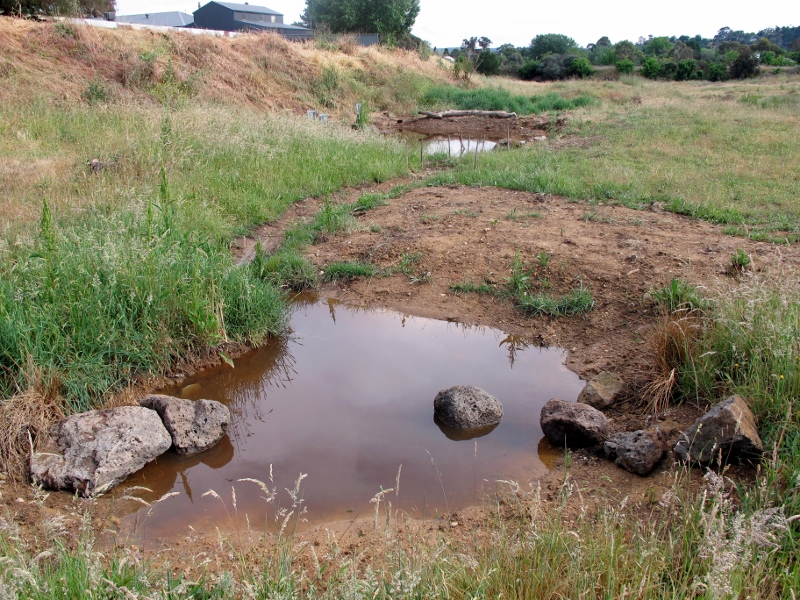
Intermittent Swampy Woodland, Aquatic Herb land with emergent Red Gums, Scotties Billabong, Lindsay Island

SERA 2016 award winning ecologist Damien Cook and Elaine Bayes have sent us information on their upcoming wetland courses.

NEW: THE WONDERFUL WETLAND ECOLOGY BUS TOUR, 12 & 13 OCT 2017
Join us on a bus tour through some of northern Victoria’s most ecologically diverse wetlands that will be looking their best because of recent rainfall and flooding. Learn how ecological drivers determine wetland ecology. Dixie Patton, Barapa Traditional Owner will share knowledge on aboriginal uses of these amazing wetlands.  Other land managers will meet us along the way.

NEW: WETLAND RESTORATION AND MANAGEMENT, 16 & 17 NOV 2017
Learn about wetland restoration and management over 2 days with Damien Cook by visiting ‘Waterways’; a SERA 2016 award-winning wetland restoration project which he was involved in planning and implementing, followed by the 200 hectares of coastal park at the Victorian Desalination Plant, Wonthaggi.  Learn more about these projects here.

THE WETLAND PLANT IDENTIFICATION DAYS STARTS OCT 2017 – MAR 2018
Learn to identify the most common wetland plants. Choose 1, 2 or all 3 days. Continue reading

Posted in News | Comments Off on New wetland ecology and training courses

FOBIF September walk

Damien Cook with Crocodile Reservoir in the background.

The sunny forecast for last Sunday meant a big group came to our second last FOBIF walk for 2017. We set out from near the corner of Spring Gully Road and Fryers Road and proceeded across country to Crocodile Reservoir before turning back to the starting point.

Leaders Damien Cook and Elaine Bayes once again provided an informative and entertaining commentary on interesting features of the landscape and local flora and fauna. Julian Hollis helped out with geological information as did Frances Cincotta with plant identification..

As you can see from the photos below there was a spectacular display of spring flowers. Click on photo to enlarge. Photos were contributed by Ruth, Rosemary and Bronwyn.

Our last walk for the year on 15 October will be in Muckleford Forest led by local Geoff Nevill. The focus will be on orchids, other wildflowers and some mining remains.

Posted in News, Walks | 1 Comment

Don’t miss this show

Mountains and Waterways, our latest photographic exhibition at TOGS cafe, finishes on Thursday 28 September. Photos range from a closeup of leaves underwater to landscapes of Mount Alexander and Mount Tarrengower. There are also 5 terrific birds on water images by Patrick Kavanagh, Damien Kelly, Geoff Park and Mitchell Parker. The response to the show has been very positive with a number of people commenting that the photos remind them of why they live here. 

All photos are for sale for under $100 including frames. Proceeds of sales go to FOBIF to cover costs. You can see more Mountains and Waterways photos on our Flickr site and on previous posts here and here.

We would like to thank TOGS once again for their support in mounting this exhibition. This is our fourth show at the cafe and our eighth in total. 

Harcourt reservoir. Photo by Frank Foster. The reservoir is not on most people’s list of local picturesque spots, but this photo makes a claim for it’s charms.

Posted in News, Photo Exhibitions | Comments Off on Don’t miss this show

Fires and misfires 1: how does a planned burn happen?

DELWP fire officers had two info sessions in this region last month to brief residents about the upcoming fire season, and planned burning operations. To see where these burns are taking place on the Department of Environment’s interactive map, click here.

It’s not the friendliest map, but a bit of persistence will give you a detailed look at where burns are planned for the next three years.

Among the information available at the drop in sessions was a useful A4 sheet, How does a planned burn happen? The sheet is divided into four sections: Planning the burn; Before the burn; On burn day; and After the burn. It would be fair to say that the info on the

sheet is a bit idealised: FOBIF has had experience with burns which don’t look quite as smoothly planned and implemented as the scenario on the sheet. In particular, the statement that firefighters ‘rake around trees to protect animal habitat’ will ring rather hollow to readers of this website, familiar with the apparently relentless destruction of habitat trees in Department operations.

More seriously, it’s a pity there was no room on the document to explain what the Department does to assess the actual achievement of its burns. The After the burn section is restricted to showing how firefighters patrol the burns to make sure it’s safe. There’s nothing to say how the burn is assessed for its actual fuel reduction, medium to long term. Nor is there mention of a critical overview of the burn from the environmental point of view. Well, it’s a short document, and only the really important stuff would fit on it…

…And on the subject of what’s important, and what’s less important, readers may want to look at Alison Pouliot’s provocative article in the latest edition of the invaluable Wombat Forestcare Newsletter. She poses the question, has our bush been reduced in the public mind to fuel? And has it become, simply, the enemy? ‘Summer is gone. Over. Finished. It is now officially the fire season…Not only has summer become the enemy, but so has the forest.’

Check it out.

Posted in Fire Management | Comments Off on Fires and misfires 1: how does a planned burn happen?