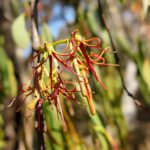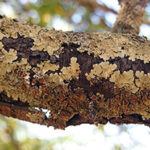
Launch of Alison Pouliot’s fungi book

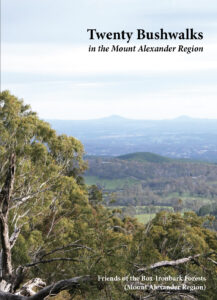
In an earlier post we told readers about Alison Pouliot’s new book, The Allure of Fungi, published by the CSIRO. Details of the book and where to purchase it can be found here.

Wombat Forestcare and Alison will formally launch the book on Thursday 28 February at the Woodshed, 21a Raglan Street, Daylesford at 6pm. All are welcome. There will be a celebratory glass of champagne and some readings from the book.


Alison is running even more workshops in Victoria this year. Two of the new workshop topics are ‘Visualising the Environment’ and ‘Trees in Focus’. You can find out all about them here

Posted in News | Comments Off on Launch of Alison Pouliot’s fungi book

A happy new year!

The FOBIF committee hopes you’ve had a good start to the new year, and take good care not to melt in the coming week’s heat.

The FOBIF monthly walks program for 2019 is now available, and can be found by clicking on ‘Walks’ above. A paper copy is being mailed to all members this week. Weather conditions and other factors may bring some changes, so we recommend that you check this site before each walk for updates.

Open committee meetings

Remember: FOBIF committee meetings are open to all members. They’re at the Continuing Education building, Templeton Street Castlemaine, on the second Monday of every month from February to November, at 6 pm. Come along and have a say—or ask a question!

There is a vacancy on the committee owing to Naomi Raftery’s departure for Adelaide. If you’re interested, contact us.

Subscriptions are due now: Member subs–$10 per individual, $15 a family—are due now. [But this reminder doesn’t apply if you’ve paid your sub in the last three months…] If you don’t receive a membership forms in the mail you can download one here

Posted in News | Comments Off on A happy new year!

A model project: Vicroads ready to start on Pyrenees Highway

A well-attended meeting in Newstead last Tuesday was told that Vicroads’ Pyrenees Highway tree removal and wire rope barrier project was about to proceed. The meeting was therefore a briefing, not a consultation: it was not going to change anything essential. Engineers were put through the wringer by resident questions, but there was an air of fatality about the proceedings.

Strange monument at the Ravensood interchange, Calder Freeway: is this a symbol of the relationship between human beings and the environment? Nearly 2000 trees, many of them ancient,were destroyed for this project. It will take several hundred years for the ‘offsets’ planted to replace them to come anywhere their size.

Although Vicroads has made some compromise on its original proposals of two years ago, its project  is essentially the same. Questioned about the ultimate rationale behind it, engineers cited ‘modelling’. This modelling was unexplained, but– it is claimed–it shows that reducing the speed limit on the highway would have some beneficial effect, but wire ropes and tree removal would have more. Against a background of repeated campaigns to persuade us that ‘speed kills’ and that we should ‘wipe off 5’, this claim was greeted with scepticism by your FOBIF correspondent.

Engineers were also quizzed about the actual rationale behind the project, justified by accident statistics involving one fatality not related to the road condition. They were unclear in their responses to these questions, arguing that their role is implementation, not the justification of the project.

There has been some confusion about this project over the years. For example, we were told two years ago that rumble strips had been removed from the project for cost reasons. Last Tuesday, however, we were assured that they are well and truly in it, though it’s not clear whether centre of the road plugs will be installed. And it seems possible that a speed limit reduction will be ‘considered’.

All this is against a background of far more serious Vicroads atrocities around the state, especially on the Calder at Ravenswood and the Western Highway west of Beaufort. No one disputes the need for safer roads: but it seems that in pursuit of this end environmental concerns are froth to be run over by the bulldozer. We assume that authorities would not demolish Saint Paul’s Cathedral to improve safety in the Melbourne CBD; they don’t have too much trouble obliterating thousands of trees, many of them hundreds of years old, in pursuit of the same end.

Vicroads has undertaken to run a further ‘consultation’ soon. It’s fair to say that the Vicroads personnel at these meetings are unfailingly professional and courteous. The problem seems to lie deeper: that in any consideration of land management (water, fire, roads…) the environment comes off second best. That chicken has still to come home to roost.

Posted in News | 3 Comments

Not enough flies? How can that be a bad thing?

Do a few trees matter?The context of all the above is not only the preferences of a few tree lovers. It’s found in the map below:

It seems that at every point in what passes for debate these days, we’re being asked to choose between the environment and people. There is no choice: people are dependent on the health of the environment. Whatever affects the environment, affects people. Large trees have a softening effect on environmental extremes…and extremes are what we are increasingly facing.

And on another matter to do with the fragility of nature: anecdotal evidence is coming to us of a relative absence of insects in the region this summer. People have observed that they aren’t being as irritated as they usually are by flies and other insects. And when was the last time your windscreen was spattered with insects? This may be just one of those seasonal variations, but for over a year now reports have been coming in about a massive decline in insect populations worldwide. You can find a couple here and here. Does this have to do with rising temperatures, or vegetation clearance? Science is cautious on the matter…but we’d argue that in any case, the precautionary principle should apply: whatever makes natural systems more resilient in hard times is good; whatever damages them should be avoided.


Posted in News | Comments Off on Not enough flies? How can that be a bad thing?

A new use for public land: free storage space

We’ve seen the margins of public land around towns sometimes used by residents to store their unwanted stuff—car bodies, machinery, etc. And we’ve seen residents encroach onto public land with garden extensions and attempts to expand their own properties. And here’s a new development, in the Fryers Forest on an unnamed track near White Gum Track: a neat stack of pallets, two of them loaded with building blocks labelled: ‘These blocks are privately owned’, with a phone number attached. The material lasted a couple of weeks, then disappeared. We believe no rent was paid to DELWP for storage.

We’re hoping this doesn’t become a popular pastime: building materials ‘stored’ in the Fryers Forest, December 2018.

Posted in News | Comments Off on A new use for public land: free storage space