Plant some understorey, check out a weed

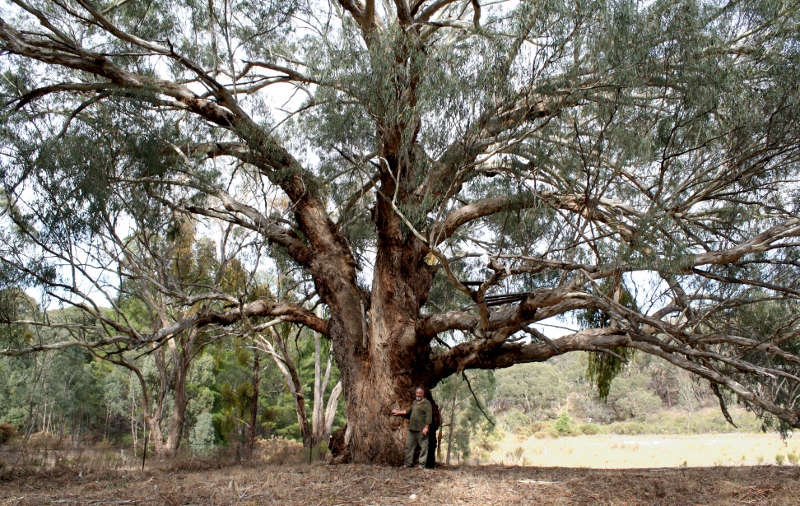
FOBIF is planning an understorey planting and weed attack working bee at the famous Chewton Yellow Box on National Tree day, Sunday July 29, from 10 am to 12 noon.

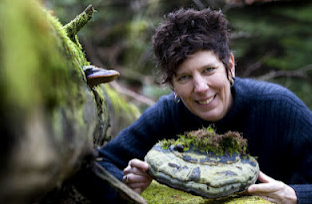
FOBIF foundation president Doug Ralph at the Chewton Yellow Box--it's definitely a monument worth looking after. Photo: Bronwyn Silver


The tree, one of the oldest in the district, is on the Great Dividing Trail near Fairbairn Street. FOBIF last year did some bridal creeper eradication work at the site, and this is a follow up effort. The site is about 100 metres from Forest Creek, near a small school pine plantation. The quantity and variety of weeds in this area is quite desperate, but the potential for restoration of a beautiful creek valley landscape offers plenty of motivation for workers to put a dent in the evil empire.

There’ll be more details closer to the event–but put it in your diary now!


Posted in News | Comments Off on Plant some understorey, check out a weed

Tall Greenhoods are flowering

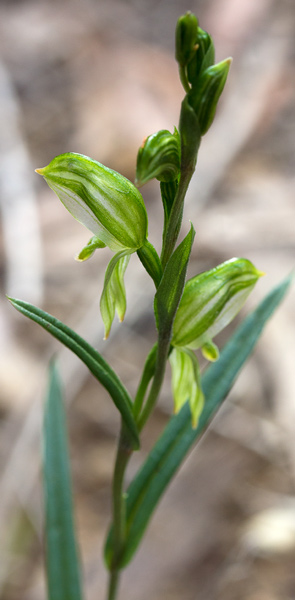
Tall Greenhood, Poverty Gully. Photo: Bronwyn Silver, 10 June 2012

The Tall Greenhood Pterostylis longifolia is one of 16 local species of Greenhoods. Worldwide there are 120 species with about 100 of these endemic to Australia.

Along with other Greenhoods, this one lures insects, usually gnats, to the plant with pheromones. When the insect touches the lower lip of the orchid (labellum) it flings the insect back into the hood and closes over it. The movement of the insect as it attempts to escape assists in the pollination process. Once the insect escapes the ‘trap’ is reset.

Tall Greenhoods are one of the earliest species of Greenhoods to flower in this area. They are characterised by long leaves and multiple flowers on each stem. As with other Greenhoods the flowers are translucent which is thought to encourage trapped insects to move towards the light.

To view several other types of Greenhoods have a look at our FOBIF Flickr Gallery.

Posted in News | Comments Off on Tall Greenhoods are flowering

FOBIF photo show at Tog’s Cafe

The latest FOBIF Mamunya exhibition opened at Tog’s Cafe in Lyttleton Street, Castlemaine last Friday. It runs till the 13 July. The exhibition continues a tradition the Friends started in 1999 with their first Mamunya festival. This word comes from a Dja Dja Wurrung chant, ‘pata, mamunya, jirarunga,’ meaning, ‘wait a while, don’t touch it, growing up.’

This time twelve photographers have contributed their photos. The images highlight the often overlooked beauty and intriguing characteristics of our local flora and fauna. Five of the 26 exhibition photos are included in the slideshow below.

Posted in News | Comments Off on FOBIF photo show at Tog’s Cafe

Soil protector: unobtrusive, and undervalued?

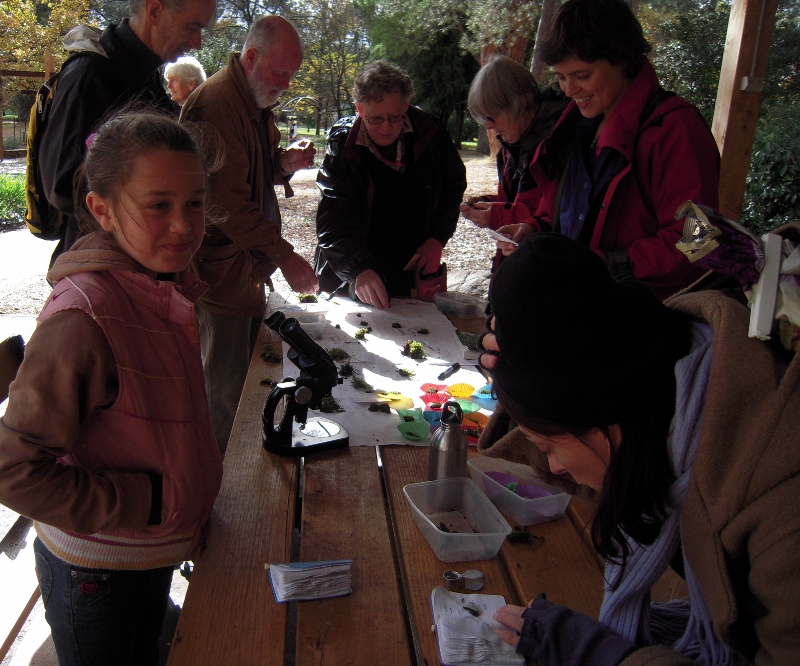
FOBIF’s moss group met at the Castlemaine Botanical Gardens last Saturday to move the project further towards its target: to publish a field guide to mosses of the region in Autumn next year.

This is not an eccentric interest in a picturesque but unimportant corner of our environment. Mosses play a key role in repair of damaged land and protection of soil against erosion. DSE analyses for the Goldfields bioregion show the following interesting figures: in Heathy Dry Forest, 10% of understorey is bryophytes [ie, mosses and liverworts] and lichens, and 10% is ‘soil crust’. In Box Ironbark Forest, 10% of understorey is bryophytes and lichens, and 20% is ‘soil crust’.

That humble term ‘soil crust‘ covers a combination of life forms, including mosses and lichens: which means that your unobtrusive moss is covering a hell of a lot of ground in our region.

FOBIF moss group at work: moss is not just a green splodge...


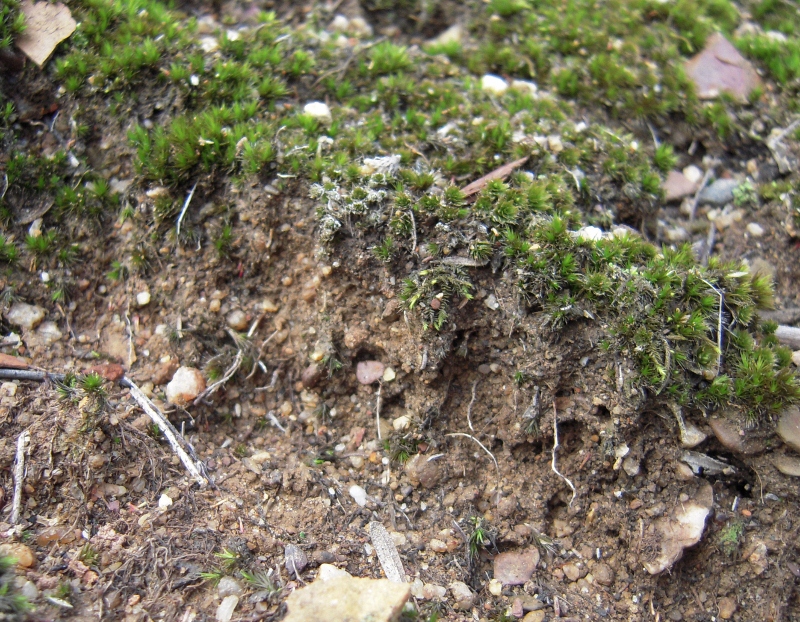
The protective action of moss is easy to see. The following picture shows clearly how soil has been washed away from the area not covered by moss:

Road embankment, Castlemaine: soil has been washed away from the edge of the moss bed.


Moss and soil crusts are vulnerable to disturbance by trampling, or fire. Although mosses are not flammable, and therefore cannot be classed as fuel, they are often destroyed by ‘fuel reduction burns’. The following picture tells a story:

Continue reading

Posted in Moss and Liverwort Field Guide group, News | Comments Off on Soil protector: unobtrusive, and undervalued?

World Environment Day to be celebrated this Sunday in Castlemaine

To celebrate World Environment Day in our Shire, an community fair will take place in the Castlemaine Market Building from 9am-1pm on Sunday 3rd June. Whether people are interested protecting our diverse plants and animals, or sustainability initiatives and green technology opportunities, the fair will be a great source of information on what is happening locally.

The ‘mini expo’ format will give visitors an opportunity to talk to representatives from local environmental organisations, community groups and government agencies including: Connecting Country, Friends of the Box-Ironbark Forests, Landcare, Mount Alexander Sustainability Group, Trust for Nature, Parks Victoria, Mount Alexander Shire Council and Castlemaine Community House – Growing Abundance.

Among the attractions of the day is the opportunity to see a specimen of the rare and endangered Southern Shepherds Purse – a plant growing in the Mount Alexander Regional Park and nowhere else in the world!

The Castlemaine Farmers Market and Castlemaine Market Building Art Showcase 2012 will be on at the same time.

Kirsten from Trust for Nautre with Swifty the Parrot at last year's World Environment Day

Posted in News | Comments Off on World Environment Day to be celebrated this Sunday in Castlemaine

Places available for Alison Pouliot’s fungi workshop

There are still places available at Alison Pouliot’s Fungi Ecology Workshop this coming weekend in Inglewood.

The workshop details are posted at:

http://wedderburncmnnews.blogspot.com.au/2012/04/alison-pouliot-fungi-workshops.html

Posted in News | Comments Off on Places available for Alison Pouliot’s fungi workshop

FOBIF walk to Spring Gully

Eighteen people turned out for the May FOBIF walk led by Barbara Guerin and Lionel Jenkins. The walk was largely focussed on the area’s mining history and Dominique Lavie took a series of terrific photos which are reproduced below.

The morning began with a walk to the top of the Monk with views like the one below.

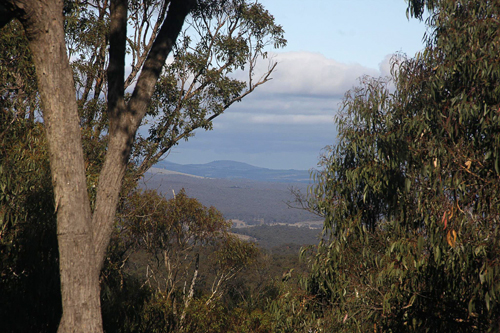
View to the east from the Monk.


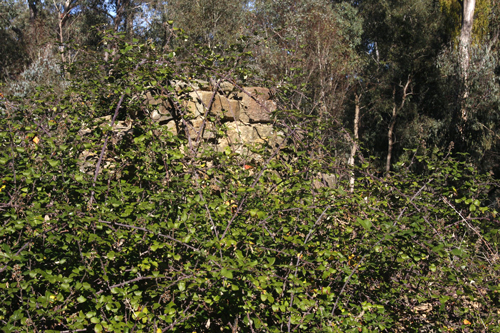
Along Cobblers Gully there were many overgrown remains of an early mining settlement.

Remains of the Cobblers Gully settlement.


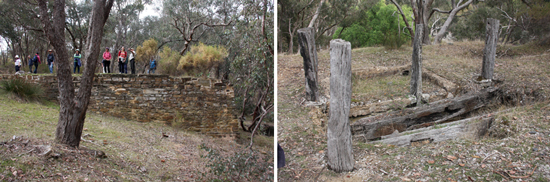
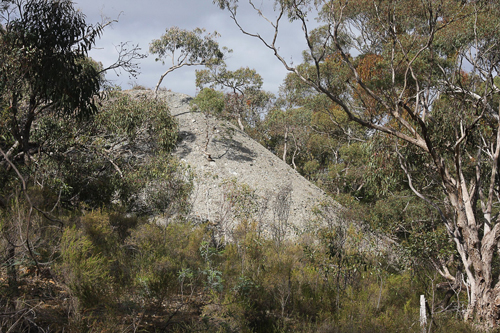
The walk along Spring Gully is covered one of Victoria’s most intact collections of quartz reef mines with well preserved machinery foundations and mullock heaps.  The mines worked from the mid-1850s to the late 1930s.

Spring Gully Mine and Battery ruins


Mullock heap, Spring Gully.


Lunch was enjoyed overlooking an enormous quartz tailing dam.

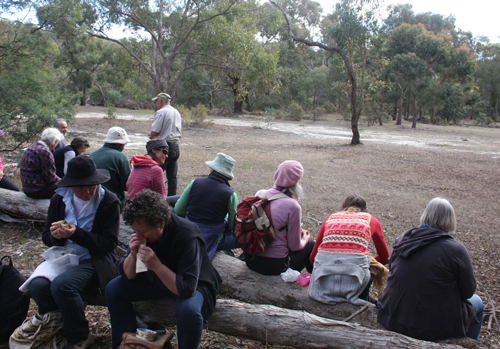
Walkers having lunch at a crushed quartz dam, Spring Gully.


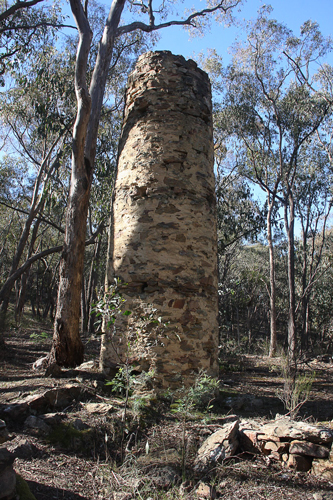
The walk back was mainly off-track. Towards the end we came across this extraordinary chimney pictured below. It was discovered after the walk that according to notes made by Jack Cocks on the Eureka Reef and surrounds the chimney is in the area of the Eureka South mine, which was not particularly rich and closed in the early 1900s.  The reason for the chimney is unclear as the building next to it is not big enough to have housed a steam boiler. It may have been a roasting kiln for mineral recovered from the Eureka Mine battery.


Thanks to Barbara and Lionel for leading their first FOBIF walk and to Dom for her photos. The next walk will be to Tarilta Gorge. Doug Ralph will be the leader.

Posted in News | Comments Off on FOBIF walk to Spring Gully

Campbell’s Creek–past and present

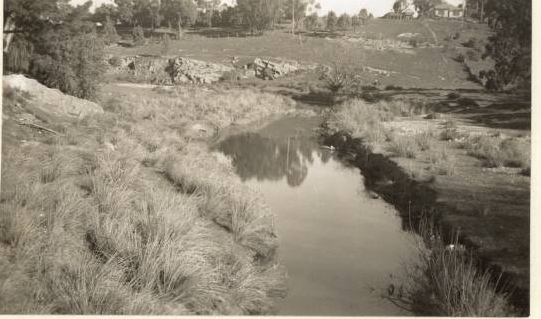
Readers who have followed the intermittent controversies over whether vegetation along creek valleys raises flood levels might be interested in the picture below, showing Campbell’s Creek, looking downstream from the Gaulton St bridge in 1946:

Campbell's Creek, looking downstream from the Gaulton St Bridge, 1946. Lack of vegetation didn't improve flood levels


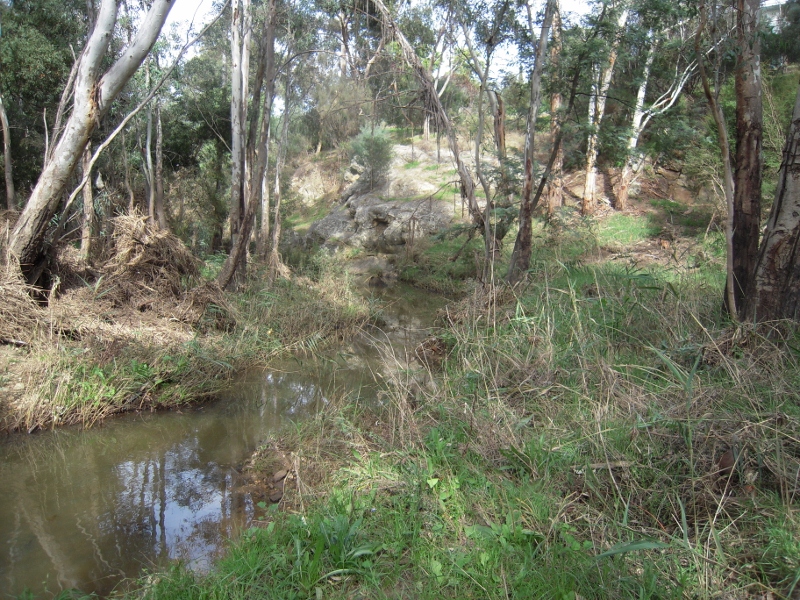
This is a photo of part of the above scene in 2011:

The same section of creek, 2011: the cliff where the creek takes a sharp turn to the left is visible in the background. This section of the creek featured in complaints that vegetation caused flooding in the last year.


The photo shows the result of years of revegetation work. Vegetation in the creek was blamed by a local businessman for raising flood levels last year. What is frustrating about such claims is that they could easily be judged if only the relevant authorities could refer to accurate flood  maps which would show water levels reached in previous floods–when there was little or no tree cover along the creek. Amazingly, it seems that such mapping is not available–not here, and not elsewhere in the state: which means that many planning decisions are made without vital knowledge of the places they’e dealing with. In the absence of such knowledge, we thought we’d run an occasional series of very short items recalling past floods [ones that happened when there was very little vegetation cover around our waterways], starting with 1909.

Continue reading

Posted in News | Comments Off on Campbell’s Creek–past and present

Tarilta: a revealing clean up

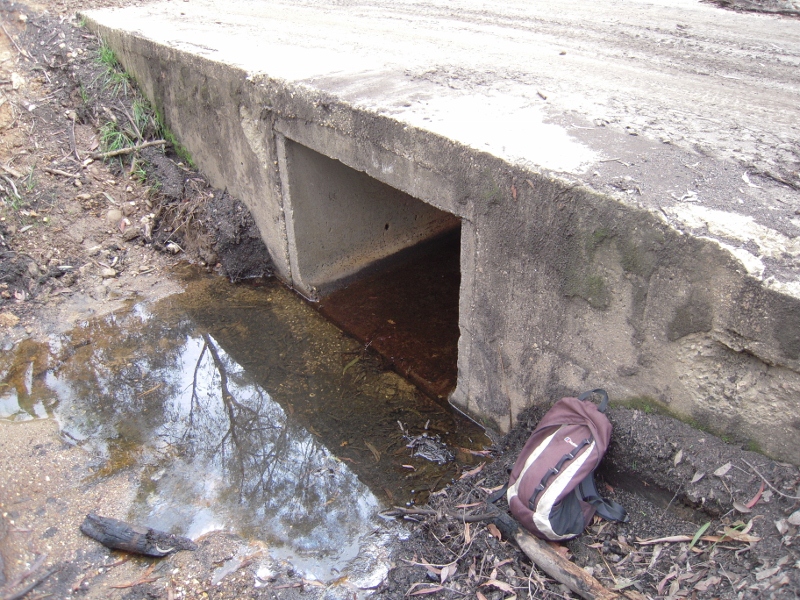
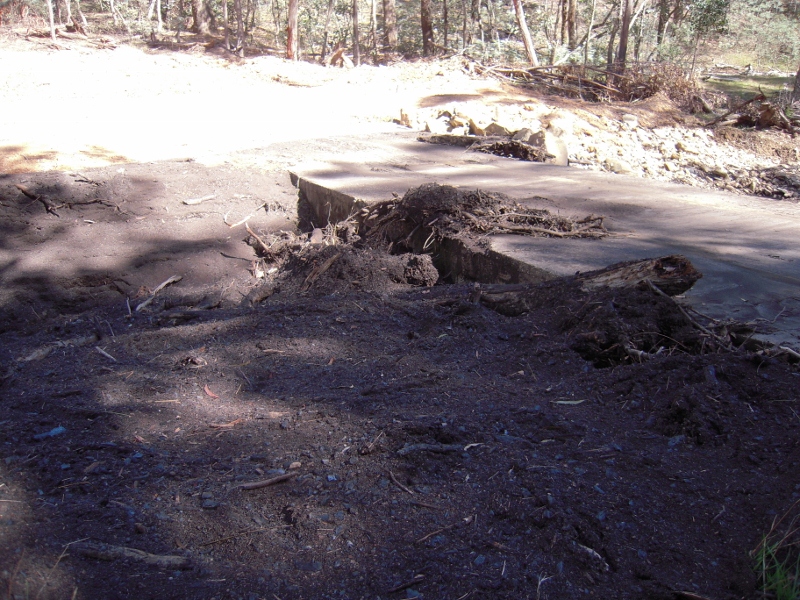
Readers will remember our original report on the destructive ‘reduction burn’ in the Tarilta gorge, with a picture of a choked creek at the Limestone Track crossing. This section of the creek has now been cleared of debris, presumably by DSE, and the works give some idea of soil loss resulting from the burn operation.

The picture below shows the cleaned up crossing:

Tarilta Creek at the Limestone Track crossing, May 22 2012, previously choked with washed out soil and ash.


And here’s the same crossing two months ago:

Limestone Track crossing, March 24 2012: soil washed down from the slopes chokes the creek.


Near the crossing, the soil and ash which has been removed from this small section of creek has been piled into a heap we estimate to be about a metre high, five metres wide and twenty five metres long. This is all stuff which has been washed off the steep slopes of the gorge, and it’s a pile which could be duplicated many times along the creek valley. The damage this soil loss represents to this section of bushland is hard to estimate, but maybe ‘catastrophe’ isn’t a bad word to use.

The works to clear the creek crossing are of course sensible, given that the debris blocking the bridge was a potential flood menace. The clearing of the creek also removes embarrassingly obvious evidence of the damage caused by by the fire. The evidence is still there if you look for it, however.

Posted in Fire Management, News | 1 Comment

‘So what if Newstead is flooded?’

A fascinating collection of old photos of our waterways collected by the Catchment Management Authority gives a bit of a sense of how far things have changed in the last sixty odd years. The picture below of the Loddon river bank upstream of Newstead, for example, shows a bank seriously prone to erosion, with erosion producing activity continuing.

1946 was the year work started on the building on Cairn Curran, in the romantic age of dam building. The project was not without its detractors, however: Newstead councillors expressed the fear that banked up water would flood the town, for example. For their pains they were the object of a tremendous blast in the Castlemaine Mail in March that year from one John Somer: ‘feebleness of brainpower’ was their problem, according to Mr Somer. Newstead was built in the wrong place, he said, seeming to look forward with some enthusiasm to the prospect of the town being flooded.
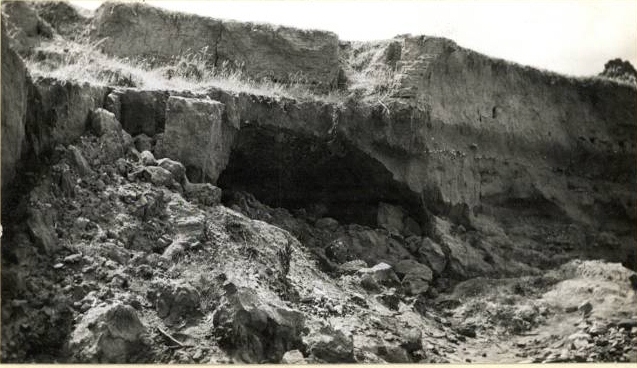
Loddon River bank near Newstead, c 1946: The top four feet, above the dark line, is 'muck, slum and sand' washed down from past dredging operations upstream. The tunneling is prospectors' work.

‘What if it is?’ he asked, before suggesting that everyone would be better off if Newstead was wiped off the map, so that a new, better town could be built on a more sensible site: ‘A new Newstead will arise in all its glory with properly designed alignments and something considerably more elegant in architecture than the higly pigly hotch potch of habitations that now exist.’

Mr Somers’ complacent contemplation of the drowning of Newstead was probably helped by the fact that he lived in Maldon. It’s also a bit hard to understand his negative portrait of a town most people [well, pretty well all people, actually] find very attractive. He did make some interesting points in his letter, however: he suggested that Aborigines, who knew the ‘vagaries of the Loddon’, made their settlements out of reach of floods, and were much more sensible than early white settlers who repeatedly went back to their houses after floods, only to be flooded again a few years later; and his description of the Loddon river flats as being covered with mining debris of ‘muck, slum and sand’ isn’t a bad description of what you can see in the photo above.
 

Posted in News | Comments Off on ‘So what if Newstead is flooded?’