Get social with fobif…


-
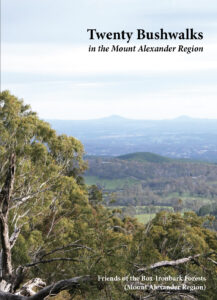
Twenty Bushwalks in the Mount Alexander Region
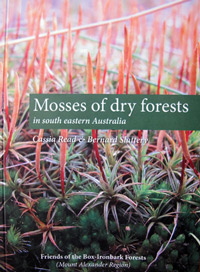
Mosses of Dry Forest book
Eucalypts of the region book
Wattles of the region book
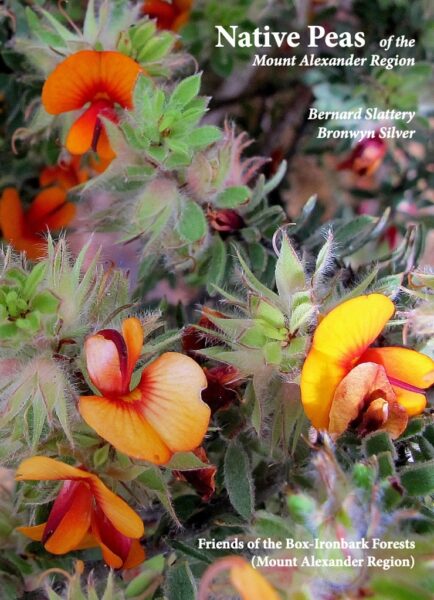
Native Peas of the region book
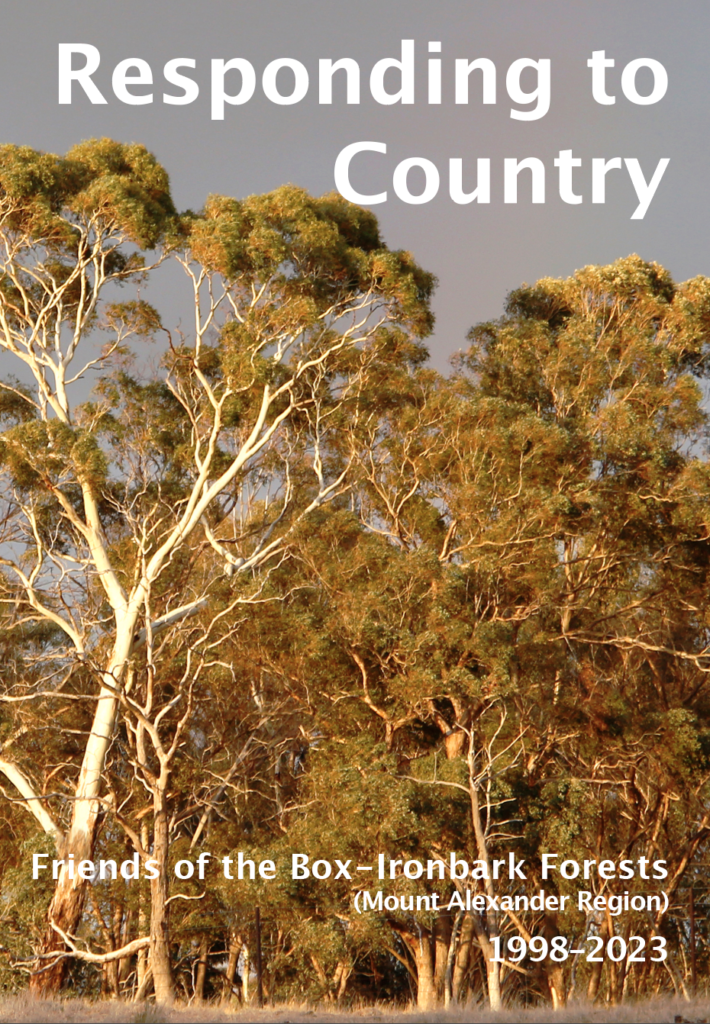
Responding to Country
Category Archives: Nature Observations
Small birds – how to identify them
At this time of year, the Box-Ironbark forests are alive with birds – you can hear lots of different calls and see movements in the trees – but what are the common birds in the forests? Throughout the Box-Ironbark forests … Continue reading
Posted in Nature Observations, News
Comments Off on Small birds – how to identify them
Hurry–season ends soon!
From a few feet away they just look like vivid splashes of various shades of green. Close up, mosses are very different from each other. The Rosalubryum below has characteristic nodding capsules, for example. They’re barely visible to someone standing … Continue reading
Posted in Nature Observations
Comments Off on Hurry–season ends soon!
Pollution monitors
Spring is around the corner, with spectacular flowering of Hardenbergia, and emergence of many other flowering plants like Hovea, Daviesia and Hakea. But by far the most prolific forms of life in the bush at the moment are the mosses … Continue reading
Posted in Nature Observations
Comments Off on Pollution monitors
More than wildflowers
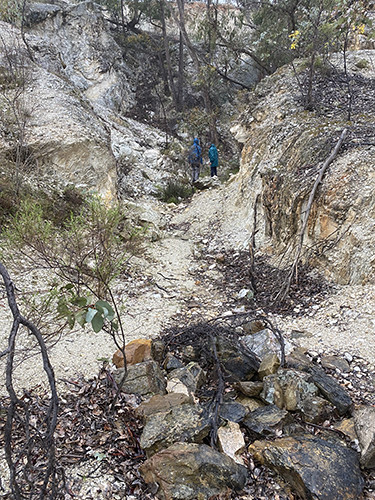
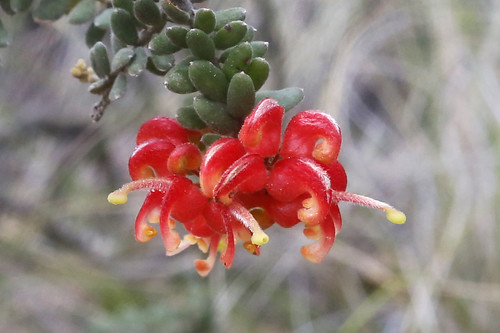
Two FOBIF members recently visited the south end of the Castlemaine Diggings National Heritage Park to see what was in flower. Common Heath Epacris impressa in its pink and white forms was everywhere. Downy Grevillea Grevillea alpina, Bushy Needlewood Hakia … Continue reading
Posted in Nature Observations, News
Comments Off on More than wildflowers
Nuggetty Walk
Thirteen people braved the cold, foggy and wet conditions on the July FOBIF walk to the Rock of Ages. This magical site is situated on top of Mount Moorul which is a couple kilometres north of Maldon. It is part of … Continue reading
Posted in Nature Observations, News
1 Comment
Lichens galore
One feature of the relatively good rains we’ve had in the last year or so has been the great shows of lichens. Lichens are partnerships between a fungus and an alga. The algal partner enables the organism to use photosynthesis … Continue reading
Posted in Nature Observations, News
Comments Off on Lichens galore
It’s winter in Mount Alexander
It looks like we’re going to get another real winter: cold, and a sense of moisture in the air, whether as mist, drizzle or proper rain. There’s still plenty to see in the bush, however, even as we approach the … Continue reading
Posted in Nature Observations
Comments Off on It’s winter in Mount Alexander
Autumn ends
One sign of autumn is the prolific seeding of the local coffee bush [Cassinia arcuata]. Cassinia is one of the good soldiers of ruined land, which is why you see it recolonising mining sites. This is what the Cassinia flower … Continue reading
Posted in Nature Observations
Comments Off on Autumn ends
Advance of the micro kingdoms
Alison Pouliot delivered a lively and informative Connecting Country presentation last Thursday to an audience of about 75 people on ‘Fungi: the mysterious kingdom’. No one leaving the Campbell’s Creek Community Centre that night could be in any doubt about … Continue reading
Posted in Nature Observations
Comments Off on Advance of the micro kingdoms
Uncommon beauty conceals a deadly trap
Carnivorous plants can trap prey in a various ways: pitfall traps, flypaper traps, snap traps and lobster-pot traps. The well-known local carnivorous Scented Sundew Drosera whittakeri uses the flypaper trap method. Insects are captured in the sticky dew exuding from … Continue reading
Posted in Nature Observations, News
Comments Off on Uncommon beauty conceals a deadly trap
 Click on image for info/order page
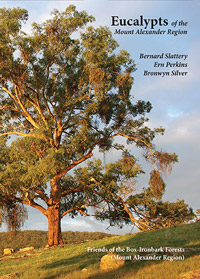 Click on image for info/order page
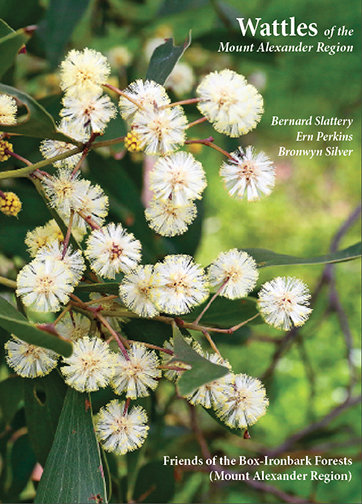 Click on image for info/order page