Kalimna Park: the old might be new, and the new old…

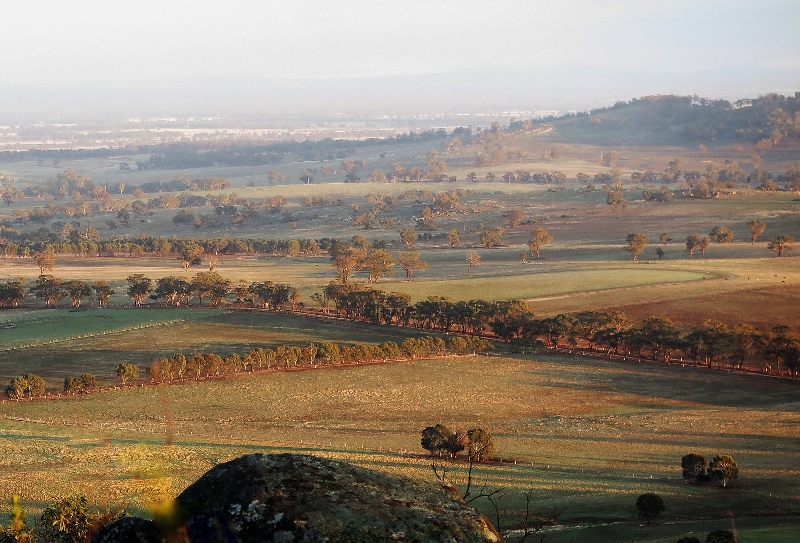
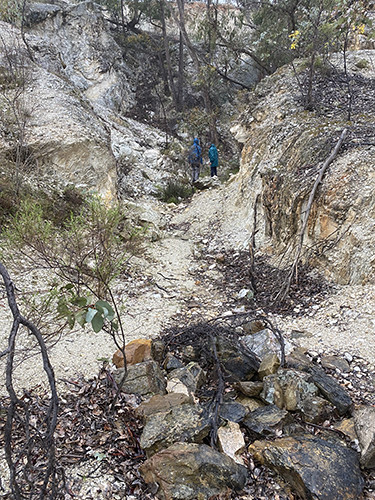
A planned fuel reduction burn for Kalimna Park is due to take place this April. The burn will be in two sections on the western side of the tourist road, and total 34 hectares.


The burn will take place as a new approach to management in the park is being developed by the Dja Dja Wurrung under its Walking Together- Balak Kalik Manya Project. The project ‘is focusing on how we can increase community connection with nature, improve visitation rates and encourage healthy use of these sites, all while maintaining and improving biodiversity. The project will promote Djaara employment and assist in Djaara reconnecting with traditional practices of land management.’ The first project newsletter can be seen here.

The proposed DELWP burn will take place in parallel with the new Indigenous approach to park management, and it’s fair to say that the two approaches will be in tension, especially when it comes to fire.

The Balak Kalik project is being developed in the context of renewed Indigenous activity in land management, including fire. ‘Cultural burning’ and DELWP fuel reduction burning are two distinct approaches to land management, and the differences between them can be seen clearly in this comment in the Dja Dja Wurrung Country Plan:

‘Planned [DELWP] burning is largely centred on fuel reduction—the cultural outcomes, impacts on Dja Dja Wurrung food and fibre plants and animals, cultural connections and obligations have been little considered. While controlled burning is beginning to integrate DDW cultural practices, fire regimes continue to damage Country. Cultural heritage in the Parks can also be damaged by the use of fire retardants, mineral earth fire breaks, control lines and in some cases the intensity of controlled burns.’

How the two approaches to land management co exist is still a work in progress, and it looks like Kalimna may be one of the more interesting sites of interaction. Managers are aware that Kalimna presents a difficult challenge. A horror fire season has put pressure on them to show they can reduce the fire threat: but Kalimna is not only a valued local asset, it’s home to the endangered Copper Butterfly. Fire managers do not want to be seen destroying the creature’s habitat.

DELWP fire managers have been consulting with Indigenous rangers about this management challenge. It remains to be seen how the two approaches to fire interact. It’s to be hoped that the very old practice of cultural burning might go some way to creating a new DELWP approach to fire.

Posted in Fire Management, News | 1 Comment

Decline or blip?

Most of our readers will be familiar with Geoff Park’s blog, Natural Newstead. If you haven’t read his recent posts on local bird numbers, it’s worth having a look:

During the week I paid visits to Rotunda Park and Mia Mia Track and on both occasions observations followed recent trends – very few birds and a lack of variety. No sign of robins (apart from a single Eastern Yellow Robin in the Mia Mia) or whistlers and very few honeyeaters. Let’s see what happens over the next month … I’d be very interested in other local notes to add to the mix. (see 29th February post, Natural Newstead)

Damian Kelly, another local bird expert, has commented:

I read your recent blog posts about species numbers with interest. Being out and about quite a bit I have to agree with your comments. Apart from a few Yellow Robins and a couple of Jacky Winters locally I have not seen any other small insectivores so far this year. Quite disturbing. (See Geoff’s post for full text.)

Geoff plans to follow this theme in posts over the next month.

Posted in Nature Observations | Comments Off on Decline or blip?

Here’s a new friend you may not want to meet

The harmless, even charming looking plant below is Tribulus terrestris—variously called Caltrop, bindii, cat’s head, goat’s head, yellow vine. It’s a native of North Africa, now naturalised around the world, including Australia. It’s thought to have been introduced here as a contaminant in seed from the Mediterranean area, California or South Africa, and spread widely when its seed was caught in car tyres in the 1920s and 1930s.

Calthrop/Bindii…a new arrival in our district: how did it get here?

A grisly list of the problems associated with this plant can be found here. They relate to the seed, a diabolical looking object vaguely like a land mine from an alien planet. It’s painful to stand on, punctures bike tyres and can stick to pets’ feet. Obviously not something to have to put up with on a sports field.

Caltrop seed: a glance will suggest why it’s painful.

Caltrop/Bindii is most commonly found in the North of Victoria, but seems to have recently arrived in Castlemaine, where it’s been found on the Western Oval and some roadsides. How did it get here? The common factor in all sites found so far is that they’ve been disturbed by road and other works, or seem to have soil brought in from elsewhere: another reason for paying more attention to the cleaning of machines, and for being more careful about transferring soil from one place to another.

Posted in News | 1 Comment

Fire 2: Around and around the burning bush

Another part of the terms of reference is to investigate the matter of ‘hazard reduction.’ Although this has been a favourite theme of commentators wanting to distract the public from the fact that climate change might be making bushfires worse, it also could be a good subject to consider.

Except that it too is an idea that’s been kicked around endlessly with no apparent consensus. Who now remembers the 2008 Victorian Parliamentary enquiry into land management and bushfires? One of its recommendations was a huge burn off target. The State Government said of that recommendation:

‘The Victorian Government supports planned burning to improve protection, conservation and production outcomes. However, the annual area treated by planned burning needs to be determined based on science and risk management frameworks and be subject to  opportunities as dictated by seasonal conditions.

‘Given this, the Government recognises that the amount of planned burning will vary to take into account these factors.

‘The Government supports a move away from focusing on hectare—based targets which may lead to inappropriate planned burning outcomes. They do not account for differences in the effort required for small area asset protection burns (often around settlements) compared to larger scale mosaic burns in more remote areas.

Then, only a few years later, the Black Saturday Royal Commission recommended a rolling 5 per cent target…and it was found unworkable and ineffective by the Commission monitor, for exactly the reasons set out in 2008—but only after a large area of land had been burned for no sensible reason.

Let’s hope we don’t have to go around that circle again.

Posted in News | Comments Off on Fire 2: Around and around the burning bush

Fire 3: the human factor

Here’s a factor which should not be forgotten: human causes of fire. We’re not talking only about arson: carelessness or sheer ignorance are factors. The fire which seriously threatened the Canberra suburbs recently was caused by an army helicopter…And it was a helicopter involved in fire protection!

It’s unfair to blame the army for this, but there’s there’s something farcical about it, although we don’t think Canberra residents would have been laughing. The lesson of it, maybe, is that for increasing lengths of time throughout the year, past ways of doing things don’t work…that the way we do things has to change. Let’s see how the Royal Commission approaches that one.

Posted in News | Comments Off on Fire 3: the human factor