Peak season

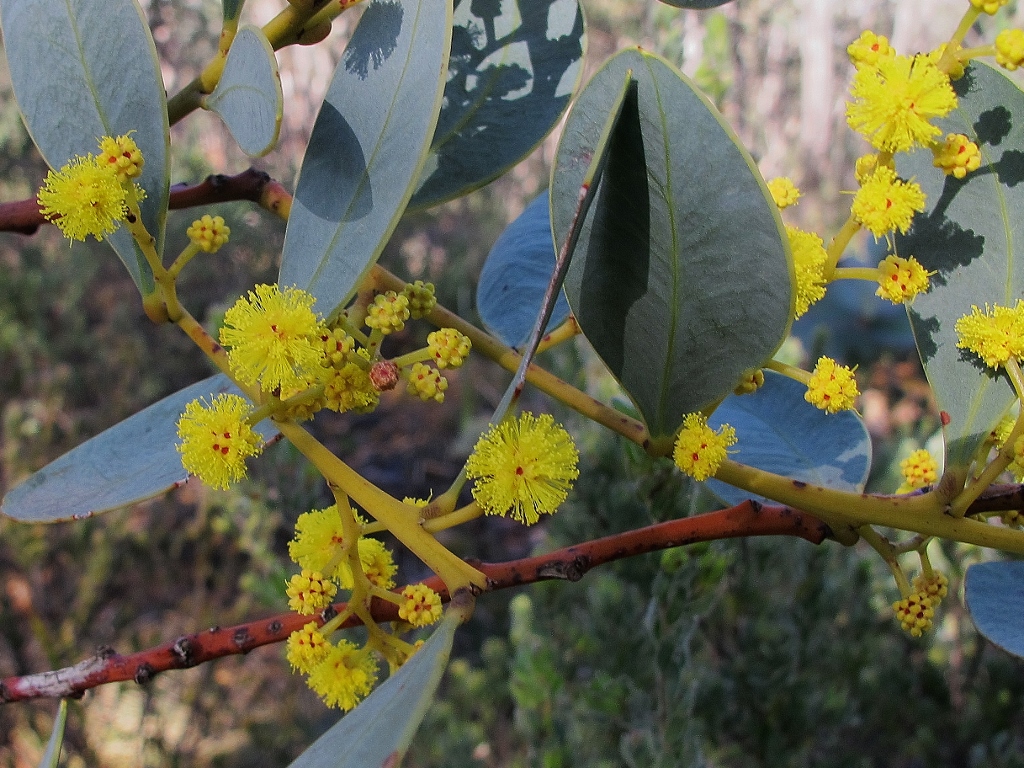
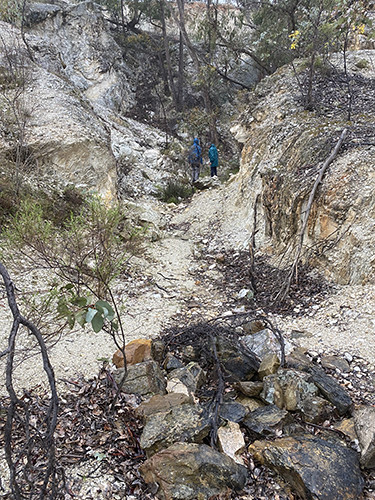
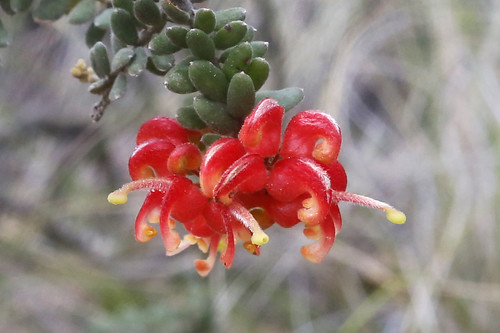
A strong group tackled FOBIF’s October walk around the Fryers Ridge yesterday in fine cool weather. The walk started at the junction of the Fryers Ridge and Fryers-Taradale roads, and wound down some nameless tracks and around to gullies on the western side of the Ridge. Although wattles are off their peak, everything else seems to be bursting out in this part of the forest right now: Pink Bells are having their best season for years, Flat-pea is prominent, along with Grevilleas, Large-leaf Bush-pea and numerous other wildflowers carpeting a ground storey still green from recent rains.

One of the highlights of the walk was finding a Bird Orchid. Photo by Peter Turner

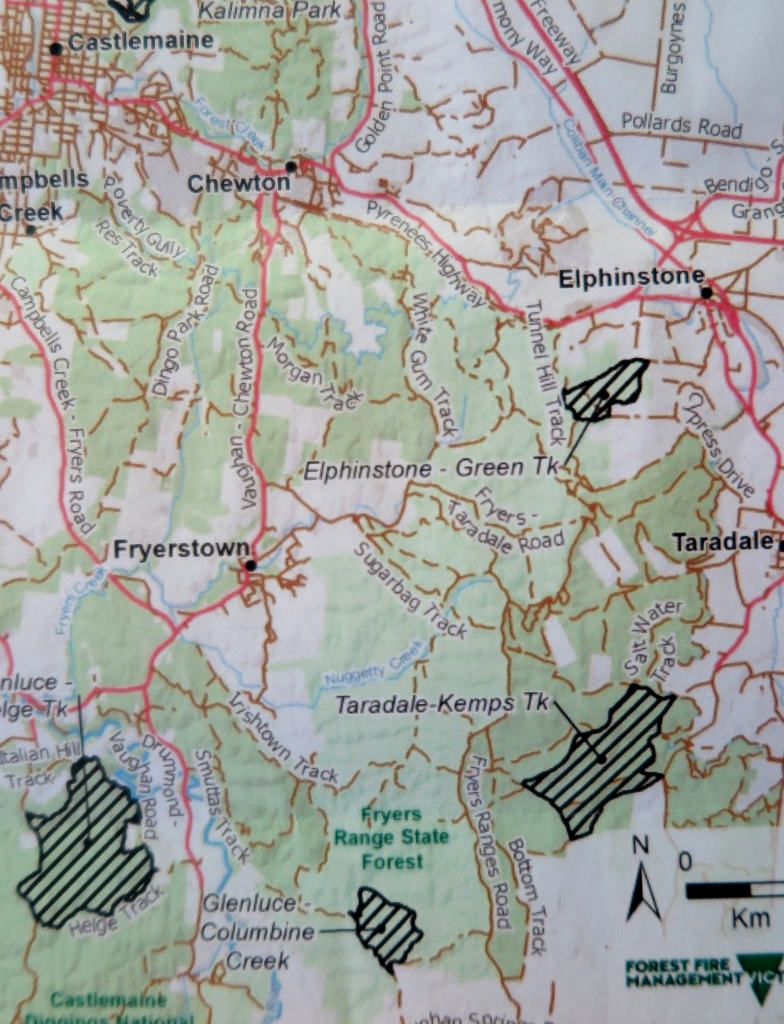
Our thanks to Christine Henderson for guiding the group around some superb corners of this wonderful bush: places hard to find, certainly not shown on any standard map.  There’s no substitute for expert local knowledge! Frances Cincotta also shared her botanical knowledge about numerous plants along the way.

Our thanks to Bronwyn Silver for managing the walks program through a tricky year, and to all our very flexible leaders. Watch out for the 2022 program! 

Posted in News, Walks, Weeds | 1 Comment

A fantasy, and a dose of reality

One day we might see a big headline in all the Murdoch media: ‘Biodiversity: worth fighting for!’

Until then, we’ll have to be content with a small item in the mainstream media, and things like the following:

‘Victoria’s biodiversity provides the foundations of healthy ecosystems, such as clean air and water, productive soils, natural pest control, pollination and flood mitigation. Threatened species and their habitats are critical to our biodiversity.’

That’s from the Victorian Auditor General’s report Protecting Victoria’s biodiversity, released last week. You can find the 75 page document here.

It makes pretty grim reading. Practically every page contains findings like this:

‘DELWP cannot demonstrate if, or how well, it is halting further decline in Victoria’s threatened species populations.’

And

‘DELWP advised us that it cannot guarantee the protection of all threatened species given:

  • current funding levels
  • scientific constraints around how species respond to threats and actions to control these in the wild, particularly in a time of climate change
  • the long-term lag effects on Victoria’s biodiversity of over 200 years of colonisation.’

DELWP has accepted all the auditor general’s recommendations, though it’s a bit defensive about funding. Parks Victoria’s response to the review is as follows:

‘Parks Victoria agrees with the Auditor General’s characterisation of both the problems being experienced by Victorian biodiversity and the urgent need for significantly increased focus and resourcing to better address these large and real challenges.’ (FOBIF emphasis)

Is that a political statement? Of course resourcing and focus are what matters: one without the other won’t work. Funding is a matter for governing parties. Focus comes from the culture of the organisations themselves. We know there are plenty of people inside DELWP and Parks Victoria who do have the values of nature at heart. Are there enough?

The AG’s report made a bit of a splash in the media last week. Will it have an effect? Maybe that depends on the number of people who read it, and draw the attention of their MP to it. Have a go.

Posted in News | Comments Off on A fantasy, and a dose of reality

Take a walk!

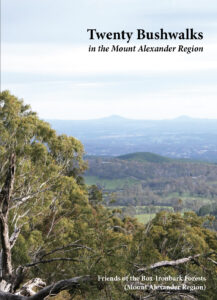
It’s spring. It’s time to get out and have a look around—if you can. And here’s an extra incentive to go out to explore a bit: FOBIF’s latest publication, Twenty Bushwalks in the Mount Alexander Region, is off the presses. It can be bought from this site (click on the cover icon at right), or from local outlets. The retail price is $15, plus postage if applicable.

The guide is 96 pages long, offers a wide variety of walks, and is illustrated by detailed contour maps and multiple photos. It’s directed at visitors and locals, and highlights cultural and natural features of the region.

More information about the book and a sample walk description can be found on the order form here.

Except perhaps for some particularly vicious summer days, this region is good for walking all year round: but if there’s one season to edge out the others, this is it. Spring flowers are now coming in to abundance. Take one of our hot spots, for example: the Maldon Railway  (as it happens, this is Walk 12 in the FOBIF guide). Along this line you can now see several kinds of pea in flower (including the Red Parrot Pea, rare in this region), great displays of Grevillea, Calytrix–and at least 5 species of orchids!

Red Parrot Pea (Dillwynia hispida), between Sinclair’s Lane and the Maldon Railway. It’s in flower now.

Every corner of our region has something different to offer, and the guide offers a representative sample of places to go. Check it out.

Posted in Nature Observations, News, Walks | Comments Off on Take a walk!

Parks Victoria: good ideas, bad ideas

Parks Victoria has released a draft Land Management Strategy for consultation. You can find it here,  together with info on how to put in a response to the strategy. The consultation is open till November 1.

The draft document has many pictures of happy people and healthy wildlife. It has some good material in it too, about indigenous co-management, population pressure, and responses to climate change.

Parts of it, however, are less attractive, even downright sinister. Look at these objectives:

–Ensure that existing and proposed private operations add value and deliver benefits for parks

–Work to ensure that private operations and Parks Victoria’s own business operations in the parks are efficient and sustainable

–Adapt and reuse heritage places where appropriate to support tourism, commercial and community activities

–Develop, where appropriate in partnership with private operators, sustainable tourism businesses

(Our emphases)

It’s clear that Parks Victoria is now in thrall to the idea that it has to encourage private and profit making businesses in the Park estate. This is not in fact the purpose of national parks, as defined in the 1975 National Parks Act, though of course well managed parks do bring tremendous financial and social benefits to the community. The above proposals are full of jargon about sustainability (the word appears multiple times through the document). Further, marketing jargon like ‘target markets’, ‘visitor segments’ and ‘nominated indicators’ infests the document. There are probably people who are excited by such language. It’s not the language of conservation, however.

Is there a problem with tourism enterprise penetrating the parks? There is, if ‘licensed tour operators’ actually replace park rangers as the face of our parks system. The problem with this document is that it doesn’t even canvass the problem as a problem: for Parks Victoria, and the state government, the debate, if there has been one, is over. Maybe the state of thinking on this theme is summed up by this sentence, on page 34 of the document:

‘Partner with tourism, industry organisations and Traditional Owners to initiate and promote.’

That’s right. The sentence makes no sense. But we get the meaning: we want to initiate and promote… whatever.

Have a look at the document, and offer an opinion. But maybe we should draw attention to the quite menacing caveat offered by Parks at the very start:

‘This publication may be of assistance to you but Parks Victoria and its employees do not guarantee that the publication is without flaw of any kind or is wholly appropriate for your particular purposes and therefore disclaims all liability for any error, loss or other consequence which may arise from you relying on any information in this publication.’

Posted in News | Comments Off on Parks Victoria: good ideas, bad ideas

Excellent spring reading

In case you’re not already in the loop: the September edition of the Wombat Forestcare newsletter is now online. You can find it here.  Among many excellent articles is one by Tanya Loos on echidnas, with much useful info on this ‘ecosystem engineer,’ very common in our region–this, for example:

‘Australia’s most widespread mammal’: you can see it–and signs of its diggings–all over our region.

‘The characteristic digging pits of echidnas (often with a little round snout-hole impression at the deepest point) create microclimates and diversity in the soilscape. A study in the arid and semi-arid areas replicated the size and shape of echidna diggings and found that these pits had greater rates of seed germination and leaf litter decomposition than in soil without diggings.

‘Echidnas are Australia’s most widespread mammal, ranging from alpine areas to deserts, and even beach habitats. As long as there is food to eat, and sites to shelter in, the echidna can survive. They are absent from cleared
farmland, upland rainforest, and the deepest fern gullies.’

Also out now is the North Central Catchment newsletter North Central Chat, containing among other material a very informative article by Ivan Carter about the Eltham Copper butterfly.

Look them up!

Posted in News | Comments Off on Excellent spring reading