Second moss and liverwort field day

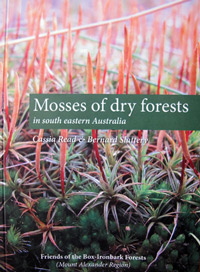
Moss and Liverwort enthusiasts enjoyed a second field day led by Cassia Read at Clinkers Hill Bushland Reserve on the morning of 8 October. They identified, photographed and recorded another 10 mosses and a liverwort for the planned brochure. The field work is now complete and the next session will involve examining moss using microscopes. If you would like to join the group, contact Beth Mellick on 5472 1316. The photos included in the slideshow below cover five of the mosses studied and the youngest member of the group.


Posted in News | Comments Off on Second moss and liverwort field day

An interesting Greenhood

Two FOBIF members recently went to the Wewak Track hoping to see the Matted Bush-pea Pultenaea pedunculata in flower. This creeper covers vast areas and is spectacular when in flower. Unfortunately we were a week or two too early. We did find lots of wildflowers including the Tangled Guinea-flower Hibbertia fascicularis and Liverworts in the wetter areas.


We also found a Bearded Greenhood Plumatichilos plumosa actually trapping an insect. As you can see in the left-hand photo below, an insect is entering the flower along the labellum which is the rigid rod with yellow hairs. This movement triggers the labellum to move upward (see second photo), closing the opening and thereby trapping the insect. The dark area in the flower in the second photo is the insect trying to escape. During this activity pollen attaches to the insect which is distributed when the insect eventually escapes through an opening near the top of the flower.

Bearded Greenhood. Photos by Bronwyn Silver, 3 October 2011

All Greenhoods trap insects but the mechanism differs depending on the type. See the South Walmer Nature Conservation site for a description of how the Blunt Greenhood trap insects.

Posted in Nature Observations, News | Comments Off on An interesting Greenhood

Sutton Grange Organic Farm

Can you farm in a different way? Is farmland degraded land? These are two of the questions Ann-Marie Monda and Carla Meurs from Sutton Grange Organic Farm addressed in their inspiring and informative presentation to Connecting Country’s AGM on 26 September 2011.

Their farm is organically certified and consists of 205 acres of granitic sandy loam. Rainfall is between 400 ml and 1000 ml rainfall a year. They run 75 goats and produce the award winning Holy Goat organic cheese which they sell at Farmers’ Markets and through a distributor who supplies outlets in regional Victoria, Melbourne and  Sydney.

Twenty-nine percent of the farm is bushland and two percent is infrastructure. The benefits of protecting this extensive bushland include the maintenance of seed banks, the protection of pasture provided by birds, insects and windbreaks and the beauty of this land which they believe benefits the goats and people.

The farmland zone is sixty-nine percent of the total land and supports substantial stands of native grasses which are deep-rooted, perennial and drought tolerant. Kangaroo and Wallaby grass are particularly beneficial in providing vital minerals and fibre. They described their successful efforts in increasing levels of phosphorous, calcium, magnesium, iron and PH levels in the soil. They have also recently trialled an innovative method for controlling Cape weed.

Anne-Marie and Carla concluded their talk by explaining their vision for the farm. They distance themselves from the conventional idea that growth means more goats and producing more cheese which could eventually be exported. Instead they view the growth of their farm in terms of sustainability, quality and generosity for their goats, the land, people and the soil.

The slide show below is made up of recent photos from the the Sutton Grange Organic Farm.

More information about Connecting Country’s AGM can be found here.

Posted in News | Comments Off on Sutton Grange Organic Farm

Illegal dumping of green waste

In August FOBIF wrote to Mount Alexander Shire suggesting that the issuing of free garden rubbish vouchers to residents might lead to a reduction in the amount of illegal dumping of green waste in our forests.

We have received the following reply from the Council:

“Mulching green waste taken to the Castlemaine landfill and then reused costs Council in excess of $100,000 per year. This processing cost is offset by the gate charge to the community when they bring green waste to the site. Hence, Council does not intend to discount or waive the fees to dispose of garden and other green waste at the Castlemaine landfill.”

In the meantime we have noted that Macedon Ranges Shire Council has introduced a new green garden recycling service whereby residents are supplied with a green garden bin. They have also introduced a free ‘Green Drop’ service at the Council Transfer Stations for larger, woody garden prunings. These initiatives would involve a high startup financial outlay but in the long term would be a great way to reduce illegal dumping and waste generation as well as increasing recycling.

Unfortunately given the constraints on the MAS budget, cost would make the adoption of the Macedon Ranges scheme unlikely in the short term. However FOBIF intends to keep raising this green waste issue with Council and looking at alternatives to the current unsatisfactory situation. Click here to view our earlier post on this subject.

Posted in News | Comments Off on Illegal dumping of green waste

Looking more closely at the Selwyn map

Recently we posted an piece on the 1853 Selwyn map. We have found out that quarter sheets of this map are available on this site enabling more detail to be viewed.  Most if not all maps can be downloaded for free at 75 dpi resolution. Or else you can buy the whole lot for $10.

Posted in News | Comments Off on Looking more closely at the Selwyn map