Forests under attack from leaf miner

Visitors passing along the Porcupine Ridge Road in recent weeks have noticed that trees on both sides of the road, both in the National Heritage Park and the Upper Loddon State Forest, are looking extremely stressed, presenting a desolate sight.  The cause appears to be a plague of lerps. Such a plague usually reflects a decline in the number of woodland birds which normally feed on lerps. [SEE OUR AUGUST 16 REVISION OF THIS ASSESSMENT]

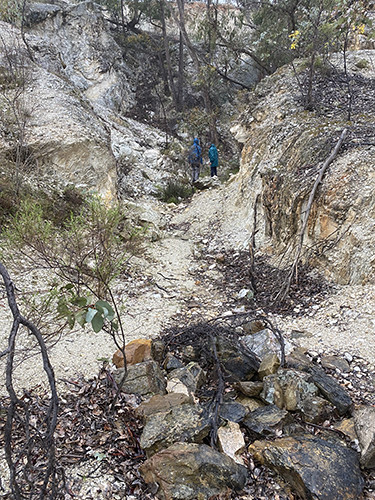
Distressed trees near the Helge Track: bush health is dependent on biodiversity, and low bird numbers suggest that we may be in trouble.


This decline is alarming from many points of view. The current condition of this bush is an indicator of the connection between biodiversity and forest health. Castlemaine Field Naturalists report that the ‘decline in bushland birds is alarming.’ Their

Lerp attack: the absence of woodland birds is not just a problem for bird watchers.

monthly bird counts at the Spring Gully/Fryerstown Road intersection reveal that the number of species seen, and the number in each species, have been declining for some time. The counts for 2012 are
January nil
February nil
March nil
April Scarlet Robin (1)
May Aust Raven (1)
June nil
July nil
August nil’.

DSE draft fire operations plans propose big burns to the south and west of this area [see our report below].

Posted in Nature Observations, News | 2 Comments

FOBIF response to fire operations plans

The following is FOBIF’s draft submission on the Fire Operations Plan [see above]. Member feedback is invited:

GENERAL COMMENTS

1. We believe that as far as possible, burn areas be small: less than 100 ha. In zones 1 and 2, they should be smaller than 50 ha. In our opinion, this would make it easier for managers to pay close attention to ecological values, something hard or impossible with large hectare burns.

2. DSE should where possible integrate weed and fire management in the burn plans. We note that integration of weed management and bushfire control is part of the Mount Alexander municipal fire plan.

Middleton Creek, Castlemaine Diggings NHP: Common sense dictates that steep slopes should not be burned, and that important old trees not be destroyed.


3. In Zone 3 burns, unless it is possible to guarantee that burn cover will not exceed 20% [that is, unless it is possible to guarantee a genuine mosaic burn], and that vulnerable areas [eg, steep areas, or areas of particular interest, like large trees, creeksides etc] can be protected, we believe that managers should aim to burn precisely defined areas within the treatment zone. We would like to have access to the Zone 3 burn plans for our area.

4. Spring burns should be avoided.

Continue reading

Posted in Fire Management, News | Comments Off on FOBIF response to fire operations plans

Magic mountain


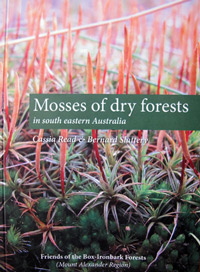
Saturday morning July 28 wasn’t an ideally warm day for crawling around the high points of Mount Alexander, but half a dozen members of FOBIF’s moss group had a pretty interesting time crawling around finding new species to pore over. This time of the year isn’t great for flora, but it’s perfect for mosses, which provide plenty of interest even when when you’re feeling a little, er, cold. The next foray will be in a month. Members interested in coming along should contact us at info@fobif.org.au

FOBIF's moss group at work. This has been an excellent season for mosses, and Mount Alexander is one of the best places to get an idea of their variety and beauty.


Posted in Moss and Liverwort Field Guide group, News | Comments Off on Magic mountain

Mosaic burning research

The Box Ironbark experimental mosaic burning project is under way. The project is the joint responsibility of DSE, Parks Victoria and Latrobe and Deakin universities. Research in the project will be based around 16 planned mosaic burns of 100 ha each in the Heathcote Rushworth forest. Eight of the burns were conducted in Autumn last year, and eight in Spring. Half of them aimed at 35-50% burn coverage and half at 75-90%.

The project’s monitoring program focuses on questions like:

–How do different mosaic burns affect the composition of plant communities?

–Does burning stimulate germination of additional plant species from the soil seed store?

–Do mosaic burns cause changes in the density of tree stems in the forest?

–Are logs, stumps and areas of deep litter lost at disproportionate rates due to high flammability?

–Do planned burns alter the composition of woodland bird communities?

–How does fire affect the movements, foraging behaviour and breeding success of individual birds?

–Do burns result in an increase in the home range size of the Yellow-footed Antechinus?

–Do fires result in a loss of den sites for the Yellow-footed Antechinus?

You can get more details and keep abreast of news about this project by getting on the mailing list for its newsletter. Write to the project officer, Greg Holland at Deakin Uni: greg.holland@deakin.edu.au


Posted in Fire Management | Comments Off on Mosaic burning research

FOBIF walk in Sandon

View to the east. Mount Franklin can be seen in the distance. Photo by John Ellis

The July FOBIF walk was to Malcolm Fyffe’s property in Sandon. This was a much appreciated opportunity to visit a farming property with lush undulating pastures and spectacular views.

Malcolm gave running commentary on the history of the property. Glenwillow has been farmed by his family since the 1940s and after a career in teaching Malcolm took over management of the farm. Over the past few years assisted by Bush Tender funding he has been able to improve and rehabilitate the property by erecting fencing to keep out stock from existing vegetation and waterways. He has also worked on weed and pest control and undertaken strategic plantings.

Stand of Hedge Wattle. Photo by Noel Young

The differences in soil and rainfall in this area which is to the south of Castlemaine have resulted in comparatively vigorous growth on common local plants such as coffee bush and hedge wattle.

Finds of particular interest were unusual fungi including some that were pink and bright red and a Striped Greenhood Pterostylis striata. These plants and other scenes from the day can be viewed in the slideshow below. The photos were taken by Noel Young, John Ellis and Bronwyn Silver.

Posted in News | Comments Off on FOBIF walk in Sandon