Fire

DELWP seems to be expanding and varying its community consultation processes on fire. A ‘listening post’ was conducted by fire officers in Castlemaine on Saturday; and last Wednesday representatives of the Castlemaine Field Naturalists toured the district with the Department’s Paul Bates and Alison Jeavons to look at issues to do with fire and biodiversity .

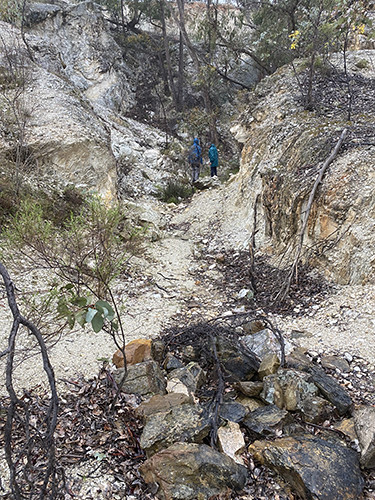
Wednesday’s tour took in Wattle Flat, recently mulched areas in Chewton, and the Fryers Ridge.

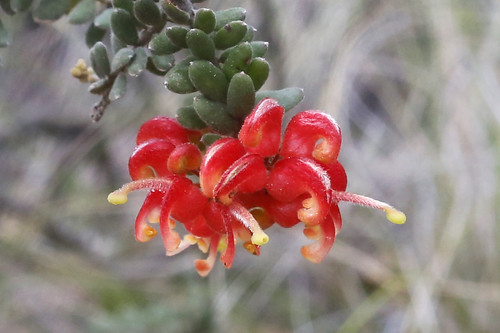
Common Heath [Epacris impressa], Fryers Ridge Road, September 11: the Ridge is currently spectacular, with wattle, beard heath, grevillea and many other species in flower.

Common Heath [Epacris impressa], Fryers Ridge Road, September 11: the Ridge is currently spectacular, with Wattle, Beard Heath, Grevillea, Bendigo Wax, and many other species in flower.

The Ridge is set for a brilliant wildflower season, with displays already quite spectacular along the Ridge Road. The Fryers Ridge is a special part of this region, and it’s encouraging that the DELWP managers expressed an interest in incorporating Field Naturalist quadrat surveys into their planning processes. FOBIF was stunned last year to be told by local managers that they didn’t attach any particular importance to the ridge, because there aren’t rare or endangered species there. We have hopes now that this attitude may change.

The results of management fire are often unpredictable. Sometimes they provoke profuse regeneration, sometimes they are depressingly destructive, causing erosion, spreading weeds, and knocking out vulnerable species. These outcomes should be more predictable: if fire operations were conducted with more detailed knowledge of the special requirements of each area, they could be much less damaging. For this reason, excursions like that held on Wednesday are to be welcomed.


Posted in Fire Management, Nature Observations | Comments Off on Fire

Wetland Plant ID

wetland
There are still some places available in the October 2016 Wetland Identification Course run by wetland expert, Damien Cook, and facilitator, Elaine Bayes. You can find out all about it by clicking on the image above.

Damien and Elaine are also leading our next FOBIF walk on September 18. The walk will take in Chewton’s highest mountain, ‘The Monk’, and Doug Ralph’s favourite long term unburnt bush near Eureka Mine.

Posted in News | Comments Off on Wetland Plant ID

Yes! It’s spring!

…And there are plenty of reasons to get out into the bush. Here are a couple:

Parrot pea, Goldfields Track, Irishtown, September 4:

Small Leaf Parrot Pea [Dyllwinia philicoides], Goldfields Track, Irishtown, September 4 2016

Boronia, Goldfields Track, Irishtown, September 4:

Sticky Boronia [Boronia anemonifolia], Goldfields Track, Irishtown, September 4 2016

Posted in Nature Observations | Comments Off on Yes! It’s spring!

Oh no! It’s spring!

Is this the best [that is, worst] year ever for the Oxalis weed? Since autumn we’ve seen the dense mats seem to get denser, to spread more widely, and to cover areas the weed’s never been strong in before. And now that it’s spring, those pretty yellow flowers seem to be everywhere.

Oxalis: among other things, it is, or should be, a challenge to fire managers

Oxalis: among other things, it is, or should be, a challenge to fire managers

There are 800 species of Oxalis world wide, including six that are native to Australia: we have two in our region—O. exilis [Shady Wood Sorrel] and O. perrenans [Grasslands wood sorrel: it’s the host plant for the Grasslands Copper butterfly]. The commonest local species is the introduced—and very feral—Soursob [Pes caprae]. It was introduced into this country in 1839 as a garden ornamental, a fact which adds a bit more weight to Tim Lowe’s claim [in Feral Future] that gardeners have done more harm to our environment than miners…

Any gardener will tell you Oxalis is hard to control. According to a 2012 DSE report, it’s also likely to increase in threat after fire, its bulbs allowing it to spread into bare ground. This, we hope, will be in fire managers’ minds when they’re conducting reduction burns in areas where Oxalis is already rampant [the proposed burn on Mount Tarrengower, for example].

Posted in News | 2 Comments

Historic places report on the way

The Victorian Environmental Assessment Council (VEAC) will submit the Final Report on its Historic Places Investigation to the Minister for Energy, Environment and Climate Change on Wednesday 31 August 2016, rather later than originally planned.  The report will be publicly released on Wednesday 7 September and will be made available on that day at www.veac.vic.gov.au.

Readers will recall FOBIF made a critical submission to the draft report in December last year. We’ll be curious to see if any of our criticisms have resulted in changes to the document.

Two information sessions on the report will be held not long after its release. One is in Melbourne. The other is in Chewton on Friday 9 September from 10:30 am to 11:30 am at the Chewton Senior Citizens Centre, 201 Main Road/Pyrenees Highway, Chewton (Car park access off Mount Street).

If you want to attend, you need to register with VEAC by phone [1800 134 803 (Free call outside Melbourne)] or email:  veac@delwp.vic.gov.au

The State Government will give its response to the report within six months.

Posted in News | Comments Off on Historic places report on the way