‘Free ranging adventure for kids and dads’

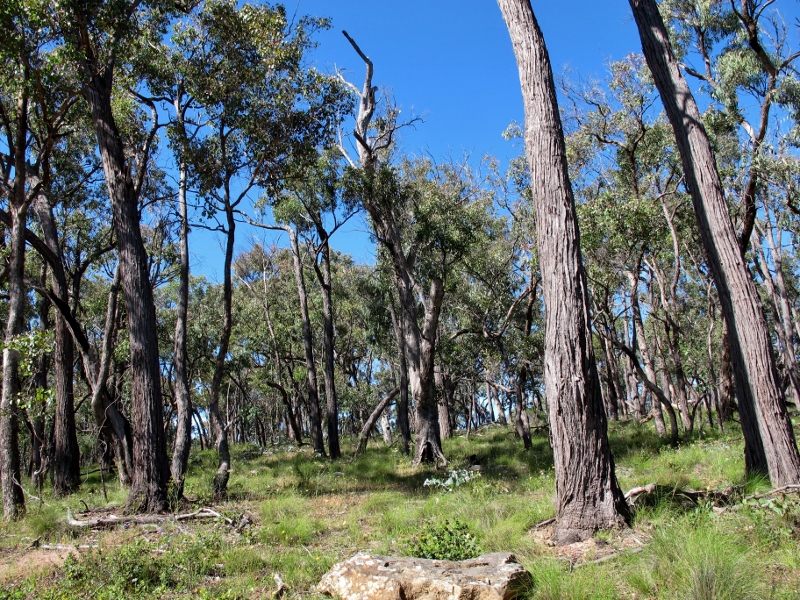
Fathers interested in taking their children for bushwalks this year might be interested in the Bendigo Dads Walking Group. The group goes out on a ‘Walk-Explore-Share-Play-Discover-Talk-Connect on a weekly kid’s adventure’. There are about 30 walks a year, on Sundays from 9.30 to 12.30, and many of the routes are in the Castlemaine region. For more details click here…Or email bendigodadswalkinggroup@gmail.com

FOBIF’s 2017 walks program will be mailed to members around the end of this month. Walks start on the third Sunday in March.

Posted in News | Comments Off on ‘Free ranging adventure for kids and dads’

Have a good Christmas

The FOBIF committee wishes all members and supporters a happy Christmas and a great summer.

This will be the last post on this site for a few weeks, barring unforeseen matters needing comment. Members will receive a letter in the mail around the start of February next year with the 2017 walks program on it.

It will also carry a reminder that membership subscriptions for 2017 are falling due. At $10 a head or $15 a family it’s one of history’s great bargains, so don’t hold back!

web-2_mg_4890-copy

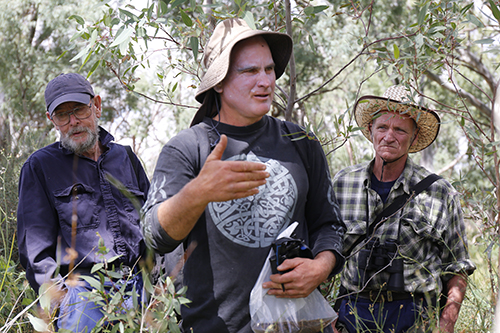
Wetland ecologist Damien Cook and two of the 20 people who came along to the FOBIF’s end of the year Bells Swamp walk and lunch last Saturday. During the morning Damien identified over 20 plants and covered the environmental history and ecological significance of the area. Everyone appreciated his knowledgable and engaging commentary. Photo: Bronwyn Silver

More photos from the walk taken by Harley Parker. Continue reading →

Posted in News, Walks | Comments Off on Have a good Christmas

The impossible dream: we can have public safety without trashing the bush

Here are a few conclusions we can draw from recent meetings with DELWP fire managers in the last two weeks:

  1. The proposal to frequently burn Expedition Pass and surrounds is definitely off. It was a mapping error, and we’ll pass over it with a shudder.
  2. The government aims at a ‘coordinated approach to managing bushfire risk across all land tenures by 2020.’ That is, we should soon be able to see a coherent approach to fuel management on private land, integrated with treatment of public land. How soon? We don’t know.
  3. Fire hazard reduction in sensitive areas like the Vaughan area and the margins of Kalimna Park will be achieved mechanically rather than through burn offs. The Loddon river valley won’t be burned.
  4. There are no plans in the immediate future for operations on the eastern [Happy Valley] side of Kalimna Park. However, if residential developments proceed in the valley, then Kalimna will definitely have to be more severely treated.
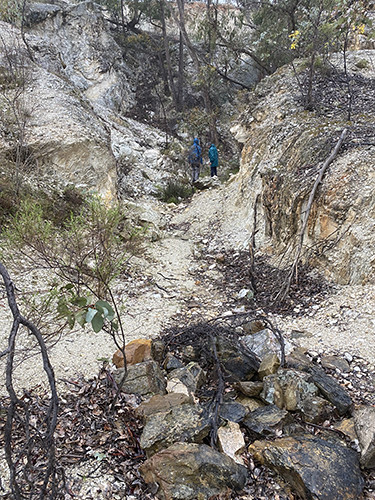
Near Hunters Track, Castlemaine Diggings NHP: the bush in this area is more open than in regrowth forest nearby, and has numerous interesting cultural features.

Near Hunters Track, Castlemaine Diggings NHP: the bush in this area is more open than regrowth forest nearby, and has numerous interesting cultural features. It has recently been rezoned and is now open to more severe fuel reduction treatment.


The above are conclusions after two meetings in the last three weeks.

Representatives of FOBIF and the Friends of Kalimna Park met with DELWP managers in Castlemaine on November 23, and representatives of FOBIF and the Talking Fire group met with the DELWP West Central Bushfire Risk Landscape team in Daylesford on December 1.

Under discussion were the revised fuel management plans for the region. The intent of both meetings was to aim at a fuel management program which achieves public safety while respecting the natural values of local public land.

Several other matters were discussed:

In response to questions about poor track management, officers repeated a rationale we’ve heard before: that ‘road access is required for fire suppression’ etc. This is a disappointing response, as we’ve never questioned the need for such access: what we’ve questioned is crude and careless track management, and lack of care [and possibly even understanding] of roadside vegetation.

Continue reading →

Posted in Fire Management, News | Comments Off on The impossible dream: we can have public safety without trashing the bush

Eucalypt guide: a dedication to Ern Perkins

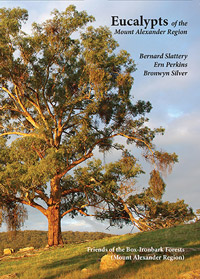
FOBIF’s field guide to the eucalypts of the Mount Alexander Region has sold out its print run of 800 copies in two months, and a reprint edition is now available.

The reprint contains some minor changes, but the most significant addition to it is a dedication to its co-author, Ern Perkins, who died in early November.  The dedication reads

This book is dedicated to the memory of Ern Perkins
teacher, botanist, field naturalist
(1934-2016)

Ern was a great supporter of the eucalypt project from the beginning. Without his knowledge of the genus, and his amazing familiarity with the location of different species in different corners of the region, the book would never have been finished. He overcame serious health problems to come on numerous excursions around the district in search of good tree specimens, and his enthusiasm and good humour never failed him.

Ern’s contributions to the understanding of the natural history of the region were numerous. He was an inspiration to many in the district, and we urge any who have not already done so to read Chris Timewell’s obituary for him (and related links) on the Connecting Country website.
web-green-gy-10-5-16-13-copy-2

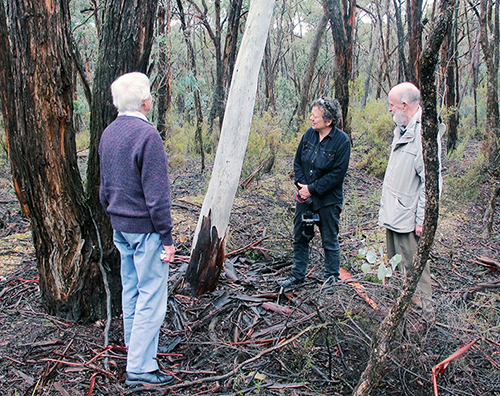
Ern and Lesley Perkins checking out a Candlebark with Bronwyn Silver at Green Gully, Winter 2016
Posted in News | Comments Off on Eucalypt guide: a dedication to Ern Perkins

The past: what’s important? what’s not?

Want to have a say on the way heritage is presented in the Diggings Park? Have a go at doing the Parks Victoria survey. It only takes a few minutes, and your answers might tilt the balance of the way the park is presented.  You have until midnight this coming Wednesday November 30 to do it.

The questions are mainly straightforward—perhaps the crunch question is number 13: ‘Information signage in Castlemaine Diggings National Heritage Park currently focuses on its important mining heritage. Are there other themes, stories or aspects of the park that should also be told?’

As we’ve said before, one of the problems with the presentation of goldfields heritage is that it doesn’t give due weight to the environmental impact of mining. For that reason, perhaps a good response to question 13 might be something like this:

The problem is not that the focus is on mining heritage: the problem is that this heritage is presented with virtually no emphasis on the destructive effects of mining, even though these are staring us in the face in the form of the total destruction of almost all the waterways in the park: these eroded gullies, and hillsides stripped of soil, are also ‘heritage’.

…But it’s your say: have a go!

Posted in News | Comments Off on The past: what’s important? what’s not?