OK: it’s pretty bleak. On the other hand…

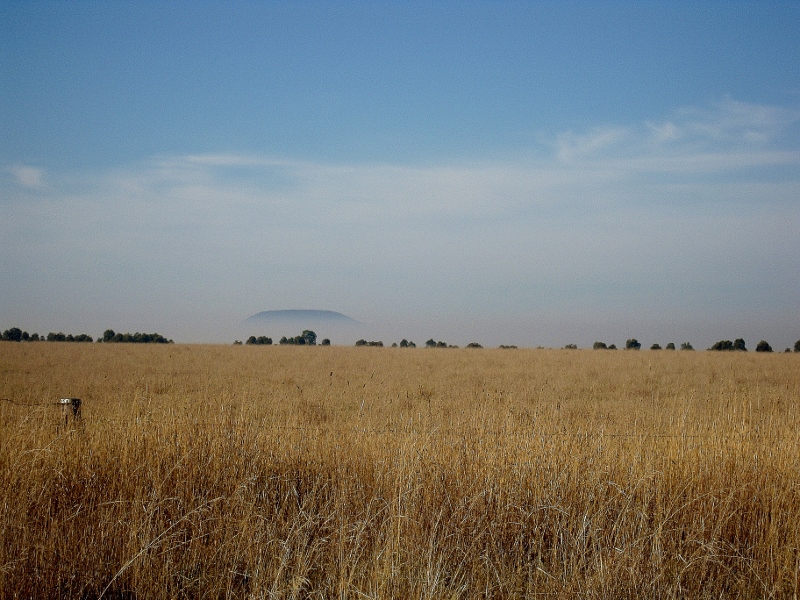
As Hanrahan might have said: ‘It’s dry all right’. A quick check of the map below will confirm what common observation has already registered: February was dry, and March so far hasn’t been much better. The 27 mls of welcome rain which fell this weekend hasn’t done much to change this picture.

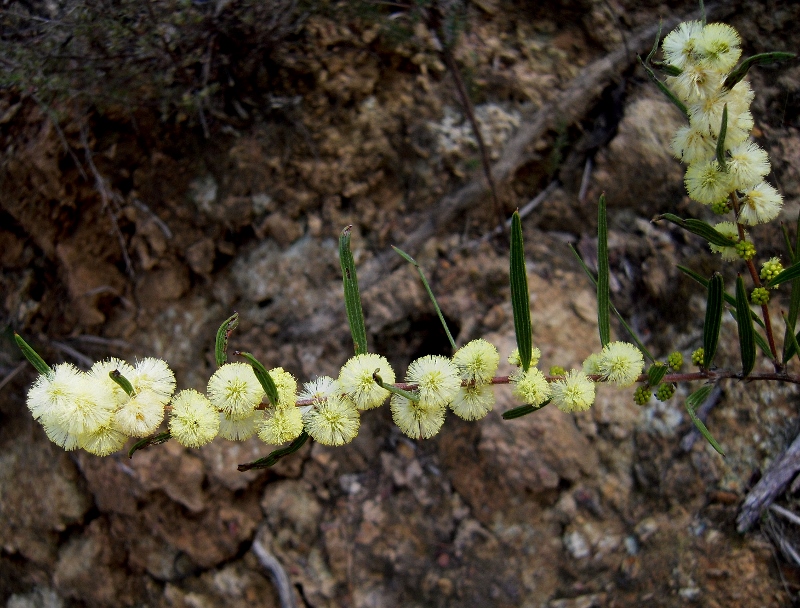
And yet, there are signs of life. Many eucalypt species have been flowering through the dry, and currently it’s the turn of Long-leaved Box (Eucalyptus goniocalyx). The photo below was taken in an intriguing grove of very old trees planted along Farran Street. This species has a pretty sprawling habit normally, so it’s a bit of a mystery why they were planted along this roadway–but we can enjoy them all the same.

Long-leaved Box blossom on Farran Street Castlemaine: it’s dry all right, but there are signs of life about the place.

And while we’re on the subject of dry weather, one of the more peculiar aspects of our culture is the habit of radio and TV reporters to say how awful it is when rain is forecast, and to suggest that weekends are ruined if they’re not sunny.

It may be time for radio and TV executives to call in their weather reporters, and tell them: ‘Look, when you’re giving a forecast, stop saying that rain will ruin the weekend.  Instead, if it’s going to rain, say how great that is, and what a wonderful thing it will be to see that water soak in.’

xxxx

Posted in News | Comments Off on OK: it’s pretty bleak. On the other hand…

Against the wind

Fifteen brave takers drove out of Castlemaine through a driving storm on Sunday the 18th for the first FOBIF walk of the year in the Fryers Forest. The storm lasted ten minutes, but the wind came and went all day, making for a blustery experience: and the Coliban channel is bordered with many wrecked trees, reminders of the epic winds which rampaged through this area earlier in the year.

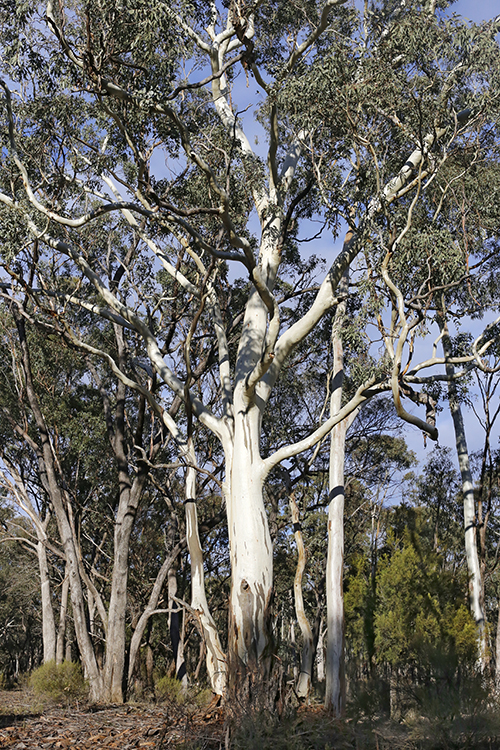
Candlebarks on the Coliban channel: the channel hosts many exceptionally large eucalypts, especially Candlebark, Long-leaved Box, Stringybark and Manna Gums

The channel is a curiously contradictory experience. Picturesque and easy walking, the reserve lined with fine old eucalypts, Candlebarks and Manna gums being the standouts: but rampant blackberry and gorse infestations suggest that weed control is not a high priority for the water authority.

Next month’s walk takes in Brown’s Gully, one of the jewels of the Diggings Park. Check the program for details.

Continue reading

Posted in News | Comments Off on Against the wind

Walks program 2018 kicks off

FOBIF’s 2018 walks program kicks off next Sunday with a stroll around  the Coliban Main Channel, with a return through sections of the Fryers Nature Conservation Reserve and the state forest. Check the walks program for more details.

Posted in News | 1 Comment

Needlegrass war

FOBIF has completed a preliminary report on its project to control Needlegrasses in Castlemaine. These weeds—related to Serrated Tussock— threaten to cause serious damage to pastures and native environments. They were probably introduced into Victoria from the 1930s, and have the potential to dramatically reduce land value because infestations reduce stock carrying capacity on farmland.

FOBIF gained a small grant from the Mount Alexander Shire to attack the needlegrass problem in 2017. Over the last twelve months project has involved a FOBIF coordinator,  19 volunteers who dug up and removed the weed, one paid weed remover, numerous other residents, council and DELWP staff, as well as landcare groups and Connecting Country.

Progress of the project is shown on the map. The volunteer commitment to further monitoring and removal will continue.

Please note that this is a revised version of the map that was posted on February 2.

The project has been a learning experience. A promising experiment has been made with control via woodchip mulching, and much has been learned about the identification and life cycle of the weeds, and how they spread. It seems very clear that Needlegrass can be spread when infested areas are mown or slashed. Seeds attach to the mower, and unless this is cleaned it spreads the seeds when it  moves on to its next job. It’s important therefore that infested areas are clearly identified, and not mown till the weeds and/ or their seeds are removed. Council workers have been increasingly helpful in this respect, but it seems that a more systematic approach to managing roadsides is needed. Not only do council staff need to be well informed about roadside weeds and control methods, but private citizens—residents and contract mowers—need to be better informed about ways to avoid spreading pests.

Roadsides are a long term and ongoing challenge: FOBIF has had occasion before to draw attention to the spread of weeds via dirty machinery, and we notice recent outbreaks of St John’s Wort along roadsides which may have come in this way. We hope that projects like the Needlegrass one will improve cooperation between managers and environmentalists, with better results in the future.

In the meantime, our thanks go to our modest coordinator and the other volunteers for the enormous amount of work they have put into this project.

Posted in News | 1 Comment

A sobering look across the Pacific

So far Victoria has passed through summer without disastrous fire events. In case you missed it, however, it’s worth casting a sympathetic eye across the Pacific to California, a US state with perhaps better environmental credentials than some. Maybe there are sobering lessons in their disastrous winter fires , the worst since 1906. The following is an excerpt from the London Review of Books:

“Jerry Brown’s California enters this new age with a halo over its head. We ‘get’ climate change and thumb our noses at the mad denialist in the White House. Our governor advocates the Paris standards with rare passion and sends our anti-carbon missionaries to the far corners of the earth. We await impatiently that great day when the entire Mojave Desert will be covered with Chinese-made solar panels, and silent Teslas rule the freeways. And we continue to send urban sprawl into our fire-dependent ecosystems with the expectation that firefighters will risk their lives to defend each new McMansion, and an insurance system that spreads costs across all homeowners will promptly replace whatever is lost.

“This is the deadly conceit behind mainstream environmental politics in California: you say fire, I say climate change, and we both ignore the financial and real-estate juggernaut that drives the suburbanisation of our increasingly inflammable wildlands. Land use patterns in California have long been insane but, with negligible opposition, they reproduce themselves like a flesh-eating virus. After the Tunnel Fire in Oakland and the 2003 and 2007 firestorms in San Diego County, paradise was quickly restored; in fact, the replacement homes were larger and grander than the originals. The East Bay implemented some sensible reforms but in rural San Diego County, the Republican majority voted down a modest tax increase to hire more firefighters. The learning curve has a negative slope.”


Posted in Fire Management | Comments Off on A sobering look across the Pacific