Fightback

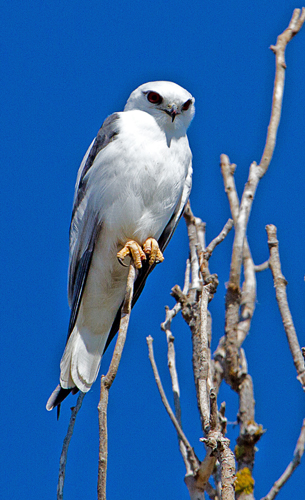
A century ago it was common enough to see enormous flocks of Regent honeyeaters in woodland country from Queensland to South Australia. Habitat depletion has led to drastic decline in the numbers of this beautiful bird [see a photo and more info here]: it’s now extinct in SA and endangered elsewhere. When a single bird appeared in a Newstead Ironbark in 2003 it became an instant celebrity, and it’s been estimated that over a hundred people came to have a look at it [the regent appeared unphased by the attention and stayed for over a month.]

Efforts to save the Regent focus on restoration of its preferred box ironbark habitat. The model project for this is the one run by Ray Thomas in the Lurg Hills of North Eastern Victoria. Neville Cooper has written the following account of a visit to the project in late October:

Ray Thomas, the Regent Honeyeater’s Project Co-ordinator, took us to 8 different sites. On our travels he explained how the project is engaging the farming community in restoring the significant remnant Box-Ironbark habitat for the endangered species that are still living in the area. The Regent Honeyeater, the Grey-crowned Babbler, Squirrel Gliders and Brush-tailed Phascogales at the top of the list. Of the 150 species of birds known to reside in the area, 11 have been declared threatened in Australia.

The Regent Honeyeater, once seen flying in flocks of hundreds, are only spotted occasionally now (not on our trip). They have not returned in great numbers yet because the trees haven’t reached the optimum flowering age.

The main ecological problems the Project has had to deal with are fragmentation of the Box-Ironbark belt; loss of understorey;  dieback;  mistletoe infestations;  loss of roadside vegetation; unsustainable agriculture;  erosion;  salinity;  loss of bio-diversity;  and habitat loss.

We discussed and, where possible, were shown solutions to some of these problems. For example, restoring  the understorey to attract insect predators, which in turn helps restore the ecological balance.

Continue reading

Posted in News | Comments Off on Fightback

Another proposal for a housing estate next to Kalimna

The Mount Alexander Council is considering a proposal for a 39 lot housing estate on the mainly cleared land on the eastern side of Kalimna Park. The developer is Mr Ron Rice who has made many development proposals for Happy Valley over the last 15 years. The current proposal is for the Hundredweight Hill area which is situated at the dog-leg in Happy Valley Rd and takes in the 25 ha of land up to the National Heritage Park.
FOBIF has previously expressed its concern about the damage that would be done to Kalimna Park by introducing such a large number of new residents next to the park (more roaming dogs and cats, trail bikes, dumping of rubbish, garden plant escapes, etc). Following the experiences of Black Saturday and because the housing estate is in such a dangerous position there could also be the need for a large Asset Protection Zone in Kalimna Park which will be continually burnt to protect the new residents.
The present situation is that the DSE has rejected the current subdivision design and a new one will have to be submitted.
Posted in News | Comments Off on Another proposal for a housing estate next to Kalimna

Poolside

Last summer saw an amazing explosion in numbers of dragonflies and damselflies around our creeks and dams. This year there are already significant numbers of these interesting and important creatures. The Forest Creek pools near the walking track are playing host to numerous species, including: blue ringtail damselfly, Aurora bluetails, Wandering perchers and Blue skimmers. Photos of these and others can be found in our gallery

On Forest Creek, November 2011: we've tentatively identified this as an Australian flatwing damselfly, but would appreciate suggestions.

Posted in Nature Observations | Comments Off on Poolside

Make yourself comfortable!

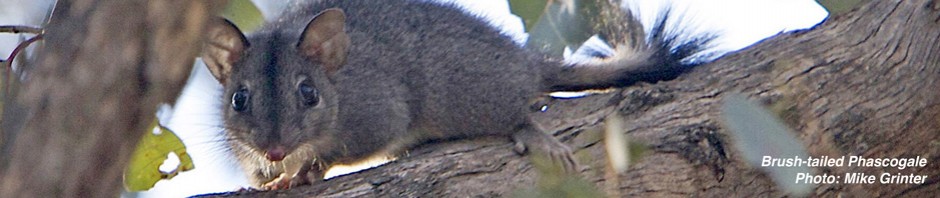
The brush tailed Phascogale, or Tuan, is FOBIF’s chosen symbol for a number of reasons: it’s an iconic box ironbark species, it’s endangered, and, let’s face it, it’s cute.

One of the interesting things about the Phascogale is that it has reacted to a decline in natural habitat in our area by adapting to human environments. A Castlemaine resident once found one in the pocket of a coat hanging in the porch outside his back door, and there have been quite a few found in people’s roofs. And we’re told that they’re quite fond of curling up in stubby holders!

Tuan: it seems they often prefer the comfort of someone else's home. Photo: Doug Ralph

The photo above was taken in a house at Clydesdale. The baby was found in a box in a cupboard. The householders have put up nesting boxes but the Tuans think living in the house is better.

To have a look at five videos of tuans around the house in Clydesdale, click here

Posted in Nature Observations | Comments Off on Make yourself comfortable!

What’s its name?

Doug Ralph recently found this caterpillar attached to a Tall Sundew. Does anyone what it’s called?

Another one of Doug’s recent images is this lacework-like gumleaf.

Posted in News | 1 Comment