Alison Pouliot book launch: Funga Obscura

Alison’s latest book is about fungi, and the photography of fungi. The title, Funga Obscura, unites the two.

Alison Pouliot

Beginning in elemental landscapes of ice and rock, the book traces the evolutionary path of fungi as enablers of life on land and creators of soils and forests.

Crossing continents and ecosystems, we navigate lichen-covered landscapes, crawl in the fungal undergrowth, scale glacial extremes and duck between rainforest shadows.

Everyone is welcome at the launch and there is not charge but please register. You will hear some stories of her travels in the photographing and writing of the book, and enjoy a glass of bubbles.

DATE: FRIDAY 14 MARCH 2025

LOCATION: – RADIUS ART GALLERY, 76 MAIN ROAD, HEPBURN SPRINGS VIC 3461

TIME: 6:30PM–8:00PM

Funga Obscura and Alison’s previous titles will be available for purchase.

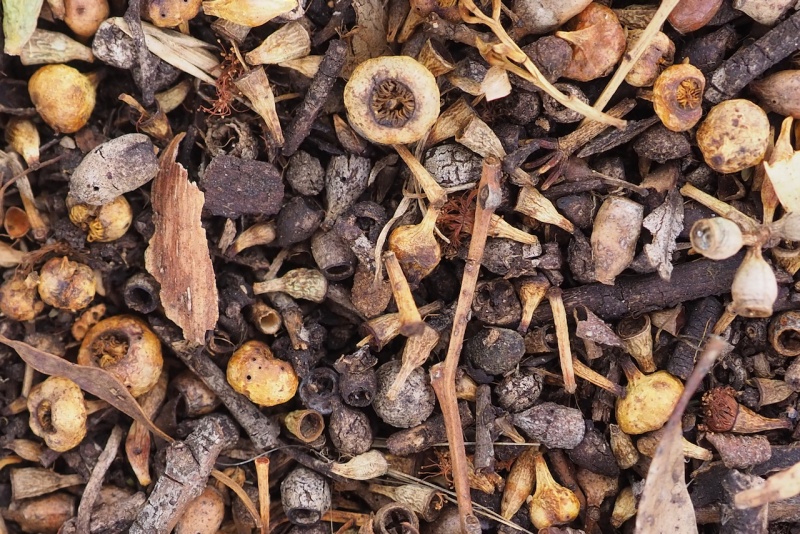
A selection of Alison’s fungi photos below. 

Posted in Nature Observations, News | Comments Off on Alison Pouliot book launch: Funga Obscura

Farewelling two FOBIF committe members & invitation to join the committee

We want to thank two members of our committee, who are both leaving due to personal commitments. Asha Bannon joined the committee in 2023 is a former Landcare coordinator and NCCMA employee. She was a valued committee member who contributed to FOBIF a broad range of knowledge and experience. Cassia Read brought her expertise as an ecologist, educator, garden designer & Moss book colaborator, to FOBIF over a number of years.

We invite anyone who is interested in joining us, to get in touch; we meet each monthly for one hour. 

We are also looking for a Treasurer and are happy to support you in this role (no previous experience necessary, apart from the ability to work a calculator!).

Committee members play a critical role in furthering the goals of the organization, ensuring the forests are well-protected and fostering strong community involvement in local environmental issues.

Call Lisa Hall, Secretary 0488 102 191 or email info@fobif.org.au

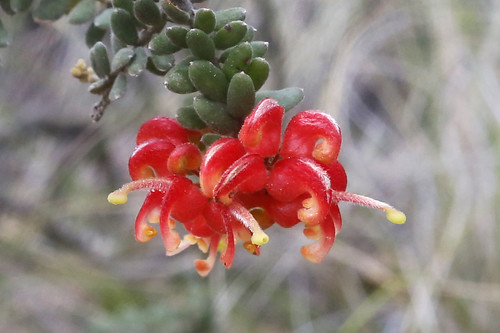
Castlemaine spider orchid, photo by Noel Young

Posted in News | Comments Off on Farewelling two FOBIF committe members & invitation to join the committee

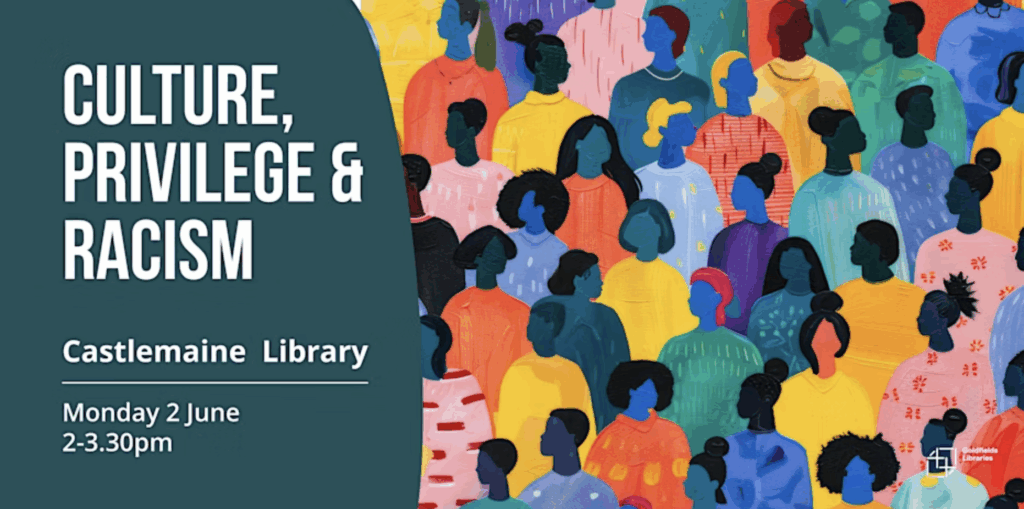
Workshop on culture, white privilege and racism (14 free spots available)

The FOBIF committee will be participating in a workshop with John Bonnice (Co-Chair of the Bendigo Reconciliation Committee) on Thursday 13th March at 10am in McKenzie Hill. The workshop takes 2.5 hours.

We have free spots available for the first 14 people to email us on info@fobif.org.au.

  • This workshop emerged from feedback from Aboriginal colleagues that groups/organisations need to promote self-reflection within staff regarding their attitudes and beliefs surrounding white privilege and racism as these beliefs and attitudes were a barrier to the partnership work with Aboriginal people and organisations. It was also expressed that non-Aboriginal people needed to carry responsibility for this conversation.

    The aim of the workshop is to enable people/groups/organisations to reflect on mainstream culture/white privilege/racism and its impact on the relationship and work with Aboriginal people and communities and our understanding of what has happened/is happening for First Nations people.

  • The workshops are a conversation using a self-reflection process
  • It is not cultural awareness training but does certainly help people prepare for cultural awareness training and further learning.
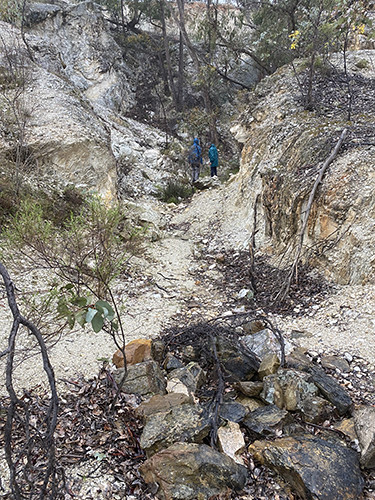
  • The workshop works best when it is done in person and not online.Sedimentary rock. Photo by Frances Cincotta 
Posted in News | Comments Off on Workshop on culture, white privilege and racism (14 free spots available)

Remembering Richard Piesse

We remember Richard Piesse,

Champion Castlemaine Naturalist and Volunteer

Saturday 15th February, 3-5pm.

Tea Rooms, Castlemaine Botanical Gardens

You are invited to join with the Castlemaine Field Naturalists Club and staff and volunteers from the Castlemaine Visitor Information Centre for an informal gathering to remember Richard Piesse, who died on 28th December, 2024.

Richard was a long-term active member of CFNC and loyal volunteer with the Castlemaine Visitor Information Centre. He knew our bushlands well through managing the building of the Leanganook as well as the Lerderderg tracks of the Great Dividing Trail Network, and his knowledge of the flora of the region was extraordinary. He was a generous and kind mentor and a passionate advocate for our local bush.

Please join us to share memories of and to celebrate Richard’s life and contributions over afternoon tea. Afterwards, there will be an option for a walk in the Castlemaine Botanical Gardens Nature Reserve, one of the many bushlands that has benefitted from Richard’s efforts.

ALL WELCOME

Meet: Saturday 15th February, 3-5pm, Tea Rooms, Castlemaine Botanical Gardens.

Parking: First car park along Downes Rd from Walker St.

Bring a small plate to share for afternoon tea. Tea and coffee will be provided.

Posted in News | Comments Off on Remembering Richard Piesse

So: what might World Heritage status mean?

Readers will have noticed prominent coverage in the national press of Federal support for the proposal to get UNESCO world heritage nomination for the Victorian goldfields.

FOBIF has taken a keen interest in the ongoing work on this proposal. You can find our 2024 submission to the World Heritage bid team here

Summing up the values that might justify listing is a tricky business, because ‘listing’ can very easily be understood as ‘celebrating’, and plenty of what happened during the gold rushes definitely should not be celebrated: the ongoing dispossession of First Nations people, and the complete trashing of our environment come to mind. World Heritage listing does NOT necessarily mean celebration: it’s worth noting that the Auschwitz death camp is on the list.

Cobblers Gully puddling wheel: such things are charming curiosities now–but Captain Bull tried unsuccessfully to ban them in 1855 because they poured sludge into creeks, polluting the region’s water.

The bid team have declared their full awareness of the complexity of goldfields history, and their determination to avoid a cheap glorification of gold which would gloss over the human and environmental costs of mining. In this, they’re in for a bit of a high wire [or is it juggling?] act, and will have to contend with the apparent ignorance or carelessness of politicians addicted to hype.  A good example might be a statement by Federal Environment Minister Tanya Plibersek:

‘The Victorian Goldfields tell so many stories – of waves of immigration, of building beautiful towns from a harsh landscape, that have stood the test of time.’

The central Victorian landscapes were not ‘harsh’ when the diggers arrived. They became so after they were torn to pieces in the search for gold. The Environment Minister should know this, and be careful of slipping into one of the worst clichés of Australian history: that new arrivals had to struggle with a hostile landscape.

The Age/SMH article linked above is a good example of Gold boosterism—perhaps a consequence of reporter ignorance, but common enough anyway. The article is illustrated by an evocative picture of the Porcupine gold dredge; the writer forgot to caption the article with info to the effect that dredging was a major factor in the destruction of our rivers.

Further, it’s well to be cautious about promotion of World Heritage for economic reasons. We’re told that ‘A 2024 economic assessment found that the listing could see 2.5 million new visitors to the Victorian Goldfields Region over 10 years, with an estimated visitor spending increase into local economies of over $500 million.’ Will those visitors be enticed to the region with challenging tales of a region in turmoil, of wholesale ethnic cleansing, and ravaged landscapes? Or will the invitation emphasise nice verandas, picturesque ruins and good coffee?

And there’s an irony here: coffee and verandas aside, the powerful charm of the Castlemaine Diggings NHP is dependent on its haunted sense of abandonment. Would that sense of loneliness and loss survive a campaign of mass tourism? It’s doubtful.

Of course, it’s the complex picture that’s the more interesting one: as FOBIF noted in a submission on National Heritage in 2004, ‘ the unique experience provided by the Diggings Park is the sense it gives of the devastation of the past and the gradual and inspiring recovery of the landscape. Visitors who see the very rare ancient trees, the rich understorey and the regrowth on mining sites can appreciate this remarkable phenomenon, not as a thing of the past, but as a reality now.’

The tourism industry doesn’t usually go for complexity, however, and from a monetary point of view, they might be right.

Section of a sign board, Eureka Reef: the story told is a complex one, and is all the more interesting for that.

On a more positive note, it’s encouraging to see a better informed comment from Premier Jacinta Allen:

“When you consider what makes this part of the world the unique place that it is, there is the unique natural environment, the Box Ironbark Forest where you can see the cultural markers of the original custodians of the Dja Dja Wurrung people,” Ms Allan said.
“From the historic streets of Bendigo to the grand buildings of Castlemaine and the untouched mining landscapes of Walhalla – the Goldfields stand as a living testament to those who came to Victoria, seeking a better life and how they transformed the state.”

What is at stake here is the question of truth in history. It goes past the cheap business of ‘balance’, or the crude classifications of the ‘black armband’ and ‘three cheers’ views of our past. It has to do with who we really are as a community.

Over 150 years ago Ernest Renan argued that ‘forgetfulness, and I would even say historical error, are essential in the creation of a nation.’ In other words, people should tell themselves comforting lies about their history, so they can pretend that they have no responsibility to correct the injustices of the past. If it’s not properly managed, World Heritage could become such a comforting lie. The bid team face a tricky task if they’re to put up a proposal that avoids the clichés, and chooses a narrative that’s truthful, challenging and exhilarating.

Posted in News | Comments Off on So: what might World Heritage status mean?