Pyrenees Highway: some preliminary questions

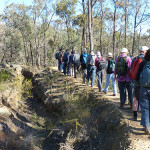
Representatives of several conservation groups, including FOBIF, have done a couple of reconnaissance trips along the Pyrenees Highway to look over trees marked for the chop as part of Vicroads proposed Safe Road Project.

FOBIF will be making a submission on the proposals by the due date of Friday April 8. Submissions should be sent to Vicroads at 53-61 Lansell St Bendigo or by email to nrmailbox@vicroads.vic.gov.au

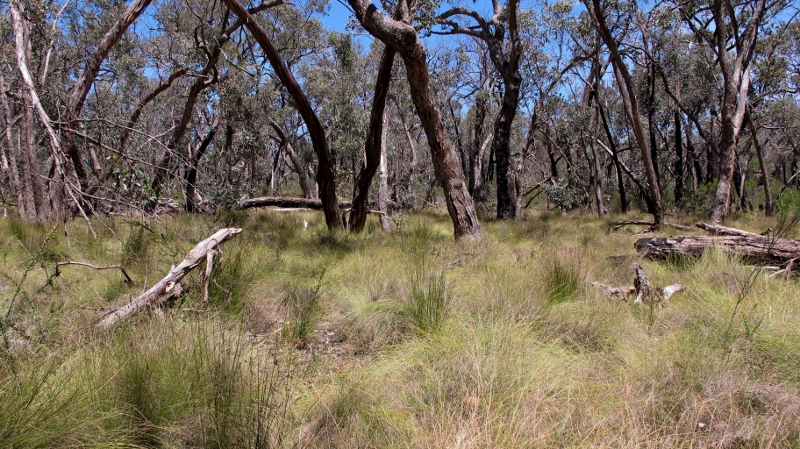
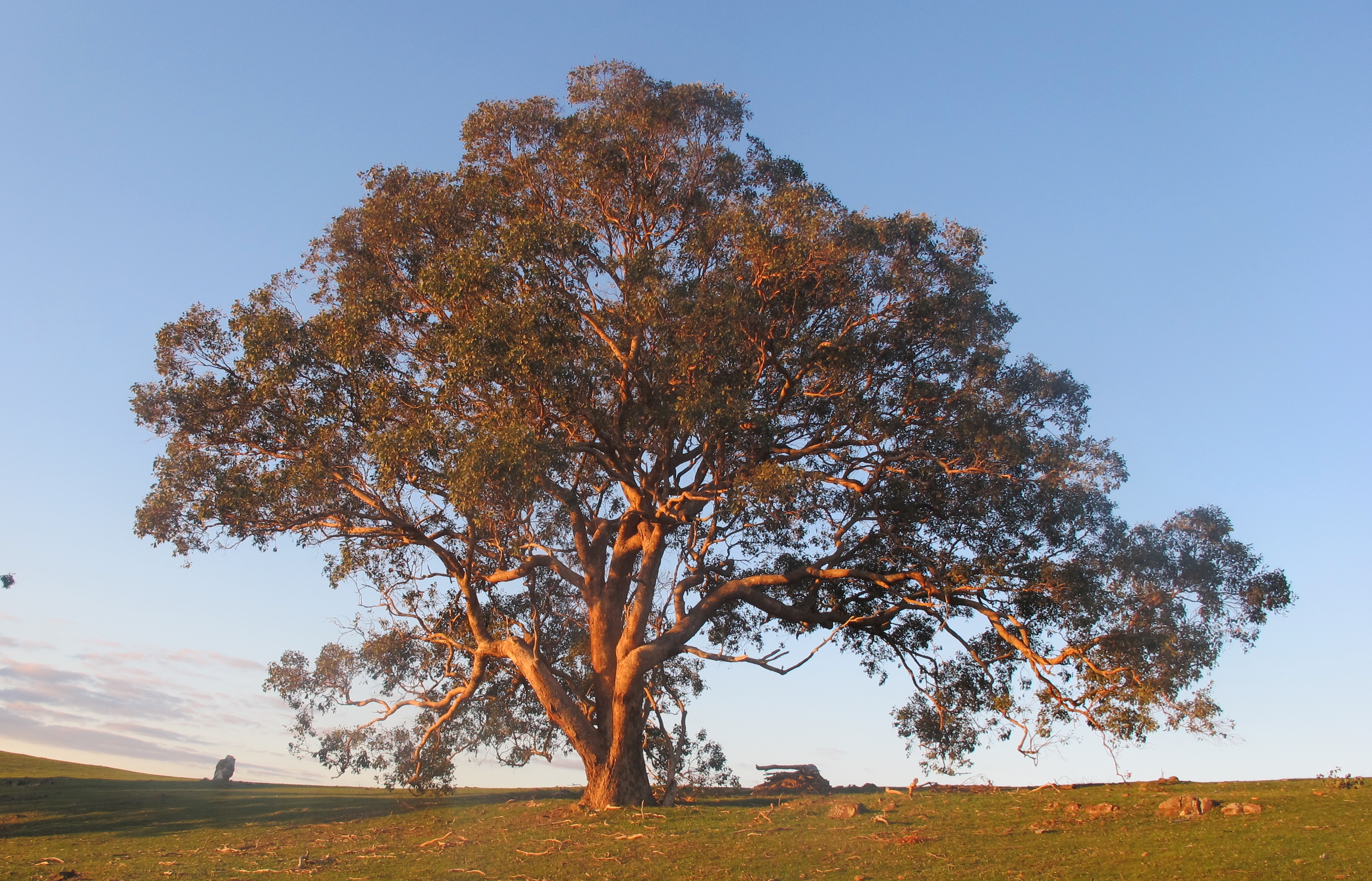
FOBIF is puzzled that some trees high on embankments, like this Yellow Gum, are marked for removal.

FOBIF is puzzled that some trees high on embankments, like this Yellow Gum, are marked for removal. We are also interested in the fact that highway edge vibration strips are not included in the project.

Initial impressions from the group include the realisation that a tree classified ‘medium’ [that is, with a trunk diameter between 52 and 70 cm at breast height] might be medium by the standards of, say, a Gippsland forest, but in this region that could be significantly larger than average.

We are also puzzled that highway edge vibration strips are not listed as among the works; and that only limited improvements to the road shoulder are planned: the road for significant stretches has little or no shoulder and falls quickly away to eroded gutters.

It seems that the strips were considered in the early stages of this project, but left out for budgetary reasons. There is substantial evidence that they reduce runoff road accidents. One US report offers the following: ‘According to National Highway Cooperative Research Program (NCHRP) studies, milled shoulder and edge rumble strips reduce single-vehicle run-off-road injury crashes by as much as 24 percent on rural freeways and by as much as 46 percent on two-lane rural roads.’ If this research matches Australian experience, it would seem strange to leave the strips out of this project, whose main object is to reduce such crashes.

We’ll be looking to clarify these and some other questions before making our submission. We also want to clarify the matter of distances between roadside barriers and adjacent trees; and we’re curious that a number of trees high on embankments have been marked for removal.

As a footnote: in the time it spent examining the roadside, the group witnessed a couple of scary examples of driver irresponsibility: passing at excessive speeds on sections with limited visibility. It’s clear that the margin for error on a road like this, with a narrow verge and steep drop offs is small: and that traffic calming should be a priority. We don’t envy Vicroads in the challenges it faces on this one. Our society continually plays the contradictory game, where we are told that speed kills–and yet high speed, powerful vehicles are put in the hands of anyone with the money, and events like the Formula 1 Grand Prix [not to mention numerous TV programs] glamorise speed and power.

Posted in News | 1 Comment

Some dog park questions

FOBIF has written to the Mount Alexander shire regarding the off lead dog park proposed for the Botanical Gardens. The relevant parts of the letter follow:

‘While FOBIF believes that an off lead park is a good and common sense idea, the location of the current proposal being right next to the ‘bush’ section of the gardens is our first cause for concern. Although the dog park is to be fenced, we’re worried that dogs might access the bush section on their way to and from the park. The bush area is home to known colonies of the Eltham Copper Butterfly which is listed as a threatened species under the Victorian Flora and Fauna Guarantee Act 1988 and should be considered by council as a valuble asset in our shire.

‘Our second concern is that the area which has been proposed as the dog park is known to have infestations of needle grass weeds. One of the ways they are spread is via furry animals such as dogs. These weeds are highly invasive and FOBIF believes the dog park should not be put in the proposed site while the current infestations remain uncontrolled. FOBIF would like to see all visible needle grass in the area destroyed, followed by removing all newly germinated or previously missed needle grass every year until no more needle grass is seen for several years. This would help prevent the proliferation of these weeds in our shire and the future expense of dealing with these currently manageable populations of needle grass weeds. (As the timing and sequence are critically important to getting rid of these weeds, we recommend using the enclosed procedure or contacting a needle grass expert… for advice.)

‘FOBIF would like Council to put the dog park in a more appropriate place. However if Council decides to go ahead in the proposed area, we would like some of the budget for the park to be allocated to this weed control prior to implementation of the park. It is likely to take years to eradicate needle grass completely from the area due to the seed bank in the soil. But we believe it is essential to get rid of existing plants before work starts, and if the dog park is opened before total eradication takes place, to do follow up control each year until the eradication is complete.’

Posted in Nature Observations, News | Comments Off on Some dog park questions

Kalimna set to burn, again

Representatives of the Friends of Kalimna Park met with DELWP and Parks Victoria fire officers last week to discuss the planned burn of a section of the Park this autumn. The exercise is set to happen in the next five weeks, conditions permitting.

The fuel reduction exercise will cover a section of the western and southern part of the park, not including Kalimna Point [which has been groomed] or the eastern side of the tourist road [the Happy Valley side]. Part of this latter area may be burned next year, and part  groomed.

FOKP representatives expressed the following concerns about the upcoming operations:

1. Mineral earth breaks [used by DELWP as borders for its fires and to protect sites deemed significant] are often intrusive and not rehabilitated properly: they can end up as permanent trail bike or mountain bike tracks. In any case, some are so crudely done as to be erosion hazards.
2. The destruction of big trees is an ongoing annoyance, especially as everyone agrees they’re not a fire hazard. DELWP has undertaken to take measures to prevent fires taking hold at the foot of such trees, and to patrol the fire in the days following its ignition to ensure these measures work.
3. Bursaria vegetation which is habitat for Eltham Copper Butterfly colonies needs to be appropriately protected. The butterfly has recently been observed in sections of the park which were mosaic burned last year. It is important that DELWP has maps of bursaria which should enable it to focus fuel reduction where it matters, not on a precious biodiversity resource.

FOKP will pay careful attention to the operation when it happens. The Department’s approach to consultation has improved markedly in recent years, now it’s time to see improvements in results on the ground.

DELWP is also in consultation with local beekeepers concerned about smoke damage. As we’ve noted, Grey Box, a very important tree for honey and pollen, is flowering prolifically at the moment, and could go on flowering beyond May.

Posted in News | Comments Off on Kalimna set to burn, again

Birds – read and listen

sarah lloydPeople might remember Sarah Lloyd who gave a very popular talk on slime moulds at last year’s FOBIF AGM. She has just published a new book, The Feathered Tribes of Van Diemen’s Land. It’s full of wonderful photos and so comprehensive it could used to identify most species. However it’s main intention is to “encourage an interest in the birds that surround us and an understanding of their habits and needs so that all landowners – whether of small backyards, extensive farms or beachfront properties – can help to ensure that Tasmania’s special birds will thrive.”

More about the book and where to buy it can be found here.

Strangways resident and nature sound recordist Andrew Skeoch was recently featured on the ABC radio program Big Ideas:

Trying to record birdsong in the pre-dawn darkness, Andrew Skeoch realised how few of us get a chance to really listen to nature. Now he’s a champion of natural soundscapes, and believes they can teach us much about beauty and even the evolution of life. (from ABC website)

The episode entitled ‘Listening to Nature’, was recorded at this year’s Woodford Music Festival. Click here to listen to Andrew’s fascinating talk.

Posted in News | Comments Off on Birds – read and listen

TOGS show up and running

hi res large poster with border 2

Click to enlarge


The Trees in the Mount Alexander Region exhibition hosted by FOBIF is now at TOGS Place Cafe, 58 Lyttleton Street, Castlemaine. The poster above shows a miniature version all the photographs and an online catalogue with commentary on each photograph is available. All photographs are for sale (framed: $95 large, $70 small) and the show runs until the end of this month. (There is wheelchair access to TOGS via a portable ramp. It is advisable to ring TOGS first if you wish to use this facility: 5470 5090.)

In mounting this exhibition we wish to pay tribute to our founding President,
Doug Ralph (1948-2015), bushman, conservationist and champion of our trees.

Doug photo low res Bush reflections copy

Doug was a keen photographer in the last decade of his life. The photo above showing the bush reflected in water trapped in leaves was a favourite subject of his.

Posted in News | Comments Off on TOGS show up and running