Indigenous joint management 1: have your say

A drop in session in Castlemaine on Sunday 20 May was a chance for interested residents to check out plans for indigenous co management of parks in north central Victoria.

None of the parks in question are in the Mount Alexander region, but the environmental and management problems faced by all of them are very similar to what we are dealing with, so the management approach being proposed is of great interest to us.

The draft joint management plan for the parks is open for public comment now. You can find it here. It’s a fascinating document, definitely worth a read [see a few details below].

The draft proposal is open for public comment till June 19. Submissions can be emailed to: consult@dhelkunyadja.org.au ; Posted to: DDLMB Senior Project Manager, C/- DELWP Level 3, 8 Nicholson Street East Melbourne 3002; or made online here.   the procedure for submissions is simple:

  1. How strongly do you support the vision of the draft plan?
  2. How strongly do you support the proposals of the draft plan overall?
  3. What do you like about the draft plan?
  4. What would you like to see changed in the draft plan?
  5. Do you have any other comments?

Posted in News | Comments Off on Indigenous joint management 1: have your say

Indigenous joint management 2: here are some interesting ideas

The draft plan is a challenging, even exhilarating document. Its objectives are ambitious:

‘Healing Land (Country) goes beyond ridding the environment of pest plant and animals, managing fire and visitor impacts. The Draft Plan is as much about Dja Dja Wurrung People as it is about the land – we are a part of it. Dja Dja Wurrung People are part of the land and cannot be separated from it now and into the future.’

‘Sustainable management of the Dja Dja Wurrung Parks generating social, cultural, economic and environmental benefits for Dja Dja Wurrung People and the wider community.’

Mount Franklin from Muckleford: the distinctive dark cap is a pine plantation, a quite unnatural imposition on the volcanic cone. One of several proposals for land restoration in the plan is to gradually restore native vegetation to the mountain.

It’s fair to say that conservation reserves are currently regarded as places to visit, refuges from the ordinary run of daily life. The idea that they could actually be a central part of a community’s culture is still a radical one.

The draft plan is too complex to summarise in detail, but here are a few challenging ideas:

— ‘The use of Dja Dja Wurrung language names for places and features of cultural significance is a key priority for DDW People.’

— ‘the reintroduction of Gal Gal [dingo] and other culturally important animals within the landscape is identified as an action in [the Country Plan]’

–‘ Gradually restore native vegetation to the Lalgambuk (Mt Franklin) section of Hepburn Regional Park in order to recognise and restore the outstanding cultural significance of this place to DDW People.’

— ‘Dams fragment the watercourse they’re built on, preventing movement of aquatic animals between parts of the stream on either side of the dam. Dams and channels can decrease gatjin [water] flows downstream, particularly in low rainfall periods, reducing streams to disconnected pools, or causing problems associated with low flows, such as algal outbreaks.’

— ‘Manage road, track and trail maintenance to protect natural and cultural values All and maintain (and where possible reduce) the extent of road verges.

Posted in News | Comments Off on Indigenous joint management 2: here are some interesting ideas

Indigenous joint management 3: cultural fire

The return of cultural fire in this region is a potentially dramatic event.  As yet the implications of this practice are not widely known, but it clearly plays a major role in the co management strategy:

– ‘Delivery of Wi [cultural fire in the landscape] by Dja Dja Wurrung People, provides significant opportunities to restore the health of Country, and for DDW People, including youth, to strengthen knowledge transmission.’

There is implied criticism of current DELWP planned burning practice in comments like these in the draft plan:

‘Planned burning is largely centred on fuel reduction—the cultural outcomes, impacts on DDW food and fibre plants and animals, cultural connections and obligations have been little considered. While controlled burning is beginning to integrate DDW cultural practices, fire regimes continue to damage Country. Cultural heritage in the Parks can also be damaged by the use of fire retardants, mineral earth fire breaks, control lines and in some cases the intensity of controlled burns.’ Page 33

Elsewhere in the document we read, ‘When we burn, we start with dead leaves and place them in a circle and make it go outwards … Once the burn gets up a tree, to the yellow leaves it’s no good then.’

These comments are similar to the criticisms groups like FOBIF have made of DELWP practices over the years: they offer hope that indigenous participation may significantly improve management in this area.

Posted in Fire Management, News | Comments Off on Indigenous joint management 3: cultural fire

‘Creatures’ update

Here are two beautiful photos that have been submitted to FOBIF for our November ‘Creatures’ show at TOGS. Keep them coming! You can now view our ‘Creatures’ Flickr photo album.

I believe the butterfly is an ‘Orchard Swallowtail’. The picture was taken on our lemon tree just a few minutes after it emerged from its cocoon. Its wings are still folded and it hasn’t taken its first flight as a butterfly yet. (Max Schlachter)

Mudeye (Dragonfly larvae) Castlemaine (Vivienne Hamilton)

Posted in News, Photo Exhibitions | Comments Off on ‘Creatures’ update

Grey skies, perfect walking conditions

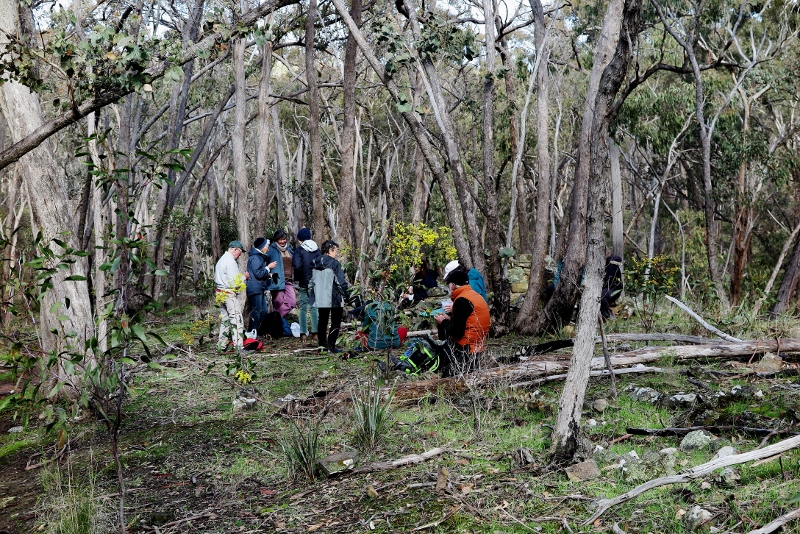
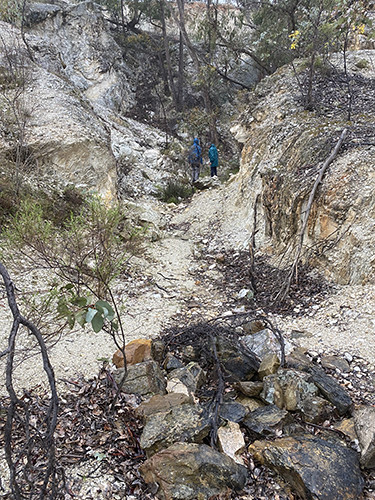
A cloudy day provided perfect conditions for FOBIF’s May walk on Sunday. A group of 17 negotiated obscure tracks in the back country of the Poverty Gully race under the leadership of Richard Piesse and Elaine Bayes. The nooks and crannies of this area have many fascinations, cultural and natural, and there were frequent pauses to explore them. The tunnel of the Crocodile Reservoir water race in its deep cutting proved particularly interesting: fortunately none of those who peered over the edge needed to be rescued.

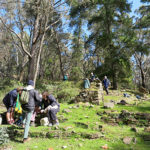
What are they looking at? Walkers check out the northern entry to the Croc Res water race tunnel.

Our thanks to Richard and Elaine for a stroll in air fresh enough to be invigorating without being uncomfortable!

Next month’s walk will be led by Jeremy Holland into the Tarilta Valley. Check the program for details.

Posted in News | 1 Comment