One more contribution to FOBIF turns 25

Liz Martin has sent us this contribution.

Mount Alexander

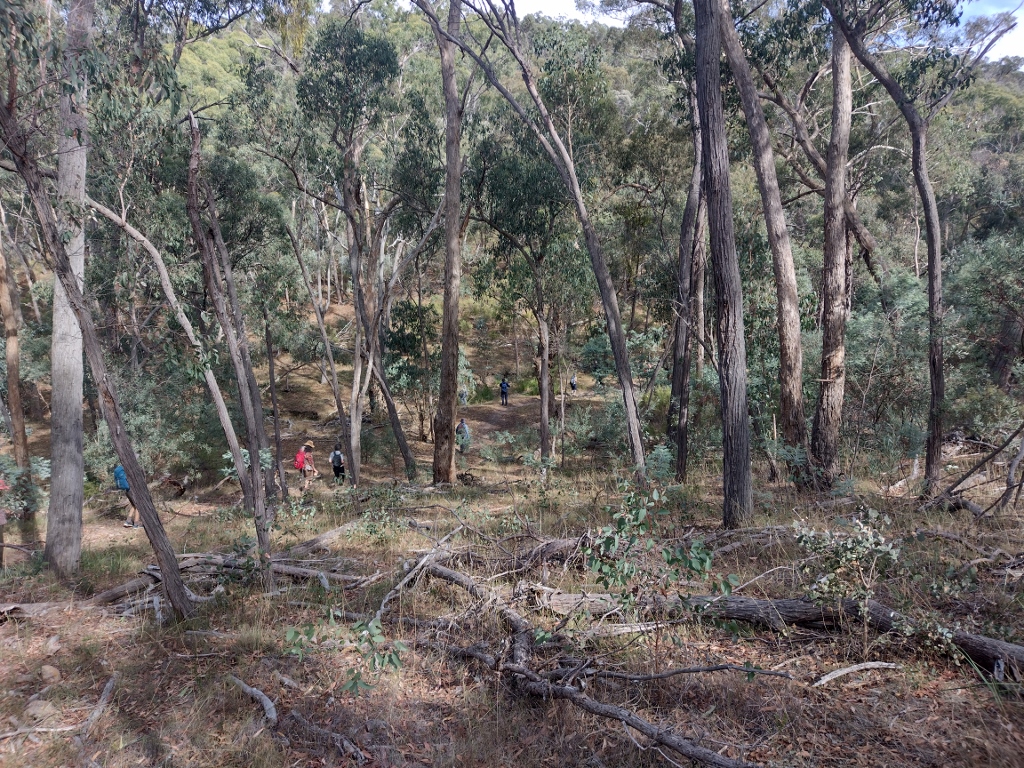
I love to wander the ridges and gullies.

I often walk and find new places that I name. Valley of the dead trees is one. 

The different environments from the summit mist to the drier valleys are all worth exploring.

It is also a place for family walks and celebrations at the picnic ground or dog rocks. 

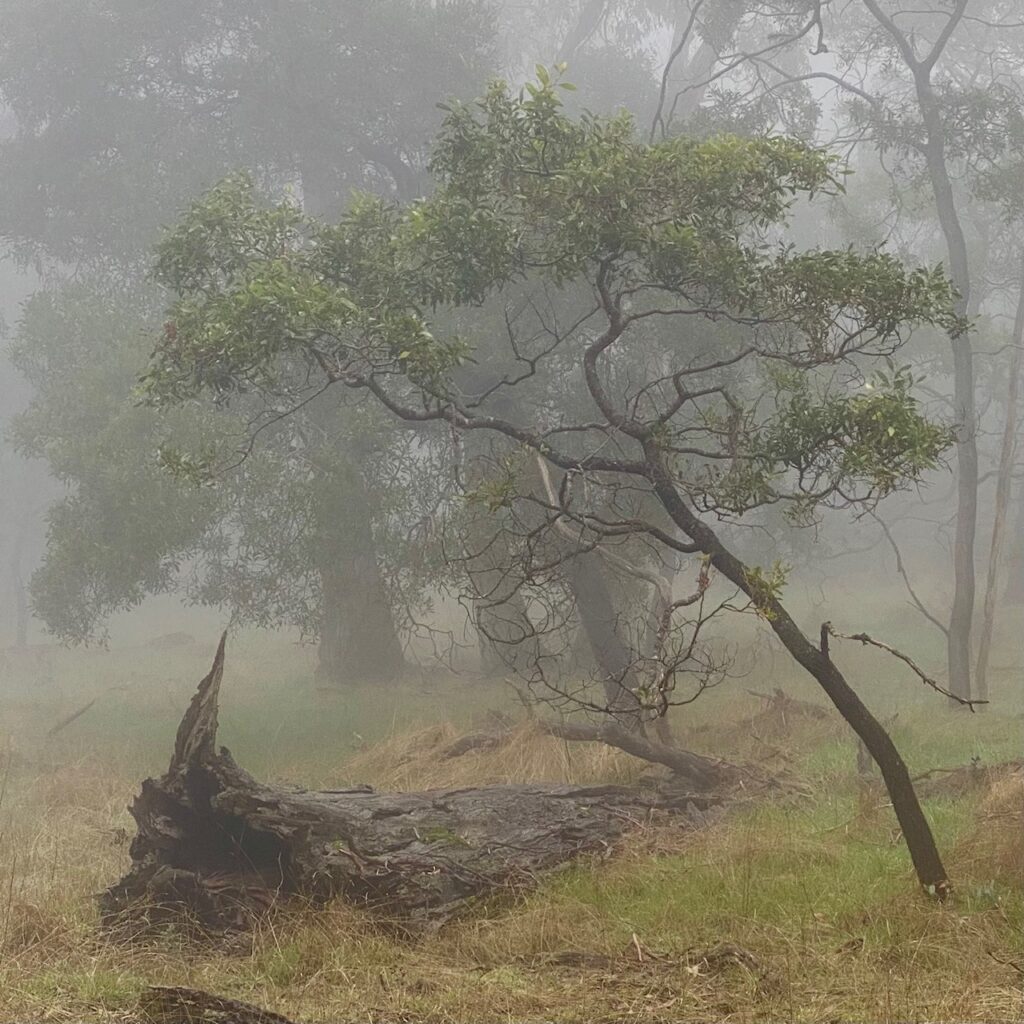
I love the misty days and the ancient rocks: the moss beds and the fascinating fungi.

It is also my refuge when life gets overwhelming and I wander the different areas with my camera, seeking out the leaves that have fallen,  lichen on the rocks and look forward to the fruiting of the mosses.

Posted in News | Comments Off on One more contribution to FOBIF turns 25

Subscriptions are now due

We have recently sent our 2023 FOBIF newsletter with a renewal membership form to members. If you haven’t received one or would like to become a member you can find the membership form and payment details here

Posted in News | Comments Off on Subscriptions are now due

More contributions to FOBIF turns 25 show

We have had a terrific response to our call for contributions to our FOBIF turns 25 exhibition. You can see all the entries here. The closing date for contributions is in just over a week (31st January). You can find the details here.

Euan Moore and Bronwyn Silver have contributed the following photos and accompanying text. 

A Visit from the Emperor (Euan Moore)

The Sugar Gums at Kalimna Point, while not native to the area, provide resources for many of the smaller animals that live in our forests.  One of the larger trees on the slope below the rotunda has been used by Sugar Gliders whose sharp teeth have cut into the bark causing the sweet sap to ooze out.  This sap is the nourishment which the Sugar Gliders seek. It continues to bleed long after the gliders have retired to their hollow at sunrise.

The sap provides a bounty for insects that would otherwise be seeking nectar from flowers at a time of year when there are fewer plants in flower. Word, or the scent, had obviously got out.  On a warm January morning there was a cloud of butterflies feeding from the Sugar Gliders’ table.

Tailed Emperors are one of our largest butterflies. Their wingspan can be up to 85mm. The photo shows one sharing the ‘table’ with a Yellow Admiral as they feed on the white frothy sap. At the lower right is a scar from an earlier visit by the Sugar Gliders.

There was continuous activity at the tree as the morning warmed up.  Common Browns were there by the dozen. There were numerous Yellow Admirals, an occasional Marbled Xenica and of course the Tailed Emperors. There were even a few insects that had become trapped in the sticky treat.  Will these be the next round of fossils preserved in amber?

We don’t see Tailed Emperors in Victoria every year.  They are more common in northern New South Wales, Queensland and the Northern Territory.  There were several sightings around Castlemaine in 2012 but few since until they showed up again this summer.  It may be that the very wet conditions further north have enabled their numbers to increase.

Dawn at Bells Swamp (Bronwyn Silver)

Our region is not known for its wetlands but Bells Swamp covers about 40 hectares at the very northern edge of the Shire. Most of the time passers-by on the Maldon-Bridgewater Road see only an unremarkable area of River Red Gums surrounded by farming country, but in a wet year the swamp becomes a stand-out landscape.

In wet years like 2011, 2016 and again in 2022 it is transformed into a wonderland of wetland birds with the River Red Gums and wetland plant life flourishing after years of drought.

Bells Swamp was dry between 1996 and 2009 but flooding after heavy rains beginning in late 2010 meant the swamp was still more than a meter deep in places in November 2012. After the 2022 rains it is again pretty deep and likely to be flooded for many months.

Reflections of the tangled wetland vegetation are especially stunning at dawn when the light is soft and golden. It’s worth getting up for.

Posted in FOBIF turns 25, News | Comments Off on More contributions to FOBIF turns 25 show

2023 FOBIF walks program

The 2023 FOBIF walks program is now on the website. The first walk is on Sunday 19 March. All walks start at the Community House in Templeton Street at 9.30am apart from the July 16 Long Walk led by Jeremy Holland which will start at 9am. All members and supporters are welcome.

Posted in News, Walks | Comments Off on 2023 FOBIF walks program

Colours from an ancient ocean

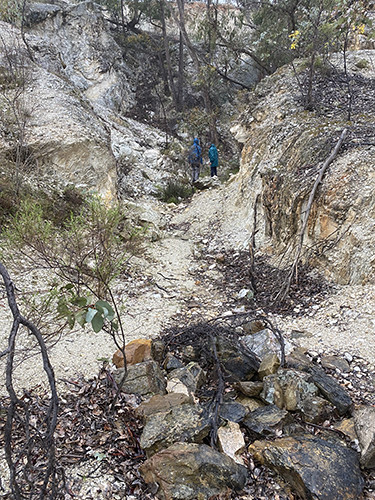
There are many sites around the Castlemaine area where 19th Century gold miners have removed all traces of soil in a process called ‘ground sluicing’. A blight upon the environment, but also, a wonderful opportunity to take a peek at the world beneath our feet.

These photos reveal one such pavement of thinly layered and intriguingly coloured mudstone. Apart from the colour, the most obvious feature in the photo is the parallel lines. The lines are the edges of thin layers of mud which were deposited on the seafloor millions of years ago (Photo 1). Most of the tiny layers appear to be very fine-grained mudstone, but some layers may be siltstone which is slightly coarser in grain-size.

But what causes the ochre like colours in the rock? We can see from the fine grain size of the rock and the thin layering that the mudstone was deposited on the seafloor at a time when bottom currents were gentle or even absent. This created an oxygen poor environment which was just right for the mineral pyrite (FeS2) to form in the muddy muck. After the mud turns to stone, and despite all the upheavals over the eons, pyrite remains in its pure state as tiny cubic crystals, that is, until erosion finally exposes the rock near the surface. When rock is exposed to within about 30 metres from the surface the oxygen-bearing groundwater reacts with the pyrite to form iron compounds that move through the weathered rock and start to fill cracks, or more porous parts of the weathered rock. These iron bearing minerals are called limonite or goethite – and these are the red-brown, or ochre coloured streaks (Photo 2).

Photo 1: The fine horizontal lines in this photo are the edges of dozens of thin layers of mud and silt that were laid down on the ocean floor. The dark brown fragments are pieces of limonite or goethite that have been weathered out of the outcrop and now just floating around.

Photo 2: The red-brown diagonal streak is probably a concentration of limonite formed along a tiny quartz vein.

This is the ninth  post in our geology series written by Clive Willman. 

Posted in Geology, News | 1 Comment