Mountain biking and Mount Alexander

A proposal is currently being developed to put a mountain bike track in the Hancock pine plantation on the western side of Mount Alexander.

FOBIF is not opposed to this idea. Mountain biking  is an activity with many health benefits, and there is some potential–as yet undefined–for economic spin offs in the form of tourism to the Harcourt area.

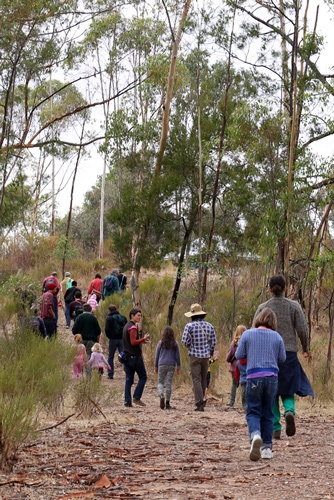
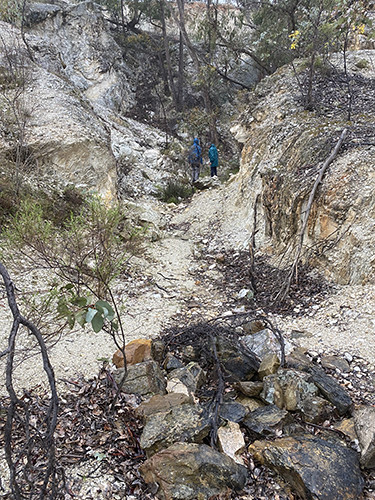
Mount Alexander, west side: illegal mountain bike use on these slopes could cause serious erosion problems

Mount Alexander, west side: illegal mountain bike use on these slopes could cause serious erosion problems

We are, however, keen that any track design should minimise the possibility that the activity will spill over into the present boundaries of the Mt Alexander Regional Park. Photos are in circulation suggesting that a track in the plantation could be linked to the Leanganook picnic area. And some illegal riding takes place already: videos can be seen on Youtube of riders using walking tracks on the Mount. Such riding is capable of causing serious erosion on the steep western slopes, and of straying onto precious moss beds on the eastern side.

We understand that the plantation will be added to the Regional Park in 2015. We’ve written to Parks Victoria ranger in charge David Major on the subject. He informed us to our surprise that Parks is not represented on the committee developing the MTB proposal, but said: ‘Some years ago Parks Victoria looked at the feasibility of mountain bike access to Mount Alexander, and was able to identify that existing tracks around Leanganook could possibly be used by mountain bikes for cross country riding, but the use of downhill mountain bikes was not suited to the area and would not be permitted…Parks Victoria is looking to stop [illegal downhill use] and rehabilitate track damage.’

FOBIF is keen to be engaged in any plans which might have an effect on the Mount. At present the concept development for the plantation, led by Goldfields Tourism, seems to be in capable hands: but this mountain, being one of the most beautiful and dramatic natural features in the region, could be put under pressure if this project is pushed through without all appropriate knowledge, care and resources.

Posted in News | Comments Off on Mountain biking and Mount Alexander

Opportunist

Nothing is as simple as it seems.

Here’s a new perspective on rubbish: when Parks Victoria ranger Noel Muller was rearranging a trailer full of rubbish at Golden Point after clean up day on Sunday, he noticed something unexpected sticking out of the side of one of his collection of decrepit mattresses, collected earlier on the edge of Kalimna Park.

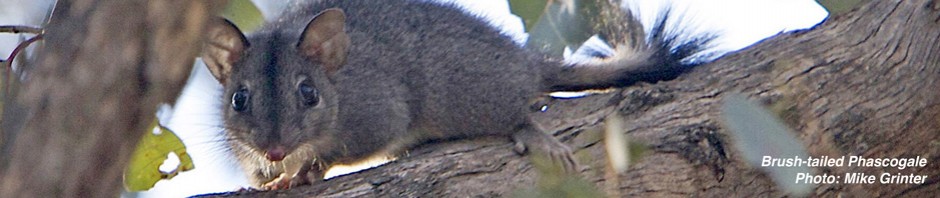
It was the head of a phascogale, rather surprised to find its comfortable accommodation bounced around so much.

As we’ve reported in a previous post, the phascogale is a pretty opportunistic creature: it’s been found in filing boxes and coat pockets before. It’s a bit unsettling to find it settling into a mouldy mattress, however.

Noel took the mattress back to where it was collected, to give the phascogale a chance to collect its wits.

Posted in News | Comments Off on Opportunist

Working towards ‘unimagined landscapes’

The goal of good land management is to create new, resilient landscapes, not to restore ‘original vegetation’, Ian Lunt told Connecting Country’s first public meeting for 2014 in Newstead on Sunday.

140 people turned up to hear Professor Lunt talk about natural regeneration, a phenomenon which has created much more native vegetation than any deliberate restoration programs. He cited several examples of this, including the figure that in the Heathcote Graytown area, native regrowth is covering an extra 1800 hectares every decade.

Natural regeneration: barely noticeable in the short term, but a major feature of landscape change in the last 60 years.

Natural regeneration: barely noticeable in the short term, but a major feature of landscape change in the last 60 years.

This process is partly the result of the decline of grazing on marginal land, and the growth of the ‘amenity landscape’, in which farming is being displaced by smaller blocks of land managed for recreational or other purposes.

Where do land restoration advocates fit into this picture? Professor Lunt urged his listeners not to entertain dreams of bringing back some kind of ideal landscape, but rather to embrace the ‘human landscape’ we have inherited from the recent past, and work with it.

The goal should be to ‘create resilient connected landscapes, not restore original vegetation.’ The ideal landscape would consist of areas in production, integrated with regrowth areas, remnant vegetation and areas planted out with native vegetation for specific reasons.

Those working on improving landscapes, he argued, should be aiming to fill biodiversity gaps [in totally cleared areas, for example], to fast track desirable changes, and to add features missing from the landscape, like habitat hollows. In agriculturally productive areas, small corridor projects are appropriate.

His ideal is a ‘pluralism’ or ‘complementarity’ of approaches to land: ‘This is creating landscapes we haven’t had before: we have to create totally new ways of thinking and talking about these unimagined landscapes.’

Professor Lunt’s talk was the first in Connecting Country’s workshop series, ‘Improve biodiversity on your property.’

Vegetation ecologist Ian Lunt is Associate Professor in the School of Environmental Science at Charles Sturt University. His brilliant blog can be found at http://ianluntecology.com/

Posted in News | Comments Off on Working towards ‘unimagined landscapes’

Time to upgrade the Wellsford State Forest

wellsford-mapMore than 60 people attended a summit on  6 February organised by the Bendigo District Environmental Council to promote the preservation of the Wellsford State Forest through upgrading its status. 

The forest is 6,478 ha of Box-Ironbark forest and has special biodiversity conservation values recognised by the Environment Conservation Council in its 2001 report. The then government’s dictated terms of reference required a balance of social, ecological and economic demands so it was not included in the Greater Bendigo National Park because at the time it was being logged.

wellsford-state-forest

Wellsford Forest in Spring, courtesy Dr John Bardsley

But times have changed and, after listening to the speakers outline the values of the Wellsford Forest, there was unanimous agreement from the summit attendees that a committee should be formed and a campaign planned to raise public and political awareness of the benefits of upgrading the forest from its current State Forest status to one that provides protection from all the threats of overuse and abuse.


We’ll keep you posted on how the campaign goes …….

Posted in News | 1 Comment

Sweet Bursaria Seed Collection & Propagation Workshop

On 16 February 2014  there will be a free Sweet Bursaria Seed Collection & Propagation Workshop in the Castlemaine Botanic Gardens between 9.30 and 11am. The workshop has been organised by McKenzies Hill Action & Landcare Group and supported by a grant from the Victorian Government’s Communities for Nature program.

More about this workshop and a second one in June can be found here and you can find out about the Eltham Copper Butterfly’s amazing relationship with Sweet Bursaria (Bursaria spinosa) and a genus of ants called Notoncus on the Connecting Country website.

Posted in News | Comments Off on Sweet Bursaria Seed Collection & Propagation Workshop