A walk in the winter sun

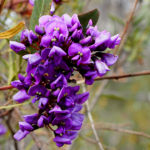
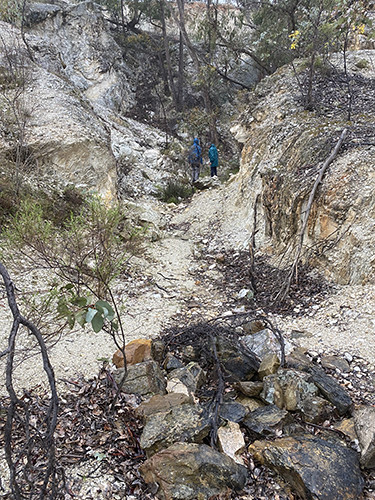
Occasional violent gusts of cold wind didn’t change the basic picture: Sunday was a bright winter day, perfect for a brisk stroll over to the Welsh Village from Chinaman’s Point via the Garfield Wheel and Sailors Gully, with a return along Forest Creek. Wattles are getting into their stride, and Dusty Miller was flowering abundantly along Sailors Gully.

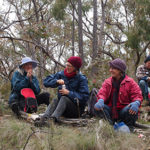
Walkers take a break in Sailors Gully. Photo by Bernard Slattery

The village is at its atmospheric best in winter, and a strong group on FOBIF’s September walk enjoyed that atmosphere to the full: the forest setting, the abandoned buildings and mine works, and the dramatic nearby slate quarry walls made for an exhilarating experience.

Our thanks to Barb Guerin and Lionel Jenkin for guiding the group through the labyrinth of tracks around the village.

Next month’s walk is in the Fryers Ranges—sure to be abundant with wildflowers. Check the program for details.

Posted in News, Walks | 1 Comment

Fires: the themes are getting familiar

Fires have ravaged Greece, and are still burning California. Gippsland has had a large bushfire in the dead of winter, and NSW has had its earliest ever total fire ban day. We’re bracing for another serious fire season.

If you have the nerve, a bit context on this contentious issue can be found in ‘California burning’, a long and provocative article in the New York Review of Books. The article can be found here. Familiar themes abound in the international story: poor forest management, climate change, arson, flammable weeds, unwise urban development at the forest interface, poor understanding of fire ecology. Here’s a sample:

‘In the United States, exurban and rural property development in the wildland-urban interface has been, perhaps, the final straw—or at least another lighted match tossed on the pile. Most wildfires that threaten or damage communities are caused by humans. Campfires, barbecues, sparks from chainsaws, lawnmowers, power lines, cars, motorcycles, cigarettes—the modes of inadvertent ignition in a bone-dry landscape are effectively limitless. Let’s say nothing of arson. Houses and other structures become wildfire fuel, and vulnerable communities hugely complicate forest management and disaster planning. In his panoramic 2017 book Megafire, the journalist (and former firefighter) Michael Kodas observes pithily that “during the century in which the nation attempted to exclude fire from forests, [those forests] filled with homes.”’

Interestingly, the article suggests that old growth forest is more resilient to fire than the even aged stands resulting from clear felling, and notes that the current US administration’s policy is to respond to fire with more logging, ‘which may well result in less resilient forests and, of all things, more fire.

Posted in News | Comments Off on Fires: the themes are getting familiar

What’s all that intensely green stuff?

We haven’t had a huge season for rain. According to the Bureau of Meteorology, ‘Statewide rainfall was 33% below the long-term July mean of 70 mm, the driest July since 2002, and large areas in the north and east of Victoria, and to the north of Melbourne had rainfall totals in the driest 10 per cent on record for July.’ This follows a dry autumn, with rainfall almost 40% below the long term average.

Tayloria octoblepharum, Spring Gully road, August 14: a characterful history.

But we’ve had plenty of dampish days: very good for moss, which has given much of our bushland its intense green winter tinge. Get down and enjoy it!

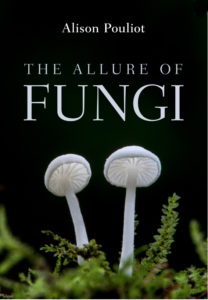
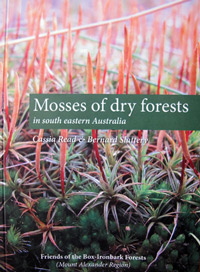
The picture shows a patch of Tayloria octoblepharum, a characterful plant with cigar shaped spore heads. It favours rotting matter. A gruesome detail: the moss was first described for modern science from a sample collected from the decaying remains of a Tasmanian bushranger! You can find this and other edifying details from FOBIF’s Mosses of dry forests of south eastern Australia. The second edition of this book is almost exhausted, and a third printing is planned for the coming months.

Posted in Nature Observations, News | Comments Off on What’s all that intensely green stuff?

More photos for ‘Creatures’ project

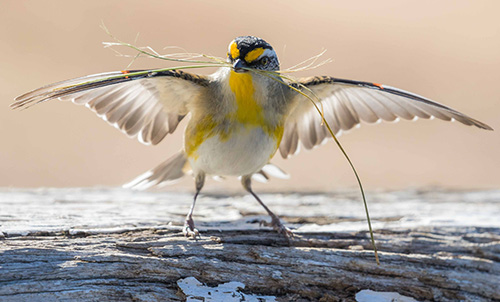
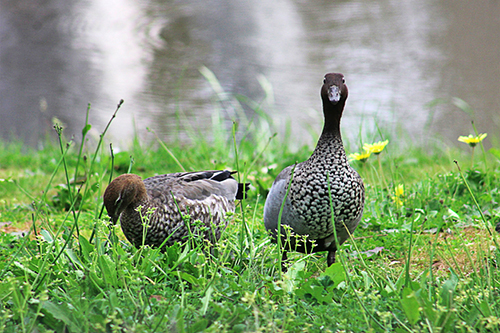
Newstead photographer, Patrick Kavanagh, has generously contributed many of his terrific nature photos to our FOBIF exhibitions. Here are five of Patrick’s most recent offerings. 

Click on each photo to enlarge. You can see our ‘Creatures’ Flickr page here and find out how to contribute to our ‘Creatures’ project here.

Posted in Photo Exhibitions | Comments Off on More photos for ‘Creatures’ project

More stunning photos for our ‘Creatures’ project

Antoinette Birkenbeil, one of the authors of the recently published Native plants and animals of the Chewton bushlands has just sent us two wonderful photos of a Blue-banded Bee Amegilla cingulata. Antoinette has contributed many photos to our FOBIF photo shows in the past and is a long-term resident of the Chewton bushlands.

The Blue-banded bee collects the majority of its nectar from blue flowers. Photo by Antoinette Birkenbeil.

You can find out more about our Creatures exhibition and Flickr page here

Posted in News, Photo Exhibitions | Comments Off on More stunning photos for our ‘Creatures’ project