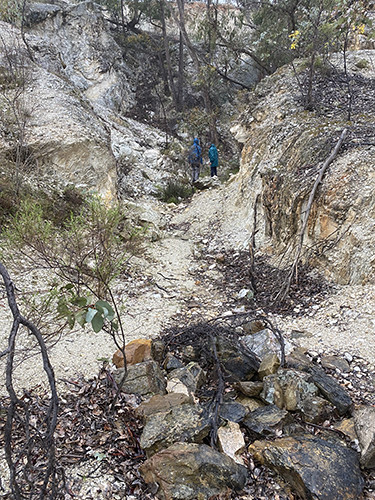
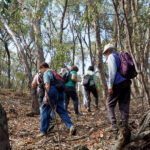
A small group of us gathered at the Spring Gully Mine site before heading off for a relaxed wander through the forest. The aim of the walk was to explore how the legacy of historic gold mining still shapes the landscape today, and to talk about some of the current management challenges in the area. Almost immediately the evidence of mining was impossible to miss. Enormous mullock heaps rose through the forest, reminders of the vast volumes of rock and soil that were shifted during the gold rush. Standing among them, it was striking to consider just how dramatically the original landforms had been altered.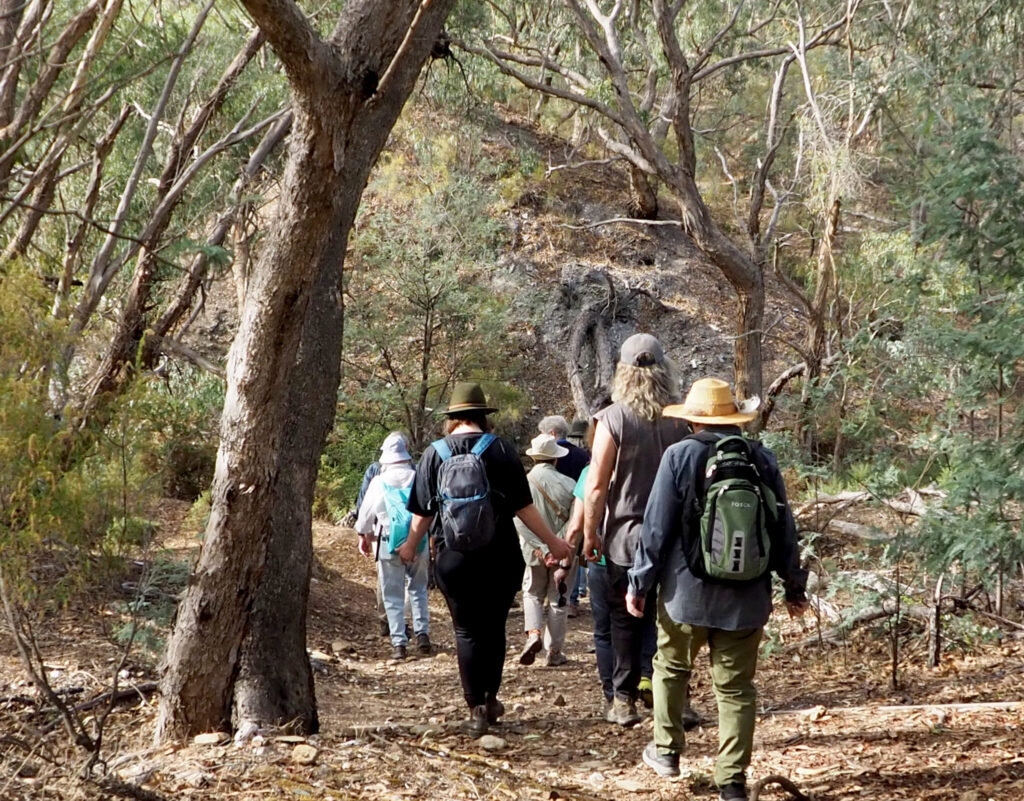
Despite this disturbance, the forest itself tells an encouraging story of resilience. Eucalypts have managed to re-establish across much of the mined ground, often as dense, same-aged coppice regrowth sprouting from old cut stumps. While this creates a younger and more uniform forest structure than would once have existed, it is still remarkable that these trees have managed to persist and reclaim such heavily modified terrain. Along the way we also noted that the tree canopies were looking particularly healthy this year, with very little sign of the lerps and other psyllid insects that can sometimes negatively impact the foliage of trees.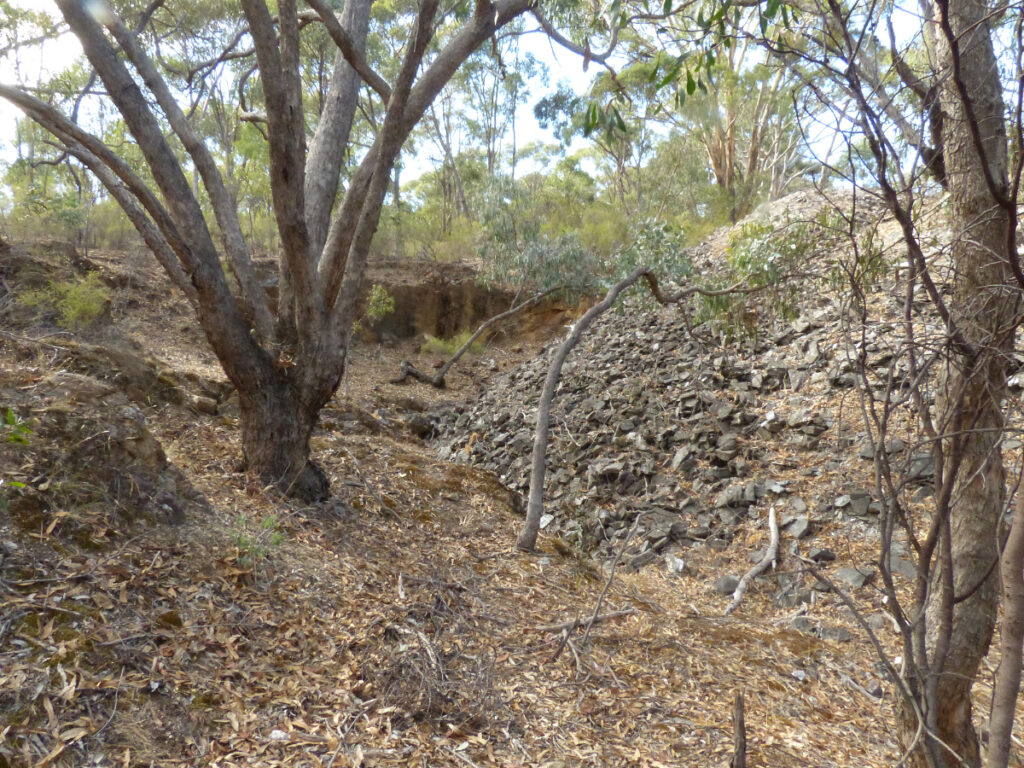
The walk also sparked plenty of discussion about how we manage these recovering forests. Fire regimes were a lively topic, with increasing evidence suggesting that fuel reduction burns can return to similar fuel loads within only a few years. In landscapes already lacking in old trees and fallen timber, fire can also remove the limited logs and coarse woody debris that provide critical habitat for wildlife. We also spent time talking about weeds, particularly Cootamundra Wattle, a high-threat species in the region. Its ability to spread rapidly and hybridise with local wattles makes controlling it an important priority for protecting the integrity of the native flora.
At one point we paused to look at some habitat for Bibron’s Toadlet, a small, endangered frog that breeds in shallow, ephemeral wet depressions on the forest floor. These temporary wetlands can appear quite inconspicuous when dry, but they provide critical breeding habitat during wetter periods. Researchers from Deakin University are currently studying the persistence of Bibron’s Toadlet populations in the Spring Gully area, helping to build a better understanding of how these frogs survive in such a variable landscape.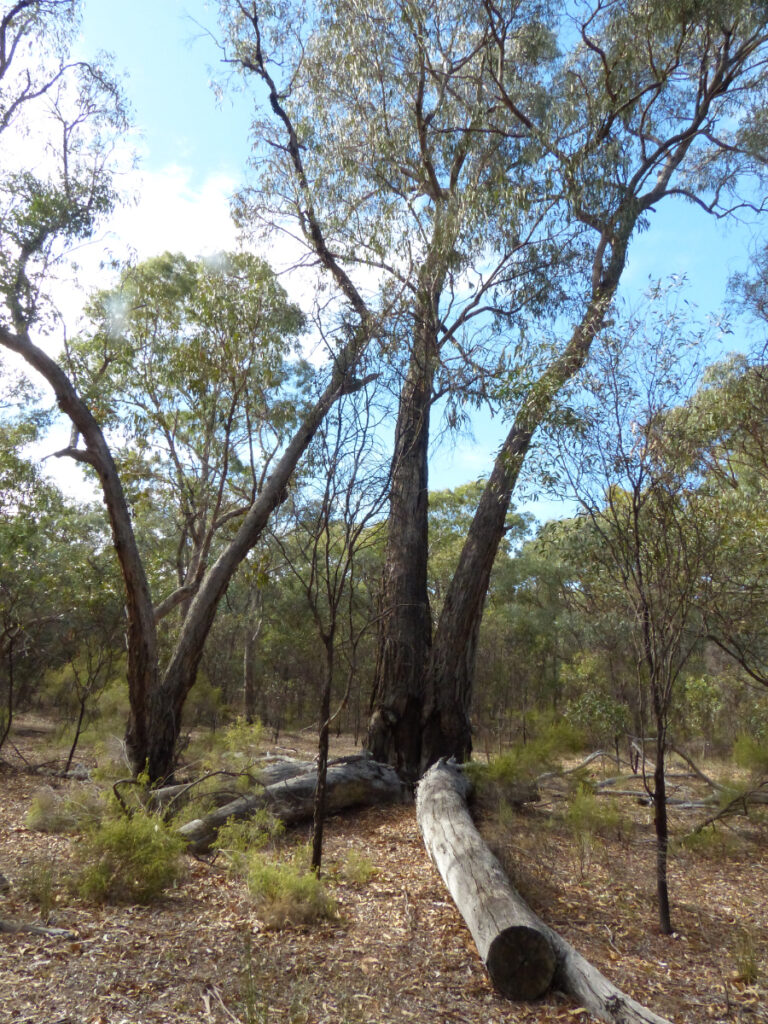
We wrapped up the walk with a close look at a Box Mistletoe growing conveniently at head height. Far from being just a curiosity, mistletoes play a vital role in ecosystems. Their flowers and fruit provide food for birds when few other plants are in bloom, and the nutrient-rich litter that falls beneath them supports a thriving community of insects. It was a fitting final stop, a reminder that even in landscapes shaped by mining and other pressures, the dry forests surrounding Castlemaine remain full of fascinating ecological stories waiting to be discovered.
-
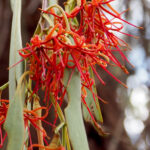
- Box Mistletoe Amyema miquelii
-
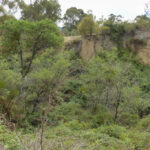
- Sluiced cliffs of Spring Gully
-

- Orb-weaver spider
-
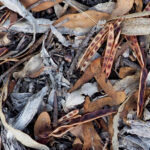
- Leaf litter
Thanks to Alistair Smith (words), Liz Martin (images 1, 4, 8, 9) and Noel Young (images 2, 3, 5, 7) for their contributions. (Images in order of appearance.) And thanks to Carolyn for leading the walk, and to Tim for sharing his insights into the history of the various mining activities and relics.
Birds spotted on the walk, courtesy of Noel Young: Red Wattlebird, Pied Cormorant, Spotted Pardalote, Little Raven, Scarlet Robin, Grey Fantail, Corella sp., White-throated Treecreeper.


 Click on image for info/order page
 Click on image for info/order page
 Click on image for info/order page