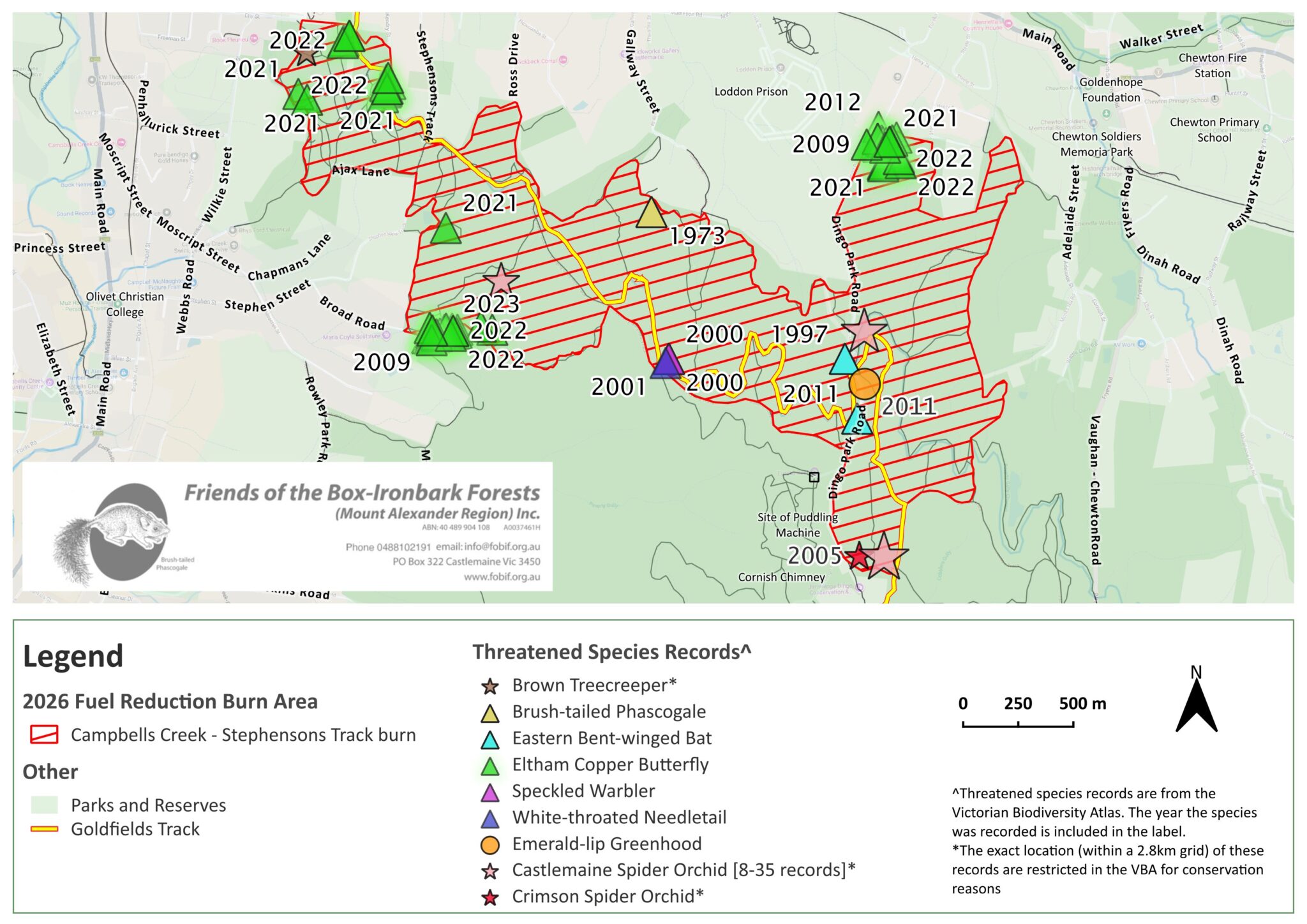
FOBIF has lodged a submission to Forest Fire Management Victoria (FFMV) regarding the proposed 239-hectare Campbells Creek – Stephensons Track planned burn in the Castlemaine Diggings National Heritage Park.
Among the concerns raised in our submission:
- The planned burn area contains populations of the nationally threatened Eltham Copper Butterfly (Paralucia pyrodiscus lucida), a species that depends on Bursaria spinosa shrubs and a close relationship with native ants to complete its life cycle.
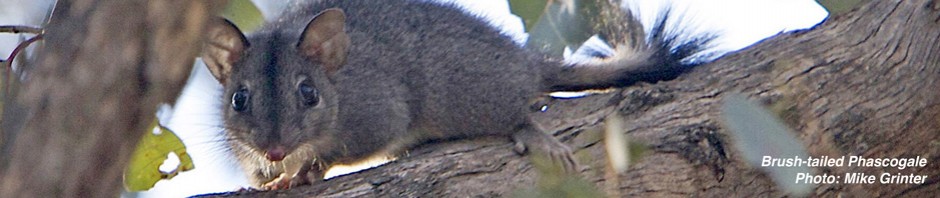
- The forest within the burn footprint supports numerous other threatened species, including the Castlemaine Spider-orchid (Caladenia clavescens), Emerald-lip Greenhood (Pterostylis smaragdyna), Brown Toadlet (Pseudophryne bibronii), Speckled Warbler (Pyrrholaemus sagittatus) and Brush-tailed Phascogale (Phascogale tapoatafa).
- Old hollow-bearing eucalypts occur throughout the burn area, providing nesting sites for wildlife but at risk of being killed when fire burns inside existing hollows.
- Evidence from recent burns nearby suggests fuel hazard can return to — or even exceed — pre-burn levels within just a few years, raising questions about the effectiveness of broad planned burns in Box–Ironbark forests.
- The burn footprint includes “The Monk” hilltop, a well-known butterfly hill-topping site where butterflies gather during the breeding season.
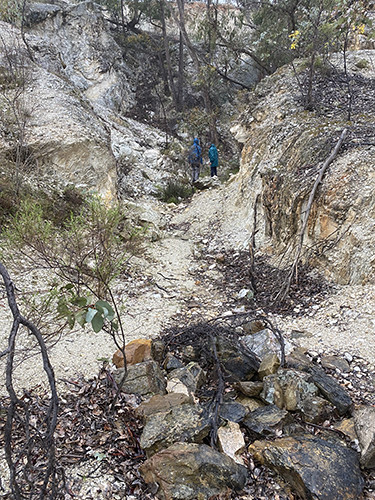
- Part of the Castlemaine Diggings Track passes through the proposed burn area, a popular walking and cycling route through the historic goldfields landscape.
You can read our full submission, with a map showing the site and threatened species previously recorded here
If this proposal concerns you, please consider sending your own submission to FFMV — even a short message explaining why this forest matters to you can help ensure community voices are heard. Community members can send submissions or comments to ffmvic@deeca.vic.gov.au with the subject line Campbells Creek – Stephensons Track planned burn.


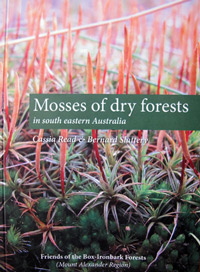 Click on image for info/order page
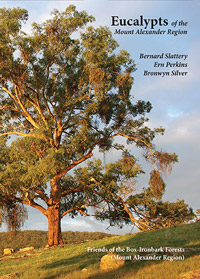 Click on image for info/order page
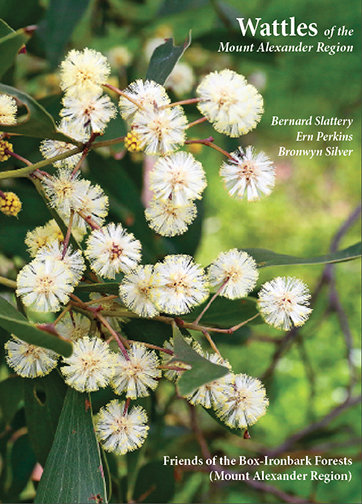 Click on image for info/order page