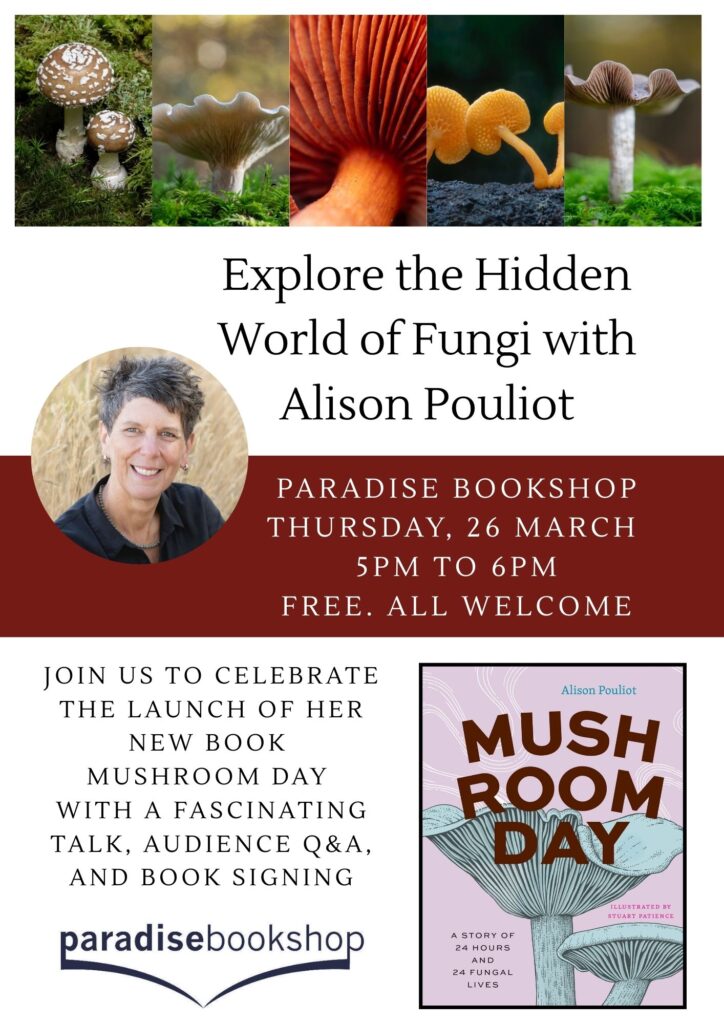
Fabulous feathered five fundraiser

https://events.humanitix.com/nature-art-soundscapes-presents-the-feathered-five

Posted in News | 1 Comment

A year of walks in review

Our regular Walks program continued this year with the familiar diversity and interesting foci that FOBIF walks are known for.

  • Euan Moore capably lead the final walk in 2024 near Crusoe Reservoir, Big Hill that gave us a great view back to Castlemaine.
  • After a long dry summer, the first walk this year in March, lead by Francis Cincotta, saw the bush soak up the cool air and gentle rain on a 5 km circuit at Fryers Ridge Nature Conservation reserve.
  • The Loddon River near Baringhup was the next walk with guest leader, Barry Golding, who shared local stories of geology, history and Indigenous culture. Thanks as well to the local farmers, Kerrie and Rob Jennings, who keenly supported the walk.
  • On a cold, windy May day in Maldon, we walked and gazed in wonder at pre-1852 eucalypts scattered through Maldon. Thanks, Bev Phillips of Maldon Urban Landcare, for sharing informative and interesting talks about these trees and the work done by this group to protect them.
  • With the arrival of winter, the annual FOBIF ‘Long Walk’ in June revealed some of the Leanganook’s hidden gems in thick winter mist, ably lead by Jeremy Holland. On the same day, an exploration of mosses in a gully in Chewton involved a lot of bending, creeping and crouching to get the right observations, guided by Cassia Read and Bernard Slattery.
  • In July, Stephen Charman, shared information from his extensive historical research, of a section of the Coliban Main Channel at Malmsbury. A snapshot of how water was moved around in this dry region dating back to gold rush era of the 1800’s.
  • Then in August, a misty, late winter mood descended on Mt Tarrengower for the walk off track that meandered up the north-western flank of the Mount. A diversity of flora and granite features were encountered, including some beautiful moss covered rock wells.
  • A feast of ecological delights in Kalimna Park were identified by Karl Just on the September walk. Lots of interest and appreciation of the biodiversity of this Park was apparent.
  • The final walk in October lead by Christine Henderson, occurred in the Fryers Ranges near Dearden Creek. Despite the dry conditions of this year, walkers were treated to some lovely displays of wildflowers and subtle signs of some orchids.

Thanks goes to Bronwyn Silver, for organising the 2025 walks program and for doing a thorough and well supported handover to our new walks coordinator, Gen Blades,  assisted by Lisa Hall.  The walks cannot occur without the support of the walk leaders who so generously share their expertise and knowledge

Many thanks to Gen and Lisa in facilitating the walks this year and to the various leaders for their care and attention to planning and executing very interesting and enjoyable walks.


Posted in News | Comments Off on A year of walks in review

Strangways & Surrounds: Book launch 8 November 2025

Newstead Arts Hub is hosting the launch of Belinda Prest’s recently published book, Strangways & Surrounds: Plein-air on Djarra Country, on Saturday 8 November at 2pm with Professor Barry Golding, author of Six Peaks Speak. The book has more than sixty of Belinda’s drawings from her travels around her home in Strangways beginning in 2013.

In praise of Strangways & Surrounds:

‘Belinda’s detailed pen drawings pay homage to the stately and wizened old trees, powerful vistas and markers of human presence both humble and profound, that characterise the region.
Eve Lamb, The Local

‘Her drawings are both delicate and evocative and they bear witness to the particularities of a place in time.’
Julie Gittus, author

Belinda will be signing copies of the book at the launch. It is also available at Stonemans Bookshop in Castlemaine. Cost is $50.

Everyone is welcome and refreshments will be provided.

Posted in News | Comments Off on Strangways & Surrounds: Book launch 8 November 2025

Fryers Ranges Walk

The final FOBIF walk was a delightful stroll up and down the ridges through the beautiful forest of Fryers Ranges. We saw lots of wildflowers and thanks Frances for identifying and explaining key indicators and conditions of different plants. These included:

  • A lot of the shrubs and grasses have been heavily browsed by animals. In an effort to deter browsers, some plants had made themselves very prickly (Hedge Wattle) or awful to taste (Bitter-peas) and even these were browsed!
  • The Downy Grevilleas were looking a bit sparse, but still valiantly pushing out their red and yellow flowers to attract pollinators.
  • Common Billy Buttons and Wax-lip orchids were flowering on short stems as a result of the extended dry weather.
  • The native peas were putting on a good show:  Purple Coral-pea, Bushy Parrot-pea, Large-leaf Bush-pea and Hill Flat-pea.
  • Broad-leaf Peppermint trees bore spherical bundles of cream flowers and distinctive new, red foliage.
  • White flowers were abundant in places: Fairy Wax-flower, Common Beard-heath, Early Nancies, Bushy Needlewood, and Common Heath (that we all agreed should be called Impressive Heath to match the botanical name Epacris impressa).
  • Gold-dust Wattle and Hedge Wattle added their bright yellow ball flowers to the scene.
  • Near Dearden Creek we saw Rock Ferns, Bracken and Maidenhair Ferns.
    Basal leaves of orchids and swathes of the soft foliage of Blue Pincushions could tempt walkers back in a few weeks time to see different flowers.

Noel heard a lot more birds than we did.

Thank you Christine for leading us through your backyard and also paying homage to a magnificent Candlebark tree by leading us in song to the tune of Frère Jacques:
Mother tree
We love you
Long may you grow here
Strong and true
(all lines sung twice).

Bird list: Yellow-faced Honeyeater, White-throated Treecreeper, Rufous Whistler, Long-billed Corella, Sulphur-crested Cockatoo, Crimson Rosella, Grey Fantail, Grey Shrike-thrush, Striated Pardalote, Spotted Pardalote, Kookaburra, Little Raven, White-winged Chough, Grey Currawong, Shining Bronze-cuckoo. 

Plant’s noted in flower: Grevillea alpina Downy Grevillea, Glossodia major Wax-lip Orchid, Tetratheca ciliata Pink Bells, Craspedia variabilis Billy Buttons, Caladenia fuscata Musky Caladenia, Platylobium montanum Hill Flat-pea, Philotheca verrucosa Fairy Wax-flower, Microseris walteri Yam Daisy, Thysanotus patersonii Twining Fringe-lily, Drosera auriculata Tall Sundew, Leucopogon virgatus Common Beard-heath, Wurmbea dioica Early Nancy, Veronica plebeia Trailing Speedwell, Lomandra longifolia Spiny-headed Mat-rush, Luzula meridionalis Field Rush, Pelargonium rodneyanum Magenta Stork’s-bill, Chiloglottis valida Common Bird-orchid (buds), Bulbine bulbosa Bulbine Lily (buds), Stackhousia monogyna Creamy Candles, Hakea decurrens Bushy Needlewood, Pultenaea daphnoides Large-leafed Bush-pea, Dillwynia sp. Parrot-pea, Epacris impressa Common Heath, Leucopogon fletcherii Twin-flower Beard-heath, Hibbertia fascicularis Bundled Guinea-flower, Caladenia carnea Pink Fingers and Eucalyptus dives Broad-leaf Peppermint. 

Thanks to Liz Martin, Frances Cincotta and Noel Young for their contributions.

Posted in News, Walks | Comments Off on Fryers Ranges Walk

Heroes

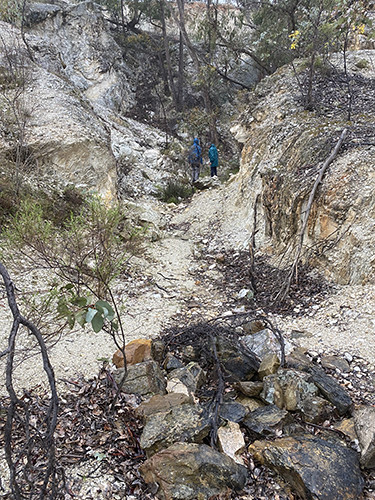
Anyone  wandering the desolate tracks separating Kalimna Park from the Moonlight Flat pine plantations to the north east this week will see a remarkable sight: beautiful patches of Rough Mint Bush flourishing on apparently sterile rocky surfaces–sometimes right in the middle of the track! The Mint Bush is one of those which may be the frustration of the gardener: spectacular in the most unpromising of environments, it’s not so easy to grow in the civilised conditions of a garden. It’s particularly impressive right now, given that the bush is looking pretty stressed by the dry.

Prostanthera denticulata, Kalimna Park, October 2025: it’s a strikingly rich sight in our stressed bushlands.


You don’t have to go over to the pines to see the Mint Bush, however: if you check out walks 1 and 2 in FOBIF’s walks guide: the Kalimna Circuit Walk, and Kalimna North End, you’ll find Rough Mint Bush in flower there—and in company with lots of Chocolate Lily, Grey Everlasting, and sundry other flowering plants.

Rough Mint Bush can be found scattered around our region. It can be locally abundant—if you see one, you’ll probably see a crowd.

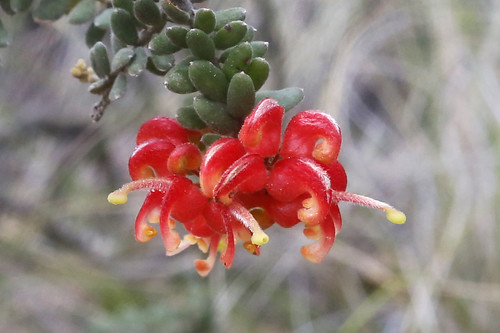
And while I’m on it, there’s another local plant which is described in the late Ern Perkins’s online plant guide, https://www.castlemaineflora.org.au/, as ‘scattered and sparse’ in our region: Rosemary Grevillea. It’s common enough as a garden specimen, but when you see it in the bush, the experience can make your day. The photos below were taken along the Campaspe river.

Bernard Slattery

Grevillea rosmarinfolia, Campaspe river valley, October: it’s a common garden specimen, but to see it in the bush is special. Photo; Duncan Sharpe


Rosemary grevillea, Campaspe river valley, October. Photo: Duncan Sharpe.

Posted in News | Comments Off on Heroes