Wildflower Season, for better or worse

It’s been a sad winter and spring so far for lovers of wildflowers in our local forest. The drought that gave us a dry winter last year continued into summer, then autumn and the winter just gone. It’s been a very harsh time, as gardeners and local bushwalkers know. 

The map below shows how serious the lack of rain has been across a swathe of southwestern Victoria and across southern South Australia. The dark areas show to what extent there’s been less rain than average during the last eighteen months, to July. Just to our west the amount of rainfall compared to normal has been the lowest on record. We’re in the severe deficiency range, which is almost as serious.

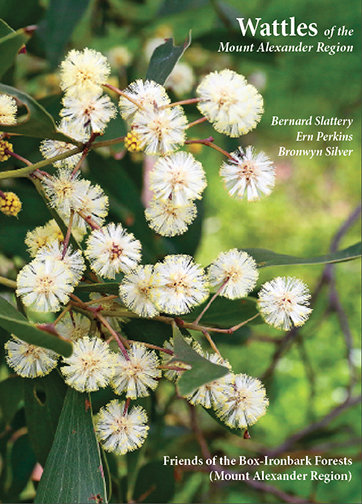
The situation in the forest is dire. The usual glorious spread of our local hillsides and valleys during late July/early August has been completely absent. Rough wattle (Acacia aspera) and Woolly wattle (Acacia lanigera) can be found as dead skeletons, not just in the blackened areas close to the water channel, burnt by Forest Fire Management, but also in the untouched areas. These short-lived species will have viable seeds in the ground and no doubt we’ll see a return to late winter gold among the trees in years to come, when wet times return. But in forty years this is the first time I’ve seen a total absence of Woolly wattle, bar a few struggling specimens. The photo shows Woolly wattle in spring 2021.

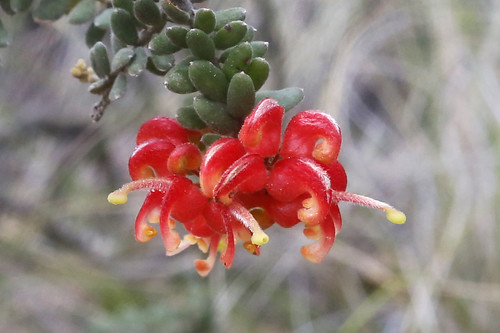
The Rough wattle, so-named because of the rough feel of its leaves, is faring slightly better but has only just begun to flower, at least a month later than usual. Over the hill towards Castlemaine the larger Golden wattle with glossy large leaves is flowering well, as are the various garden escapees: Cootamundra, Ovens and other large showy wattles. It’s our delicate locals that are doing it toughest. Another factor compounding the tough times for forest plants is a mixture of hungry wallabies and the newest feral arrivals in the district, fallow deer. I suspect they could be stripping the leaves of the Woolly wattle, as well as the beautiful winter-flowering Correa. I’ve searched in vain for this winter treat, finding only one specimen out of the burn area (which had been a local stronghold). It had only one leaf and a single flower. The photo shows how it looks in better conditions.

One observation I’ve made is that every plant species will do its utmost to flower and set seed. In good conditions there will be a glorious abundance of flowering shrubs and herbaceous plants lighting up the forest floor. In dry conditions flowers will be few and far between, and each plant that flowers will do so for as short a time as possible. So it’s worth exploring the forest during Spring, whatever the weather. If you’re interested in what might be found, the Taradale Community website has a section showing the common flower species and when they appear. Go to www.taradale.vic.au/wildflowers/

If you want to know where to go walking in our local Fryers Ridge forest, the website gives directions for a number of walks from different starting points. See taradale.vic.au/explore However, the link to the map is out of date. You can buy a hard copy for $1 at the Castlemaine Visitors Centre in Mostyn St. 

If you’d like to see some wildflowers but walking isn’t your thing, you can drive to the top of the main ridge of the Fryers Ridge Forest on the Taradale-Fryerstown Road. It’s a gravel road which may have a few potholes if there’s been good rain, but it’s suitable for 2WD vehicles of any size. At the top of the road where you meet the Main Ridge Road there’s a cutting. It’s worthwhile parking and getting out to look for flowers in this area. If you’re feeling adventurous you can turn left after the cutting onto the Main Ridge Road and follow it as far as Dearden Creek Track, where you turn left and descend, eventually reaching Old Drummond Road. Another left turn will take you back to the Taradale CBD. There are bends and narrow parts – watch out for oncoming vehicles who aren’t expecting traffic! 

A trip along the Ridge Road in October can be a great wildflower treat, with massed bushes of flowering peas, grevilleas and other delights.

Christine Henderson

Posted in Nature Observations, News, Walks | Comments Off on Wildflower Season, for better or worse

FOBIF AGM Monday 8th September

All welcome at our AGM, 6pm, Monday 8th September, Senior Citizens Centre, Mechanics Lane, Castlemaine. At 6.30 Tanya Loos will speak on living with wildlife. Then a light supper and the opportunity to buy; Tanya’s book ‘Living with wildlife’; FOBIF’s excellent field guides; raffle tickets for a gorgeous lithograph of either the anticlinal fold, hakea or banksia by local artist Bev Lewis.

You can read the 2024 minutes , 2025 Agenda.

Have you thought about joining the committee? You can with the nomination form here.

If you can’t attend and want someone to vote on your behalf, use this proxy form.

More about our guest speaker-

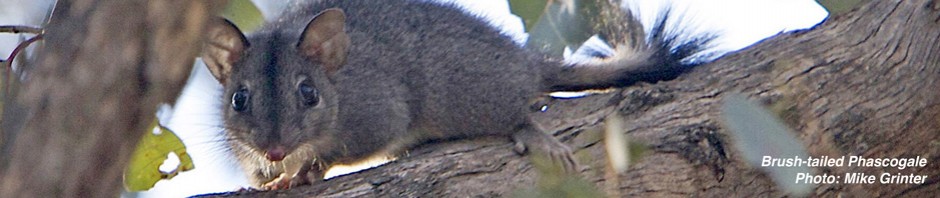
Tanya Loos loves sharing nature knowledge about how to live more harmoniously with the animals that live where we live – and how our homes and backyards can be safe havens in a time of climate breakdown. Whether you have a bird attacking a window, a possum in the roof, phascogales harassing your chickens, or a visiting venomous snake in the backyard Tanya believes there are simple steps we can take that are wildlife friendly and make sure your place is a haven! 

Tanya lives in central Victoria and is passionate about wildlife and nature! In her presentations, Tanya loves drawing from ecological science to educate and inspire people to care about wildlife and wildlife habitat. She has worked as a Woodland Bird Project Coordinator for Connecting Country and Biodiversity Projects Officer for Macedon Ranges City Council – and at present she is Avian Influenza Response Coordinator at BirdLife Australia. 


Posted in News | Comments Off on FOBIF AGM Monday 8th September

Raffle at the AGM

Bring some cash to win one of Bev Lewis’ beautiful stone lithographs.

$5 per ticket, 3 for $10

First prize gets first choice, 2nd prize second choice, 3rd prize the remaining print.

Posted in News | Comments Off on Raffle at the AGM

Vale Pam Douglas

Pam Douglas died last month. She was a regular walker on FOBIF’s monthly walks since 2016, though ill health limited her participation this year.

Pam came to live in Castlemaine around then, and it became common to see her walking from her house in Grumont Street to the town, train station or library.

Pam told FOBIF walk leaders that she enjoyed and looked forward to the walks.  She died alone, but we hope that the pleasure she took in the walks made a difference to her difficult life. Pam left no family connections; her affairs are in the hands of the Public Trustees, who will organise a funeral at a time and place to be announced.

Pam often commented on the FOBIF website about walks:

‘It was another fantastic walk, and the usual crowd e.g. Bernard, Bronwyn, etc. (and even myself, Pam), love our walks. Looking forward to the walking again with FOBIF next year.’ 2024

‘A very nice relaxing walk. Bernard’s sense of humour was greatly appreciated. The weather was hot and I love the goldfields forests.’ 2018

‘Beautiful walk & beautiful people.’ 2017

‘The best thing about Bells Swamp was going into the swamp. I loved walking around there in the swamp. I was surprised that Damien was only wearing sandals as the rest of us had gumboots. It was all a very good experience.’ 2016


Posted in News, Walks | Comments Off on Vale Pam Douglas

Fire in the landscape, much to learn…

Mount Korong Eco-Watch have been conducting a series of conversations among private landholders and others over a 10-month period about ecological practices of fire and their roles and uses in our landscapes. Conversations will be part of a community forum on September 13th in Inglewood. The aim is to explore the potential for establishing a sustainable process for sharing fire experiences and learning together for the benefit of ecosystems and communities.  

Leaders of discussion at the forum will include Paul Foreman (Bluedevil Consulting/Biolinks Alliance), Terri Williams (landholder and teacher Bendigo TAFE), Oli Moraes (Galk-galk Dhelkunya Program Manager, Djaara), Peter Morison (conservationist), Karen Tymms (Trust for Nature), Dale Tonkinson (biodiversity officer CFA).

Posted in Fire Management | Comments Off on Fire in the landscape, much to learn…